STORYTAPE ’95

Interviews, Music, Published Material, The Good Old Days, Videos

Written by Daniel Isenberg

1995 was an incredibly dope year for rap music. And thankfully, I’ve had the opportunity throughout my career as a writer to interview the artists and producers that made it so incredibly dope. So to celebrate the nine-nickel appropriately, I dug in my docs and put together a mixtape-esque collection of stories behind 25 classic songs released in 1995, as told to me by some of the most legendary names in hip-hop, including Diamond D, DJ Clark Kent, DJ Muggs, Erick Sermon, Fat Joe, Ghostface Killah, Large Professor, Pete Rock, and Raekwon.

Okay, let’s set STORYTAPE ’95 off with SIDE A: THE SINGLES. These songs all had a music video back in ‘95, too.

SIDE A: THE SINGLES

Method Man & Redman “How High (Remix)”

Erick Sermon: “How High” came from Dr. Dre and Ice Cube’s “Natural Born Killaz.” If you play “How High” and you play that, it’s the same beat. I didn’t use the same sounds, but the melody and the way the bass line is going is the same. I used the melody of “Natural Born Killaz” to make “How High.” It was incredible.

I played the beat over. At that time, I was using a Roland W-30 station. It was like an ASR-10, but by Roland. And I played the bass line. That’s what I do. I play keys. Since ‘89, this is what I was doing.

So me and Russell hooked them up, for The Show soundtrack. They were in the studio, and I walked in, and I couldn’t see shit. There was so much smoke in the room. They’re the most consistent blunt smokers you will ever meet in your life, besides Snoop and them. Nobody smokes more blunts than Red and Meth. The room, you can’t see in it.

So I come in there with that beat, my version of “Natural Born Killaz.” And they start writing to the beat. And that was them saying, “How High,” because they’re in there smoked out of their minds!

So I had the original record, but it was street to me. But my mind is saying, “I got Red and Meth on a record. I’m not going out like this. I’m making something bigger.” So I go and remix it.

I had a Crusaders sample, and then in the studio, somebody had an acapella of some band that had done the vocals for that classic “Fly Robin Fly” part over. It was the weirdest shit. So I took it, and put it in the key of what my Crusaders loop was in. Fuck it.

And then, I took the vocals, and took the parts that I liked, and put them in the remix. The original version was longer, and had different, longer verses. So I was chopping them up the way I liked them. 

They didn’t like the remix at first when I made it. They hated it. When they got to the video shoot, and saw they were using the remix, they were pissed. They were expecting to go and shoot the video to the hard version. They were like, “This isn’t the one we want.” They thought it was too soft. But I told them, “Trust us.”

At the end of the day, it sold one million records. And to this day, they still thank me for that. 

Cypress Hill ft. Erick Sermon, Redman, and MC Eiht “Throw Your Hands In The Air”

DJ Muggs: We put the album out, and it was running its course, and then, we wanted to give the album a little boost. So you give it another three months of life. So at that time, that was that. And it came out so gangster.

I had always been an Erick Sermon and Redman fan, so I had reached out to them, like, “What do I have to do to get you guys on a record? How much is it gonna cost?” And they were like, “Nothing. We’re fans. We want to do it.” Fuckin’ A. Then I wanted to get somebody from the West. So I got MC Eiht.

Fuckin’ MC Eiht wrote his verse in fifteen minutes and laid it in one take. I was like, “Wow.” It blew me away, man. I wasn’t used to seeing people write their shit that quick.

We went and shot the video in L.A. with my boy McG, who ended up doing the big show The O.C. and Charlie’s Angels. So we did some of the first videos he shot. The video was great. The concepts and the ideas he had, like putting MC Eiht in front of all the hubcaps, and the way he shot from the side.

Redman was the funkiest, sickest motherfucker. Cypress Hill had a lot of influence on Redman early on. It’s funny, because he had a big influence on us, but we had a big influence back on him. It was like an exchange of energy. We used some of their samples, and they used some of ours, and nobody ever sued. There was more respect at that time for things, and people using samples.

Even when I had used the samples on the first album from Wild Style, Fab 5 Freddy was like, “That’s hip-hop, I’m glad you used that.” Mark the 45 King said the same thing. You see fools now, they’re trying to sue you off a fucking mixtape like, “Oh, you’re making money off your shows, and selling t-shirts.” It’s like, “Wow, it’s getting that bad? Shut up, it’s a fucking mixtape.”

Tha Alkoholiks ft. Diamond D “Next Level”

Diamond D: I met Tha Liks through an A&R at Loud Records. I don’t know if it was Matty C or my other man, but they reached out to me. They flew out to New York, and came up to the Bronx to hang out with me. I played them a couple of joints. The basic foundation of “Next Level” was already made. Then we flew out to L.A. and recorded it.

I wrote my verse right there on the spot, just so I could capture that moment and it could be fresh. We shot the video in downtown San Francisco at first, and then we rode out towards the Pacific to some National Park or something and shot some of the scenes out there too.

They liked to party, but when it was time to work, it was time to work. It wasn’t like they were running around with no discipline.

Me and Tha Liks stayed in touch all these years too. I’m supposed to be working on their new album. I did one joint with them already, and I think Kurupt is on it.* I’m just waiting to hear the rough mix of it.

*ip note: The song ended up being “We Are The People Of The World” of featuring Diamond D, Tha Alkaholiks, and Kurupt, which was released on Diamond D’s 2014 album The Diam Piece.

Raekwon ft. Ghostface Killah “Criminology”

Raekwon: That’s a beat that RZA had in the basement that sounded real big and real strong. This was when we were in our Cuban Linx chamber and we were starting to build that album. That record right there was definitely one of the records where we were like, “Yo, we dare anybody to get in our way right now.” Me and Ghost were just blood thirsty wolves right there. The beat was so strong, we already knew that that was definitely gonna be one on the album that niggas was gonna be like, “Yo, them boys from Staten Island ain’t playin’ on this microphone.”

We wind up doing the video. You know me, orchestrating the video, “I need Benzes, jewels, and waterfalls behind shootin’ to the right.” We actually went into the desert and found a waterfall that shot to the right. I told Ghost, “I need you to be Vincent ‘Chin’ Gigante right now. Don’t have no mutherfuckin’ gear on, all I need you in is a mean robe.” And he was like, “Yeah, you right. I’ma just run with the robes.” And, the next thing you know, he’s the robe man.

I’m telling you, from that record it opened up the door. It started it. So now it’s, “Yeah, I need my jewels and a robe, I ain’t wearin’ no clothes no more.” I was all the way into my mafia chamber, so I’m telling him, “Yeah this is how I need you to be. You’re my underboss. Yeah, you come, you walk around. We gonna do it like this.” It was just a hot video man.

Fat Joe “Envy”

Fat Joe: “Envy” was a bit of a challenge for me. It was smooth. That was the first time Fat Joe was trying to be on some fly shit. But it was still hard. If you listen to the lyrics, they’re real hard. 

L.E.S. gave me that sound. He was Nas’ DJ forever, and he was a tremendous producer. The fact that I had someone down with Nas, who was the best rapper in the game at the time, was incredible.

L.E.S. gave me the beat, and was like, “Yo, you can rap to this.” I was like, “I don’t know if this shit is too smooth, and if niggas will still fuck with me. You know, I’m Army fatigue’d, Chucker’d up.” But he was like, “Nah Joe, just spit that hard shit over this smooth shit.” He opened the door to me using melodic beats and talking that fly shit so a girl could relate. Even though it was still a little too hardcore, girls could relate, and we could get it played on the radio.

People love it. To this day, people tell me about that song. And that was before we were clearing samples. So we didn’t even have to pay. It was crazy. 

AZ ft. Nas “Gimme Yours”

Pete Rock:  I met AZ way before Nas. I was working with AZ when we both were nobodies. I met AZ through a friend of mine who was from the Bronx and moved to Mount Vernon right on my mother’s block, and we became real close and used to hang out with each other a lot.

He knew AZ, and one day he introduced me to him. We were working with him down in my basement, and we used to go out to East New York to look for him and pick him up and bring him back to the house to work with him.

“Gimme Yours” happened the same time “Rather Unique” happened. I just ended up doing two. He picked two beats. And he said, “I’m gonna put Nas on the hook.” They were in the studio together. At that point in time, people were still in the studio with each other, before this email stuff came out. We were at Greene Street studios in Manhattan. It was quiet and fun, that’s about it.

We were excited and really happy for his first record deal. Him and Nas developed a relationship, he got on Illmatic, made that hit record “Life’s A Bitch,” and that helped him get his deal. 

Junior M.A.F.I.A. “Player’s Anthem”

DJ Clark Kent: I knew B.I.G. before he made records because of the neighborhood he was in, and I was cool with people in the neighborhood. I was very cool with Lance ‘Un’ Rivera, and Justice, Gutter, D-Roc, Daddy-O, all of them. I was cool with 50 Grand, who was his DJ, and who was Dana Dane’s DJ before I became Dana Dane’s DJ. And I was B.I.G.’s DJ too after 50 Grand. That’s crazy, right?

I would hear B.I.G. and be like, “This guy’s incredible. He’s dope.” His manager Gucci Mark grew up in my neighborhood, and I was practically like a big brother to him. When it was time for B.I.G. to do shows, they were like, “We need the best show DJ. Clark’s the best show DJ.”

The first time he came to my house, we clicked instantly, because we were already cool. I was there when he was making records. I gave him one of his first shows to perform. I had a birthday party, and I was like, “Yo, come to my party and do a show.” And he came and did “Party and Bullshit,” and had the fight scene on stage and everything. It was at The Shelter. It was absolutely insane. 

So Ready To Die comes out, and we’re on tour, and he just decides he’s going to make Junior M.A.F.I.A. records. One day on the bus, he’s like, “Yo Clark, play me some beats.” So we go home, and we come back on the tour, and I got beats. So I’m playing beats, and he’s like, “We’re gonna use that for Junior M.A.F.I.A.” And he makes up that hook as soon as that beat comes on in the bus, and I’m like, “Oh shit, this is gonna be dumbness.”

In my mind, I’m like, “Do that for yourself!” But we’re on the tour, so we’re just going to do whatever is happening. And every beat that was chosen for that album was a joint effort between me and him and sometimes Lance and sometimes Jacob, which is why I got executive producer credit on it. We all had to agree that those beats were going to go on that album.

That was the first time you heard Kim. She bodied it. She wasn’t on tour with us at that point. Lil’ Cease was on tour because he was one of the hype men.

That record was done instantly. As soon as all the verses were done, without them even being chopped up or edited at the end properly, we mixed it and made an acetate, and took it to the club. We went to The Tunnel and were like, “Yo, play the record.” And niggas was like, “What do you mean, ‘Play the record?’” And we were like, “Play the fucking record.”

It was me, and B.I.G., and Un, and Just, and we were standing next to the wall, like, “Wait ‘til you see what happens when this comes on.” And Big Kap is like, “New Biggie and Junior M.A.F.I.A.!!!” And Kap put the record on, and motherfuckers went crazy. When the song started in The Tunnel, that shit sounded like a movie.

And we’re just standing there, not even flinching, and the chorus comes in, “Grab your dick if you love hip-hop.” And people are like, “What the fuck is going on here?!? What is this?!?” Then Lil’ Cease comes in. Then B.I.G.’s verse comes in, and once B.I.G.’s verse hits you, it’s like, “Oh no, this is really ill.” And then the chick starts rapping! And niggas is like, “What the fuck is that?!?” 

We’re in the club, and that’s the first reaction, in The Tunnel, with nine million motherfuckers in there. They brought it it back a thousand times, and played that shit over and over and over. And we’re standing there, and I’m looking at B.I.G. like, “I told you son. We’re good money.” And Un is like, “Yo B.I.G.! We good B.I.G., we good. This shit crazy. Yo Clark man, me and you, we’re gonna be…” That shit was fucking hilarious. But that’s what it was.

But that record was so crazy because it was instant. It did so well in the club, that it wasn’t like we just gave it to the mixtapes. Motherfuckers had test pressings a week later, and then everybody had it.

And the video was kind of crazy too, with the planes and all kinds of surveillance. People were like, “Damn, how’d they get all that already?” We had a good budget over there. Those were the good days.

Raekwon “Incarcerated Scarfaces”

Raekwon: I wrote that song right there for all my niggas that was locked up. I happened to just be thinking about it. I think one of my mans had just went away for a long time. I wanted to have something on the album to represent the niggas that’s inside the belly of the beast. You got a lot of cats also that wear that scar on their face. So I definitely just wanted to shout out all the criminals on that record right there. All the ones that’s incarcerated, they Scarfaces, too. Plus, whoever walking around with a buck fifty or three hundred on their face, this record’s for you. When you think ain’t nobody paying attention to you, Chef thought about you.

I just was rhyming man. I came in RZA’s basement one night and he just had that shit poppin’, and I looked around the room and nobody was there. I was like, “I want this shit! This is me!” I wrote my rhyme in maybe like fifteen minutes. The whole three verses. I was just flying. It was just coming to me ‘cause that’s how I get it in sometimes. If something really yokes me up like this, the beat just go, then I’m ready to get on it. I just aired that shit out in like fifteen minutes. Before you know it the song was popping, hook on it, everything. We like, “That’s Cuban Linx.”

It pops in the club. That’s definitely a lot of people’s favorite record. Especially when I go to Connecticut. I call it the Connecticut anthem. It’s like I just put a whole state in my pocket when I did that. I feel like if I’m anywhere in the world, especially Connecticut, if I’m fucked up, somebody gonna hold me down just based on that record.

Too $hort ft. Erick Sermon “Buy You Some” 

Erick Sermon: Too $hort saw me in The Source magazine, and was like, “Yo Erick, what are you doing in Atlanta?” And I’m like, “Yo, I’m down here.” So he came. Scarface too. They all came when they saw me in The Source. Scarface came, $hort came, and Pac came. I was in The Source for my rim shop. It said, “Erick Sermon Moves to Atlanta.” 

He was my friend. I knew him from the industry. He came out the same year, in ’88. So I was in Atlanta, and he came about two years later. $hort had a lot of money. And when he got his studio up, my boy said, “Let’s go to $hort’s studio.” So we went there, and we made the record. That was the first one we did.

I was really hostile on that record. I was cursing a lot on the song. That was a raunchy record compared to what Erick does. But I had wrote that record on a freestyle or something. 

But that record was so monumental, because while the East and West coast was beefin’, two guys from the East and West coast had a hit record out together. On the low, it was a hit record. When I came home to New York, I couldn’t believe it was big. Funkmaster Flex blew it up here.

Then I performed it at the Apollo, and when I brought $hort out, on the Survival of the Illest tour! Oh my god! Pandemonium! That record played on Atlanta radio for ten years straight. But it blew up to a huge record, out the blue. $hort sold a million records on it. It was on a Dangerous Crew compilation, but he put it on his album too. And we did a remix with MC Breed too—God bless the dead.

Fat Joe “Success”

Fat Joe: I was really from the streets and I really did hustle in a major way. When I got my record deal, I left the streets alone, as far as hustling. I never ever hustled again. I said, “I’m gonna change my life, I’m going legit. This is where I’m at.”

But when you get in the rap game, no matter how hardcore rap is, there’s a bunch of nice guys in this business. I was busy trying to act like a nice guy, trying to make people not be scared of me and work with me because I’m sure they were hearing horror stories from the streets. But then, Jay-Z was about to drop a whole drug dealer album, Biggie was talking about hustling, and they were talking about shit I really did.

So, at one point, I was like, “I know I’m trying to change my life and be b-boy hip-hop, but this is the lifestyle I know. Can’t nobody describe it like me. They know I got the real stories.” In fact, Biggie and me were really cool, and we used to talk every other day on the phone, and “Success” was the one song he ever complimented me on. He was like, “You stepped your shit up, man! Damn, Joe!” Biggie was a great dude. So humble. I watched him become the biggest guy on earth, but still be majorly humble.

I think Biggie was out of town when we did the video. I had Big L, Rosie Perez when she was like the baddest chick. Nas was in it, Raekwon. Diamond D, Showbiz, Ghostface, LL. The kings of the game. The whole world came out and was like, “Crack, what’s up!” I had Nas and Common in the Bronx. Whooo! We had a great time.

DJ Premier, KRS-One, Doug E. Fresh, Fat Joe, Mad Lion, Smif-N-Wessun, and Jeru The Damaja “1, 2 Pass It”

Fat Joe: That was classic, because for years I had worked on doing albums at D&D. It was Preemo’s home base. Everything with Premier was done at D&D. At the same time, that was the hangout. We would go to D&D, shoot pool, and talk to everybody.

Being that it was a posse track, they said they only needed eight bars. So I turned around and did it. And you know, Lord Finesse was who inspired me to even rap. So at that time, I thought Finesse should have been on that record. So I think subliminally I threw a little shot, and was like, “Motherfuckers know who’s the best, if it ain’t Fat Joe then it must be Lord Finesse.” That was letting them know, “Yo, that’s my brother, and I don’t know what he ain’t doing on this. But he deserves to be on here.”

Then Preemo sampled my line, “Bring it on if you think you can hang” on Jay-Z’s album. I saw Jay-Z, and he was like, “Yo man, we’re gonna send you some publishing. We used your voice on this.” That shit was cool. Reasonable Doubt is a classic album. That whole album was crazy. To have my voice on there was dope.

Junior M.A.F.I.A. ft. Aaliyah “I Need You Tonight” 

DJ Clark Kent: Faith Evans was on the song at first, but we got Aaliyah involved because she was young. Faith sang the hook first, but it kind of didn’t make sense to have all these young kids on the record with this grown woman singing. So we got Aaliyah on the record. Plus, Aaliyah was on Atlantic Records also, so it wasn’t like we had to get her cleared. It made sense, and it felt right.

I worked at Atlantic Records, so I knew Aaliyah since she was crazy young. When she was fifteen and signing record deals, I knew her. It was perfect to work with her. It was simple, because she was too talented. “Here’s the hook, sing it again.” And she sang it again. She was dope.

That was Biggie’s idea to use the Lisa Lisa record as the hook. He knew exactly what he wanted to hear.

Okay, now let’s flip to SIDE B: THE DEEPER CUTS and hear the stories behind some album favorites, remixes, and even an unreleased Nas gem. No videos for these joints here, but peep the audio while you read the stories for the full experience. Enjoy.

SIDE B: THE DEEPER CUTS

Mobb Deep ft. Nas and Raekwon “Eye For A Eye (Your Beef Is Mines)” 

Raekwon: It was payback time. It was payback for the friendship and the love that Queensbridge and Shaolin had together. They’re building up their Queensbridge medals and shining ‘em up, and they called me in to get on that record. All I did was come in the studio and hang out with them. We was gettin’ bent and all that. But that beat, everybody’s head just kept knockin’.

So that beat was just freshly made once we all got into the studio together. I remember P was up in there first settin’ it off, and Havoc came behind him. And me and Nas was over there in the corner writing. Like, one thing about me, I think I was more excited just chillin’ with niggas than writing. Like, I was always the type of nigga like, “Aiight, you go. Gimme like ten minutes.” So a lot of my rhymes are wrote quick. Like, that’s what cats always say about me, like, “Yo Chef you write so fuckin’ fast.” I’m like, “‘Cause I get open quick.” If I get open off of something then it makes me write like that. 

I’m a big fan of Mobb and Nas. Queens rappers excite me more than Brooklyn rappers for some reason. I don’t know. I like Queens rappers. I like how they rhyme. I like the beats they be picking. And, at that time Havoc was young, but nice. So you know I’m always for the young thoroughbred. Anybody that’s just feeling to me like they on some young G shit. Yeah, I wanted to fuck with them.

Him and P, they already had their potions and me and Nas were just in the back like, “This is it.” The next thing you know we just went in and did what we did. Honestly, I wasn’t even writing that hard, I wrote something just to participate and it wound up being a classic.

Raekwon ft. Ghostface Killah and Nas “Verbal Intercourse”

Raekwon: Another one of my favorites right there. That one right there though, the beat was sick. RZA was just dominating where he wanted to take this record, and I was just right there with him all the time co-signing the beats. At that time me and Nas were real close. He would come see me at my crib. I’d come see him up in Queens. And I always told him I want him on the album.

So one day I brought him out to Staten Island. We went to RZA’s house and he went to the basement and he was listening to the beat and I’m like, “Yo, this is the one I’m thinking I need to have you on.” And we would just sit there for an hour listening to the beat. Now mind you, I didn’t even write my rhyme yet. I just knew, this beat is going on the album.

So Nas is automatically like, “Yeah this is it, but I don’t know what rhyme to fucking come with.” I’m like, “Fuck it. What you got?” He got a couple lines. I’m like, “Fuck it, go in the booth.” So now, I’m in the back on some A&R shit. Ghost walked in. We all just chillin’. Next thing you know, Nas is up in there trying all different kinds of rhymes. He’s my guest, so I’m definitely paying attention to what he’s doing ‘cause at the end of the day I’m gonna make sure that he does what he needs to do.

He was trying shit and I was like, “Nah that ain’t it right there.” And then once he said that, “Through the lights, cameras, and action,” I looked at niggas in the room. Everybody looked at me. I’m like, “That’s it!” I stopped him and said, “Yo, that’s the verse. Do that one.” And ever since when he did that one, it was one of the best verses in hip-hop today. 

When that came out, Nas was just really starting to be heard more. He was starting to get his buzz up now as far as being a Queensbridge representative. People were seeing that this nigga’s nice, but we helped put that credibility on it even more when that record came out. So it was definitely one that people was like, “Yo, I love this shit because this little nigga over in Queens is nice. Then he’s fucking wit y’all and then the record is mean.” So, it kinda helped everybody’s position grow in the game at that time.

Fat Joe ft. KRS-One “Bronx Tale”

Fat Joe: This was my second album, I would’ve been extinct in hip-hop if I didn’t step my game up lyrically. Because this is around the time that Nas, Biggie, and then Jay-Z came out. So the game was getting real lyrical. You couldn’t away with, “Bust it, check it, watch how I wreck it.” I couldn’t get away with that. If that was the case, you were played out. So I studied a lot of Nas, and a lot of other artists, and I analyzed the game, and knew I had to step up my game lyrically.

Of course, KRS-One is my idol. My three main idols were LL Cool J, KRS-One, and Heavy D. Actually being from the Bronx, and seeing the growth of KRS-One, I think I’m his number one fan ever. 

I was there the first time he did “South Bronx” at a block party. So to actually have him come to the studio and work with me, and then rap on the record with the guy who I know is a million times better than me and still have to represent myself was a big challenge. And it was the biggest honor.

After the success of my first album, and the success of “Flow Joe” kind of faded, I was struggling to make some money and make ends meet. And KRS knew that, so he took me on the road with him, and I was his hype man. I was kind of like his Flava Flav at the time.

So when I started doing my second album, I knew I was going to do a song with him. The problem was, I didn’t want to get shitted on. So I knew I had to step my lyrics up and talk that shit. And I think I did pretty well.

For “Bronx Tale,” I just wanted that hard shit. At this point, I was just so hard. I don’t even know how to explain it to you. I just wanted to come with the hardest shit. That’s all I knew. I never thought I would be making a song with Chris Brown or R. Kelly.

But even though I was a hard dude, I played P.M. Dawn. I played De La Soul, and Native Tongues. I would bump A Tribe Called Quest in my car all day. But my preference for making music was hardcore, gangster shit. Still, to this day, my preference is making hard shit.

KRS-One ft. Busta Rhymes “Build Ya Skillz” 

Diamond D: BX baby, BX! Kris reached out to me for that. We came up loving KRS-One. “South Bronx” and all those iconic songs. Working with him was an honor. And he paid me what I wanted too. But I would have done it for half. But, you know, no man is going to talk himself out of no guap.

That’s one of those gems that not too many people even know about right there. The beat was made already, and when he heard it, he was like, “This is the one right here.” I think I might’ve left and came back, and the shit was done.

At the beginning, Busta’s on the record talking. I don’t remember if he was just in the session or what. I do know that song led to us working together down the road just from Busta telling me that he was really feeling that beat.

AZ “Rather Unique”

Pete Rock: “Rather Unique” was ill because I had it perfected, with the beat ready with all these nice little fill-ins and drum stuff going on. And the assistant engineer stepped on the plug by accident, and I didn’t save it, and I had to re-make it. I had it going better than what you hear now. It was crazy. I had it going really dope before. I just did what I could, but there were certain things I did that I couldn’t remember from when I was programming it. I was mad.

Nas ft. AZ and Biz Markie “Understanding”

Large Professor: I was involved in an earlier version of “Life is Like a Dice Game” where he didn’t actually name it “Dice Game.” We did it over the same sample as Junior M.A.F.I.A.’s “Get Money,” the original. It was earlier though. I had hooked it up. Everyone was going to those record conventions, so records would come in waves. And I was catching a lot of those records earlier, and knowing to freak them early. But it never came out. I think that’s the same session we did “Understanding.”

That was Biz’s idea. Biz called me one day, and was like, “Yo! You know what would be dope? To get Nas to rhyme over that Grover Washington joint.” And I was like, “Word? You think so?” And then I called Nas, and was like, “Yo, this is what Biz said.” And he was like, “Then we gotta do it.”

So I hooked the beat up, and we went to the Greene Street Studios, and knocked it out. We never mixed it or took it through the whole process, it was just a flinger. But Grandmaster Vic was there, Biz was there, AZ. Raekwon came through. Nas was just starting to work on It Was Written. Those were sessions between Illmatic and It Was Written. That was one of the first sessions when he started getting in the swing of working again.

Common Sense “Resurrection (Extra P. Remix)”

Large Professor: The one that everyone likes I think is the “Extra P. Remix” with the long movement. What happened was, I did the other one, with the Jungle Brothers cut, “That’s what it is,” and Com got back to me and was like, “I like it. But I want something different. This is more b-boy, hip-hop. I want something in an iller zone.”

So I was like, “Aiight, cool.” So I went back, and came back with some crazy, zoned out movement shit. And I sent that one, and he was like, “Yeah, that’s what I’m talkin’ about.” So I was happy, man.

And that was when I first met him. He rolled through for the remix, we were in the city. That was dope. That was a nice session. He did the vocals over, and flipped the verse with a few different lyrics. He signed my album, like, I was in there in fan mode. Yeah, New York definitely embraced him.

I like the second one better. It was on some zoned out shit, and that’s where I was at that time.

Junior M.A.F.I.A. “Realm Of Junior M.A.F.I.A.”

DJ Clark Kent: That was probably like the last record we did for the album. It was some fun shit. Biggie wanted to rhyme to an old school beat. So I sampled the “UFO” record and put drums under it, and made it play out properly. And I did it, and we went in the studio, and it was done.

B.I.G. liked Lil Jamal. He was Lil too. We’re looking at him like, “You’re practically Junior M.A.F.I.A. to us.” And that’s what happened. Lil Jamal with all the Lils.

But come on. “I got that venom rhyme like Sprite got lemon-lime, Donna Karan dime, keep her hair done all the time, my rhymes, somewhat Shakespearean, blood I’m smearin’ ‘em, tongue kissin’ my lawyer at the hearing, in this day and age, my rap is like the plague, I married this shit y’all niggas still engaged, turn blowouts to 360 waves.” Get the fuck outta here!

There’s another song on that album, “Oh My Lord” with Kleptomaniac, that he went crazy on too! People missed these songs because they didn’t pay attention to the whole Junior M.A.F.I.A. project.

I was in the lab for every record on that album, because I was A&R’ing that album. That verse on “Realm of Junior M.A.F.I.A.” was the one that had me going, “Are you hearing this shit?” We were on tour, and I was playing B.I.G. Jay-Z music, and I’m telling him, “Dog, my man’s the best.” He’s going, “Clark, you’re crazy.” “Dead Presidents” comes out. He’s like, “He’s saying it, but…” Then “Dead Presidents II” comes out, and he goes, “Alright Clark, you got it. Dude is crazy.” Then Un calls up, and he’s like, “Yo B.I.G. did you hear this Jay-Z shit? This shit is crazy!” So now B.I.G. is giving it up. Meanwhile, I’m on the bus with Junior M.A.F.I.A. and all his crimeys, and they’re like, “Yo, you better stop saying this motherfucker is better than B.I.G.”

But me and B.I.G. were tight. And I’m going, “He’s iller than you B.I.G.” And B.I.G. is mad now. So we go off tour, and he goes home, and he goes right to do “Who Shot Ya.” “Who Shot Ya” was done a long time ago, when the beat was on Mary J. Blige’s album, but there was only one verse on it. So he goes to the studio to do the whole version, and he adds that second verse.

We go back to get on tour, and we’re at the airport, and they’ve got a big radio. Click, “Who Shot Ya” comes on. I’m like, “I heard this already, nigga.” He’s like, “No you didn’t.” The second verse comes on and I’m like, “Wow.” He’s like, “You want to tell me I’m not the hardest nigga out Clark?” And I’m like, “You’re definitely the hardest nigga out. But Jay’s nicer than you.” That was the argument all the time with us.

So now he’s motivated, because he’s hearing Jay-Z. And then he came with “Realm Of Junior M.A.F.I.A.” And that was motivated by dudes saying Jay was nice. He was like, “Oh really, he’s nice? I’m comin’ for his ass.” But by that time, “Brooklyn’s Finest” was recorded, and they were friends.

Cypress Hill “No Rest for the Wicked”

DJ Muggs: That was a direct message to Ice Cube. He had called us to work on a song for Friday, for the soundtrack. And we had recorded our album, and already had “Throw Your Set in the Air.” So Cube came to the studio, and we played him “Roll It Up, Light It Up, Smoke It Up.” We were like, “This is for you, for the Friday soundtrack,” because it was dope.

Then, he was like, “What are you guys working on? Play me a few cuts.” So we played him “Throw Your Set in the Air.” And he was like, “Yo! That’s ill. Let me get that for the movie. Play it again, let me hear it.” We played it again, and he was like, “Let me get that one.” But we were like, “Nah, that’s our shit. Fall back.”

Two, three weeks later, we’re driving, and we hear his new song for Friday on 106, where he says “Throw your neighborhood in the air” on the chorus. We’re like, “Fucking cocksucker!” B-Real called him, and he was like, “I didn’t take your shit.” B-Real was like, “Fuck you, man.” B-Real was hot. Then B-Real went in on “No Rest for the Wicked.”

Cube came back with Westside Connection, and wrote a diss on the Westside Connection album. See, I used to live with DJ Aladdin, and WC and Coolio were in the Maad Circle. And we were all homies, doing demos. When I was in my bedroom doing the Cypress demos, they were in their bedroom doing the Low Profile demos. So when it came time for them to do the diss record against us, WC was like, “No, those are my boys. I’m not jumping on the track with you.” But Mack 10 didn’t know us. He had to back up his boy, so Mack 10 jumped on the record.

But it got to the point where Westside Connection would be playing at the Power Jam, and Mexicans were throwing bottles at them and shit. Real racial tension. They were on the radio talking, and B would call up on the radio, grab his gun, and drive down to the fuckin’ radio station looking for him. It got a little heated.

And then, Cube kind of made up with B-Real. They squashed it at some point, eventually. It’s funny because a lot of Cube’s people were calling us at that time, like, “Yo, he took your shit.” King Sun called us. Kam called us. You know, that whole Muslim shit that he was into, that was Kam’s whole life. And then, the Torture Chamber called us, saying they never got paid for “Wicked.” J-Dee was calling us, from Da Lench Mob. We were like, “It is him. This really happened.”

But anyway, they squashed it. It was cool, whatever. Let bygones be bygones. But then Sen ran into him one night, at one of our shows. And Sen never got to say his piece. And Sen let him have it. He was in his face, and it was kind of uncomfortable for everybody.

I wish it never happened, because I’m a huge Cube fan, and still am. He’s one of the greatest of all-time. I think if that didn’t happen, we could’ve done so much more together. But looking back, we were young, dumb, hotheads. Everything is aggression. First reaction is anger and aggression, instead of thinking about it, and sitting back, like, “Let’s try to win this war instead of trying to fight every battle,” which is what we were doing at that time.

After they came out with their diss, we came back and grabbed their beat, and did another song about him. It was called “Ice Cube Killa.” It never came out officially, but we printed up 500 copies, and we were just ripping into Cube. And we got one of our homies that sounded like Cube to open up and do the first verse, ripping Cube. Some Crip from L.A. At that point it was like, “Alright, we’re cool. Everybody said what they had to say. We’re cool. Let’s move on.”

Now we’re super cool. I did some shows with Cube in Europe, B-Real’s done some shows with him since. We’re grown men. I love everything he does. That’s one thing, when I look back, I’m like, “Man, I would’ve rather just done a Cypress Hill and Ice Cube album.” We could’ve done something at that time. Right after Black Sunday and The Predator, we could’ve done an album together. It would’ve been big.

I don’t think he ever admitted that he jacked our chorus, but I know he did, so you don’t got to admit it. At this point I don’t even really care.

Showbiz and A.G. ft. Diamond D “You Want It”

Diamond D: I was in the studio, and they asked me to spit on it, and I got on it. That was basically it. Party Arty was on the hook, shout out to him. That was A.G.’s right hand man. It was just family, whether it was a Showbiz and A.G. session, Lord Finesse session, Diamond D session, Fat Joe session, O.C. session, whoever it was. Everybody was welcome. 

When I said, “I got the honeys running all night like the 21 Bus,” that was the bus that used to run from the South Bronx all the way up to the North Bronx. I lived along that route. It was a little Bronx metaphor I used. If you’re not from the Bronx, you didn’t know what the fuck I was talking about.

Jodeci ft. Raekwon and Ghostface Killah “Freek’n You (Remix)”

Raekwon: That right there was when we really started to look at making a transition for our careers, and when we made that record what was going through my mind was that maybe I could still be hardcore and still do these kinds of records too. But RZA wouldn’t let me go there.

When we made that record and it started taking off, I kinda just wanted to start making music like that. I wanted to try to open up that R&B world because like I said I’m the Chef. I’m versatile. You can’t just put me in one box.

Jodeci gave us a call. I remember me and Ghost up in the studio with them niggas ‘cause we was the only ones that went to go get at ‘em that day ‘cause they called specifically for us. And, them niggas was pissy, pissy, pissy, pissy drunk. We was in New York City, somewhere up in the city. I remember we was all just up in the studio having fun. Them niggas was singing their verses. Next thing you know, we was just pacing as it go on and while they was up in there doing their thing, I’m over there trying to write my first line like, “What the fuck am I gonna say to set off this rhyme?!” It wasn’t easy for me, so I think it may have took me like an hour and a half to just come up with the first line. 

I caught a lot of female love on that. So that’s why I was trying to get my little female shine on. Now I wanna be a sex symbol like Meth. Meth is a sex symbol, and that record was allowing me to be a sex symbol to a degree. So I’m like, “Yeah, I need to start making more records like this!”

RZA was like, “Man, listen here, you gonna stay right over here. Stay in your chamber.” I was really one of the dudes back then that was just so amped up to do whatever I can. I believed in myself like that. Confidence got the Chef where he at today.

Raekwon “Spot Rusherz”

Ghostface Killah: We went to Barbados to record Cuban Linx, then got kicked out, and went to record it in Miami. We got kicked out I guess ‘cause the British, well there was black people too, and I love white people, but they were too much under us. Whatever music we played, not even turned up, they’d go and call the people on us. They kept doing it every fucking time. And then, we had fatigues on. And we couldn’t wear them out there. “Take that shit off!” We had to get the fuck out of there. It was too much.

But it was a blessing, because we got to Miami, and it was a whole different vibe. We did “Ice Water,” and a majority of the Cuban Linx album there. Me and Rae were just going in. “Spot Rusherz” and all that other shit started coming to play.

We had a bunch of beats with us that RZA made. Before we left, we picked them out, like, “Give us those.” We took all the fire ones. We wrote like we wanted every song to be a single. That was our mindset. I gotta go do that again, and get back into that mode. Make every song a single.

I haven’t heard Cuban in so long. I perform “Criminology” like every fuckin’ night. But you know, you get tired of that. “Wisdom Body” was one of my favorites on there, and I’m just saying that because it was just me. When I first heard that beat, the beat was ridiculous.

I even like “Spot Rusherz.” Rae was saying some fly shit on there. And I was going in on the intro. But I remember when I said, “Yo Rae, come here,” at the end, and he’s like, “Yo, chill Ghost.” And I’m like, “Yo Rae, I’m ‘bout to scrape her.”  But I said “rape” at first. “Yo Rae, I’m ‘bout to rape her.” He was like, “Nah, we can’t say that.” It was too much. He said, “No, just say ‘scrape her.’” And it became “scrape.” I was just thinking about that the other day.

Fat Joe “Dedication”

Fat Joe: That beat was so hard. My man Rated R found the sample. I believe The Beatnuts helped me flip that. It was a reflection of the time in hip-hop, where there was no beefing, and it was just love, and everybody supported each other. I made a song about everyone I had ever met in hip-hop and everybody I thought was dope. It was a dedication to hip-hop.

Everyone was repping. If you talk about Fat Joe’s turbulent career, and having beef with this one and that one, if you listen to “Dedication,” you’ll be like, “Damn, this nigga got along with everybody.” It was a time when everybody would show up at everybody’s video, and everybody would support everybody. There were no real big egos in New York hip-hop.

Special thanks to Complex for the opportunity to interview my hip-hop heroes, and a nod to Take It Personal Radio for the visual inspiration.

Listen to the STORYTAPE ’95 playlist on Spotify HERE (minus a few unavailable songs). Stay tuned for more from the STORYTAPE series coming soon.

Long Live DJ Clark Kent…

Dallas Penn’s 5 Favorite Polo Pieces Worn In Rap Videos

Gear, Interviews, Lists, Music, Published Material, Videos

This Dallas Penn interview was originally published on NahRight.com in June, 2013 and is being reposted here in his memory...

Words by Daniel Isenberg

Internets! You knew it wouldn’t be long before we hollered at our man Dallas Penn to collaborate on an official NahRight feature. He’s outchea right now, doing his thing as the charismatic co-host of Complex TV’s The Combat Jack Show. And he continues to make waves in the New York City streets as a well-known sneakerhead, hip-hop fanatic, and Polo Ralph Lauren connoisseur. 

Dallas, a Corona, Queens native who attended high school at Brooklyn Tech, traces his interest in Polo back to 1986, when he saw someone on the train wearing a color-blocked Ralph Lauren windbreaker that he had to have. In a botched robbery attempt, dude got away, but his love for the brand stuck. As Dallas puts it, Polo Ralph Lauren was, and still is, “accessible luxury” and “aspirational apparel.” He says, “It’s not about the place you’re in. It’s about the place you want to go, and imagine yourself going. So on a winter day, I want a ski jacket. And I want lift tickets on my ski jacket. That shit is boss.”

Between 1986 and 1989, Dallas watched New York street style transform from the illest cats on the block wearing high-end track suits to rocking Polo Ralph Lauren pieces. He describes Polo during that time period as “dominant” year-round. The brand’s popularity in the streets ultimately led to the formation of the Lo-Lifes, a tight knit collective of young people who rocked, boosted, and sold Polo garments all over New York City. And by 1992, Polo had fully infiltrated hip-hop culture, with pieces popping up in regularly in televised rap videos.

Knowing Dallas’ passion for fashion and hip-hop, we linked up with him to explore the longstanding relationship between hip-hop and Polo Ralph Lauren by taking a look back at his 5 Favorite Polo Pieces Worn in Rap Videos. His list features legendary pieces like Raekwon’s Snow Beach Pullover from the “Can It Be All So Simple” video and the Alpine Rugby that Grand Puba wore on Yo! MTV Raps, as well as a nod to one of the Lo-Life’s leading hip-hop and street figures, rapper Thirstin Howl III.

As for his own Polo pieces, well, when we asked when we’re going to see him break out some rare ‘Lo on The Combat Jack Show, he responded, “These guys gotta give me a wardrobe budget, which they haven’t given me, yet. When that comes through, then it’s gonna get crazy.” We already know.

Check Dallas’ 5 Favorite Polo Pieces Worn in Rap Videos below. Do you have any of these pieces in your closet?

5. Timeless Truth “Wherever We Go”

Standout Polo Piece: Japan “Expedition” Anorak (:55)

Dallas Penn: “The group Timeless Truth are two brothers from Queens who are die-hard hip-hop fans, and love the aesthetic of like Gang Starr, and Brand Nubian. Like, New York in 1992. Let’s call 1992 the most important year in hip-hop and Polo Ralph Lauren, and their connectivity. But don’t think of Timeless Truth as a throwback. They just respect the rhyme to the fullest. Beats, rhymes, life.

“Inside this video, they go through a bunch of different ‘fits, better known as outfits. But the hardest joint that they’re rocking is the Japanorak, 55 seconds in. The Japan ‘Expedition’ Anorak. Hard. Hardware. And they’re both rocking it! 

“They go through pieces all through the video. My dude Meyhem is in this video, also. He’s part of the young Lo-Life, Outdoorsmen wave. I met Bronson and Meyhem through Timeless Truth. I knew Timeless Truth before the music.

“You can’t get it. Maybe it will pop up on eBay for $2,000. Timeless got it through their various connections, and cats who travel overseas. But I’ll tell you, Lord & Taylor probably had it when it dropped. Because Lord & Taylor does get really exclusive, high-end pieces. They don’t get a lot of them, but they get them. It was probably $395 or $495. But now, you probably couldn’t get it for less than two racks. Easy. 

“In my mind, it came out in 2008. But I’d have to ask Timeless to give me the specifics on that piece. What Ralph Lauren loves to do, and I love to call Polo Ralph Lauren ‘lifestyle,’ because he loves to create pieces that reference an actual narrative. And in Japan, there was an expedition that climbed their highest peak, and the Japan Anorak lists the names of the climbers on the sleeve. Everyone who was part of that expedition, their names are listed, first initial and last name, on a sleeve of the jacket.”

4B. Zhigge “Toss It Up”

Standout Polo Pieces: ‘92 Plates Hoodie, Golfer Swing Graphic Knit Shirt (:28)

“Zhigge is from Uptown and Brooklyn. Salaam Remi’s first full production was for them in 1992. Oh snap, that’s crazy! But he didn’t do this.

“They flash a bunch of ‘92 pieces in this video, but the ‘92 Plates Hoodie is the hardest joint. And the Golfer Swing Graphic Knit Shirt, at 28 seconds in. Whoooo! That is hard. But they got crazy pieces throughout the whole video. They got so much ‘92 work in the video. The P-Wing Sweatshirt, too.

“Like I said, 1992 is this an incredible moment for Polo Ralph Lauren and hip-hop fans. It’s perfectly sporty, and well-made, and represents aspiration to the fullest. This stuff is fashioned after vintage Olympic track & field apparel. Like something Jesse Owens might’ve worn. Jesse Owens would’ve had another number on, but Polo was fond of tagging the year that they released a series of items. You’ll see a 92, 94, or whatever the year it was that it came out. And they do it to this day. You see pieces with 2012 on it. They actually did something with a series this spring that actually doesn’t have the year tag on it, it’s just a random number. I’m trying to figure out what it means. It could be them just being wonderfully random and switching it up.”

4A. Zhigge  “Rakin’ in the Dough”

Standout Polo Pieces: Angler’s Vest (:37), Sit-Down Teddy Bear Long Bill Cap (2:20)

“Zhigge didn’t have much more than these two songs. They were really pushing the Ralph Lauren look in their vids, as well as their own individual style. And this was done on purpose. They had some North Face stuff on too, but in terms of Polo Ralph Lauren, they had some good pieces. At 37 seconds in, dude has on a fishing vest. An Angler’s Vest. 

“This is part of being official—when you wear something like an Angler’s Vest, and you’ve got bait hooks and flies hanging from your joint. You’re not even going fishing. You’re about to go angling. Meanwhile, in the video at 1:17, you see him on a payphone on the block. He’s not angling. Or maybe that is his angle. 

“There’s some regular spell-out sweatshirts going on. At the time, they were just some dope pieces to have. Then, at 2:20, my man that’s sitting down on the couch with the chick, with a red Long Bill Cap. It’s a Teddy Bear Long Bill! The embroidered insignia on the crown is the Sit-Down Teddy Bear. That’s just a sick piece. The Sit-Down Teddy Bear dropped in ‘92. So these dudes, they were on their ‘Lo game heavy in ‘92. And he came up early on that Long Bill Cap. I would love to find that Long Bill Cap. That joint is beautiful.

“This is another kind of mainstay of Ralph Lauren’s designs, the Long Bill Cap. Now, the Long Bill Cap is typically worn by fisherman. The purpose of a long bill is to keep the sun out of your face, sitting on a boat all day. The sun is ripping you, and beating you down. That’s where the cap comes from. But Ralph Lauren made them in Polartec fleece, and cotton. So he made them for all different types of applications. You wouldn’t wear a winter fleece cap in the summer, but it gives you that look.

“Zhigge was killing ‘em. But you see in the video, they’ve got their own leather jackets customized, and sweatshirts. So part of their aspiration apparel made them say, ‘You know what? I’m gonna do my own line.’ And that’s what they were moving in to.”

3. Grand Puba & Mary J.Blige “What’s the 411?” live on Yo! MTV Raps

Standout Polo Piece: Alpine Rugby

“This video is so effing important. Puba is basically rocking late ‘80s street style. The rugby, tucked at the belt loop so you can also flash the Girbaud tag. The classic Fila visor, with Fila socks. And what’s crazy, in the ‘Rakin’ in the Dough’ video, I seen they had these on, and Puba has them on, too. The Air Revaderchi. They’re ACGs. He’s killing it. 

“Puba was an effing icon. And this performance is from ‘92, ‘93, so he’s right there in the pocket. Philly, D.C., and Chicago all fucked with Polo. But his presentation of the way he’s layered and showing these brands, that was some real New York street style. This is how kids in Brooklyn looked every day in ‘92. Only thing he’s really missing is a motherfucking Jansport or an Eastsport on his back. That would have made the cypher complete. But he’s still fresh to def right here.

“There was a series of rugbys back then. There was ALPINE, there was CLIMB, and a series of rugbys that had spell-out lettering across the front. But this ALPINE one is the hardest because of the way it’s color-blocked. It’s got red, yellow, green, black, blue. Look at that piece! That shit is fire!

“I pushed this up to number three, because it’s super-influential, and just one of the best representations of how New York street style gets put together. From head to toe. It’s called outfit architecture. He was absolutely a style icon. 

“He legitimized Tommy Hilfiger with that one line, ‘Girbauds hanging baggy, Hilfiger on the top.’ Because Tommy was the dun brand of Polo. It wasn’t complete dun status. Like Chaps was the dun brand! Like, ‘Dunion, why you got the Chaps on? Could’ve Had A Polo Shirt.’ They were like the son of Polo, or the little brother. 

“But Tommy did have a little run with some fresh shit. He had a Pit Crew short sleeve knit shirt. Plus, Tommy was active with using Scotchlite on pieces. Polo did it, and Tommy OD’d with it a little, but who doesn’t love Scotchlite on a shirt right now? They had a little run, but they had to go back to son status. They didn’t sustain.”

2. Wu-Tang Clan “Can It Be All So Simple”

Standout Polo Piece: Snow Beach Pullover

“Okay, the Snow Beach, which is now called the Raekwon Snow Beach. He gets credit for it. The way the video was constructed, it’s a dark, rainy landscape. But when the spotlight comes on Raekwon to rhyme, he is effing shining with this jacket on. It’s like he’s bringing light to where there’s darkness. 

“Back then, it was a hard piece to find, but it was around. I remember that when I finally got ready to cop it, it wasn’t in my size. It was in a size large. And this is way before the video came out. And I was like, ‘Oh well, they’ll be more.’ Now had I known what I know now, I would’ve bought both of the size larges and just kept them on ice. That could’ve been my retirement. That would’ve been my 401K.

“But it was a dope piece. I go back to color-blocking. They way the colors and the materials are laid on top of each other. The real pop on that piece is the red, Polartec fleece on the collar, and the red Gore-Tex patches on the sleeve. That’s the real pop. It’s again part of that wild live shit that Ralph Lauren does to create your aspirations. But I thought to myself, ‘I wonder where the hell a Snow Beach is?’ That was ill to me. Like, snow never stays on sand. Like, you never see a beach covered in snow. A sandy beach? The water goes right into the sand, and it disappears. That’s why people put sand on snow. But that’s what was going through my mind. Like, are you using dune buggies in the snow?

“Then, later on, Wu-Tang comes out with their video, and I was like, ‘Yeah, yeah, that’s that jacket.’ And it becomes legendary. Part of the reason it becomes legendary is because Wu-Tang themselves are now an incredible force inside hip-hop. Their energy, and their ability. So this was one of the things that Wu-Tang touched. And their legend made it legendary.

“By that time, Polo existed in hip-hop to a great degree. So it wasn’t a surprise. I look at old Wu-Tang videos, and someone’s always rocking some Polo. Plus, Wu-Tang had so many Brooklyn connections. And if there was one place that was known for Polo, all day every day, it was Brooklyn. 

“But by ‘92, everyone is rocking Polo. Bronx, Queens. My dudes out by Green Acres Mall. By ‘92, ‘93, everyone has a piece in their wardrobe. Now, do you have some ill shit like the Alpine Rugby or the Snow Beach Pullover? Or the Sit-Down Teddy Bear? Or a P-Wing Varsity Jacket? Do you have one of the iller pieces? That was the question. But it was city-wide.

“Raekwon and Ghostface and Wu-Tang, they’re not fashionista rappers. They don’t reference their clothing all the time in their raps. You might hear a line about cream Wallos, or Raekwon had a song called ‘Sneakers.’ But come on, Rae? He said, ‘Same damn ‘Lo sweater/Times is rough and tough like leather.’ So when times are hard, you gotta wear your shit mad days in a row. But you keep wearing it because it’s the freshest thing you got.”

1. Thirstin Howl III “Together Forever (Remix)” 

Standout Polo Piece: Too many to name.

“Thirstin Howl is at the very center of Lo-Life. And this is why Lo-Life is still around. You have to have a charismatic person in the center—guiding, leading, and pushing. So because he’s still around making music and influencing guys like Timeless Truth and Meyhem Lauren, he’s still relevant. He’s still important.

“The reason why I go with this as number one is because it represents that street style and aspiration. And how once you get the bug, you start making your own stuff. You see the video opens up with FiLo, and he’s wearing a custom Love & Loyalty t-shirt. That’s their thing that they created so they could unify and have something together. 

“In the video, Thirstin’s got his two sons wearing the same shirt he is, and his man Disco. It’s nothing crazy, but they all got it. That’s what made things crazy. Twenty people all rocking the same piece. Meyhem’s in it, and Sadat X, who reps Lo-Life. It’s a roll call for everyone in this Lo-Life collective. All throughout the video. And there’s not another video where someone is wearing more Polo than this. And this shit runs for almost ten minutes! I like my man’s Polo Match Long Sleeve at 2:13 in. 

“Thirstin Howl’s music isn’t about Polo. He’ll have a reference here and there, but he doesn’t tell you about the pieces that he’s wearing. For these guys, it’s about their aspirations to look good. To be clean, and to be fresh. And then, their willing to defend it. Even as you watch the video, you’ll see guys wearing Fila, a Coogi t-shirt. The idea of Lo-Life isn’t just wearing Polo. You’ll wear other brands. You’ll wear Gucci, Bally. The idea of Lo-Life is being fresh, and doing what it takes to stay fresh. It’s a statement about how you feel about yourself, and your life. Like, ‘You’re not gonna catch me fucked up, with holes in my shit.’

“For this video, the reason I put it at number one, is that since 1988 these dudes have been putting in the work to rock the freshest look, and they made getting fresh a lifestyle. And here they are, in this video from 2010, and they’re still doing it.”

Long live the one and only Dallas Penn.

In The Lab with Daringer (2016)

Interviews, Music, Published Material

It’s been four years since I interviewed Daringer for NahRight’s In The Lab series. And since then, Griselda has exploded, with Shady Records and Roc Nation deals and countless releases that have made their catalog of modern-day classics seemingly endless. And their in-house producer Daringer has been at the boards through it all. Take a trip back four Septembers and go In The Lab with Daringer, and see just how far him and his team have come, and also how some things are probably the same as they’ve always been.

This article was originally published on NahRight.com on September 15th, 2016.

Written by Daniel Isenberg

Beneath the brazy bars of Buffalo-bred brothers Westside Gunn and Conway, you will commonly hear incredible soundscapes crafted by a sample-based producer from the same city—Daringer. In the past year, this three-headed monster has ushered in a new wave of hard body hip-hop, keeping that real street shit many of us grew up on alive and well. And Daringer has been at the helm, spearheading the production on recent celebrated projects like Flygod and Reject 2, not to mention a shitload of Soundcloud loosies and EPs. And though it’s steeped in tradition, Daringer’s beats are not just a bunch of recycled ‘90s nostalgia. Instead, he’s putting his own stamp on the sample-flip style with a signature sound that legends in the game like Alchemist, Just Blaze, and DJ Premier have all publicly saluted. 

It’s not easy to go back to basics and still help push the genre forward, which is what intrigues us most about Daringer’s discography thus far. So we hopped on the horn with him to find out how he constructs his tracks, and dug into some interesting history along the way. Plus, we got a feel for the vibe in is Buffalo-based, crib-set studio, and what it’s like to record with two of the illest new dudes in the game. Let’s take a trip upstate, shall we? It’s time to get In The Lab with Daringer.

Starting Point

Daringer: “I started on the DJ route before making beats when I was 17, 18. I wanted to get turntables and a mixer and records and start scratching, and everything that came with DJing. So first thing I did was cop a couple Stanton turntables and a mixer, and I started digging and buying some hip-hop 12 inches. That’s pretty much what got me hooked. 

“From there, I wanted to do it all. I wanted to start making beats, so I started figuring out how to go about it. What I need to get, and see if there was anyone in town I could talk to that could show me the ropes and what I needed to do to get that rolling. 

“I was working a kitchen job when I was younger to make a couple extra dollars. When I finally had enough money, I was able to finance an MPC from Guitar Center. I got the MPC2000XL, and it was on from there. One of my homies from around the way, Tone Atlas, he knew how to work the MPC. I knew if I could connect with someone and learn a little something, I could at least get it working.”

Studio Setup

“I’m working out of my apartment in Buffalo. It’s not any special, crazy studio space that people might think we’re recording all this shit at. We’re doing this shit in my living room. I’ve been making all my beats in this apartment for the past four, five years now, so damn near everything you hear has been made in this living room. 

“I’m rolling with the same thing—Technic 12s, MPC2000XL that I bought years ago, and I have a newer MPC Studio so I can be on the computer, working on the go. I mainly got into it for travel reasons, but it became more of a permanent piece for me. I’ve been rocking out on the MPC Studio for pretty much everything now. It’s more tech savvy—easy to chop up and keep it moving. The workflow is nice on those things.”

Digging/Sampling

“It really started by getting into my pop’s crates. That’s what got me wanting to make beats from the beginning. He had dope jazz, Blue Note records—he was a jazz pianist, so he had a lot of shit that was jazz-related, that he was buying when he was younger. So I started going through those records, finding samples used by guys like Premier and all the guys I was listening to at the time. Primo was a big influence on me at the time with all the piano samples, and Pete Rock and Alchemist. Those were my main influences at the time when I was in high school. So I’d be sitting in my basement chilling, and low and behold, there were piano samples galore. 

“One of the first records I found in there was the Gary Burton ‘Las Vegas Tango’ joint. That was sampled numerous times. Cypress sampled that shit so Muggs was on top of that, there was a song off Capital Punishment that RZA produced with that sample I think Organized Konfusion used it. It’s a popular song, but when I heard it I was like, ‘Wow, this is crazy.’ Once I heard that, it was like, ‘I want it all.’

“We have a couple spots around Buffalo, but there really aren’t too many. It’s very selective. There’s a record show that comes around twice a year, and some private dealers, but it’s not like New York City where you can go to ten different stores and go digging. So I’ve been keeping it low-key with a couple record spots and record dealers. Record Theatre, and Revolver Records which is only a couple blocks away from me so it’s very convenient. I don’t have to go far to dig.

“And I do the online digging as well. A lot of the shit from different countries isn’t in the crates in Buffalo. But I’m not downloading—I’m going on eBay, Discogs, or something like that. 

“But honestly, I’ve been collecting vinyl for so long that I’ve been constantly just going back to my collection and working off that. Any time I get frustrated with not finding what I want, I just hit my crates. Now that I’m just producing, I have a decent amount that I’ve been able to work off of. I can always go back to that, which is crazy because you’d think I would have used it all by now and there wouldn’t be anything left.”

Daily Routine

“I try to have a set schedule, but sometimes it winds up being something else. For the most part, I try to get my day started early. I’ll listen to some records, try to find something that I like. Get a groove going, get inspired. Once I throw on a couple records, I’ll fuck around and usually start hitting some beats up. Sometimes I’ll stay up late making beats, and I’ll wake up early and start messing with what I made the night before. It depends. 

“Sometimes, having the transfer my samples from the box to the computer, I’ll go through records and stack samples up. But sometimes I’ll find something, and I’ll be like, ‘I gotta work on that shit immediately. I don’t even wanna wait. I got an idea for this now, let me see if I can find some drums. Or shit, I might just be looping this motherfucker.’ You already know the signature Daringer loop is definitely getting out there. So as much as I want to show everybody I can be an ill producer with the drums, we’ve been doing a bunch of these loop joints and these shits have been working out for us, so you never know. 

“We’ve been working so hard, I don’t get a chance to sit and listen to music as much as I’d like to. I gotta be whipping up beats right now. But I gotta do what I gotta do. So I just get the shit cracking, and keep cooking. We’ve been working on the Conway album for the past couple months now, so mainly everything we’ve been doing has been going for that. We’ve been dropping a couple loosies—when West’s in town we’ll record something new and put it out on the fly. I’ll play some beats, and before you know it, we’ll have some songs done. I always gotta keep a stack with me for when West comes into town, because we get busy.

“We come from a town where nobody’s really been able to make anything happen. So for heads in the city to see what we’re doing, and see me getting praise from the people that inspired me to even start this, it’s mind-blowing at the same time. This is very, very new to the city, so we’re tapping into a vein that’s never been touched before. We’ve got something to prove.

“There’s a lot to learn still, too. All the programs, all the new technology. I’m kind of doing it the throwback way, more simplistic. You’re not hearing me play all sorts of instruments on top of it, or adding synths. I’ll do my crazy sounds over the top of these beats, but I’m not sitting here with the keyboard playing some magnificent chords over the top like some producers can. Not saying that I don’t want to or can’t—I can definitely play a couple notes, and my pops is a piano player so I want to learn the instrument more and progress as a producer—but we’re just keeping it simple for these records right now. I’m not into the overproducing—I’m trying to stick with the formula and keep doing what people want to hear from us.”

Studio Essentials

“We’re constantly smoking—that’s a fact. That’s definitely a method behind the madness. Smoking weed crazy all day every day here, from the moment we get up until we pass out. [Laughs.] Whether that has an influence or not, that’s just something we do regardless. 

“We get some good strands. We’ve got some kids getting some shit from Cali, so we always got some good Cali strands coming. It’s not like we’re stuck with some boo-hoo Buffalo homegrown shit. We don’t get the best shit from Cali, but the kushes and Girl Scouts and sours, that all comes around.”

Wing Breaks

“We got a little hole-in-the-wall Irish bar called Kelly’s Korner, that’s pretty much our favorite wing spot out here. That’s our go-to spot for the wings. They got like a weird hot sauce with crazy crushed red pepper and Frank’s hot sauce—it’s not your average hot sauce. It’s a unique taste.”  

Westside Gunn & Conway

“They’re definitely two completely different individuals, but they come together and both work the same. They’re very fast writers. They work on the spot—they’ll hear something, and they’re damn near ready simultaneously.

“Conway’s an amazing writer because he can just keep going. West is a great writer too, and both boys just kill it on the spot. But Con sometimes gets into writing more and having longer verses on some of these songs, and push the limit as far as giving people the bars, the delivery, the punchlines. He’s always been like that.

“They love the references. Between the two of them, you never know what they’re gonna say. There’s always some fresh references that they’re thinking of at all times, so it’s like, how are they gonna fly ‘em. 

“I wouldn’t say they’re competitive, but they do like a lot of the same beats. So that’s why we get the Hall & Nash joints.” 

Studio Time with Alchemist

“When we went to New York in January, I was able to finally get in the lab with Al. The boys got to get up with him and work on a couple of these Hall & Nash joints. So I was able to get in the lab and actually kick it and chill with Al. That was dope, because he’s always been someone I’ve been influenced by for years. 

“Al’s still doing everything on the MPC2500 still. I thought he was doing more in the Pro Tools with all the crazy sounds and effects he’s got going on. But he’s just killing shit in the MP still. So that really made me think a little bit differently about everything going on—just keeping it ill, and doing everything in the box still.”

“The Town” ft. Conway, Westside Gunn and Sadat X

“We had Sadat here for a show, and that’s how it started. He came and did a show here in Buffalo at one of the hip-hop spots around the way—DBGB. They’ve been holding down all the hip-hop shows lately, bringing in legendary artists, that’s been their motto. We wound up linking with Sadat that night, and our homie went and spoke with him, checking his temperature and seeing what it was. And before you know it, that next morning, we got him in the studio, right in my apartment.

“He came through, we got some 40s crackin’ and a couple blunts in the air, and we played that beat which I was working on at the time, a soul 45 joint. We already had a Conway verse on it, and we had sent Sadat the beat the night before, so he already had something prepared for it. He didn’t write it on the spot, but he revised it. But Conway already had his verse over it, so I think that definitely helped with the process.

“Once we got Sadat on it, West heard it and jumped on it as well. Then we did a quick mix on it and dropped it. When I hear it now, I’m like, ‘Damn, it could’ve come out a little bit better.’ But it’s another situation of where we mixed it here and let it fly. And people loved it. So I don’t really take anything back, other than maybe I can do another mix for it.

“You never know, it might wind up on a collection of mine. I’m gonna start working on a Daringer project soon.”

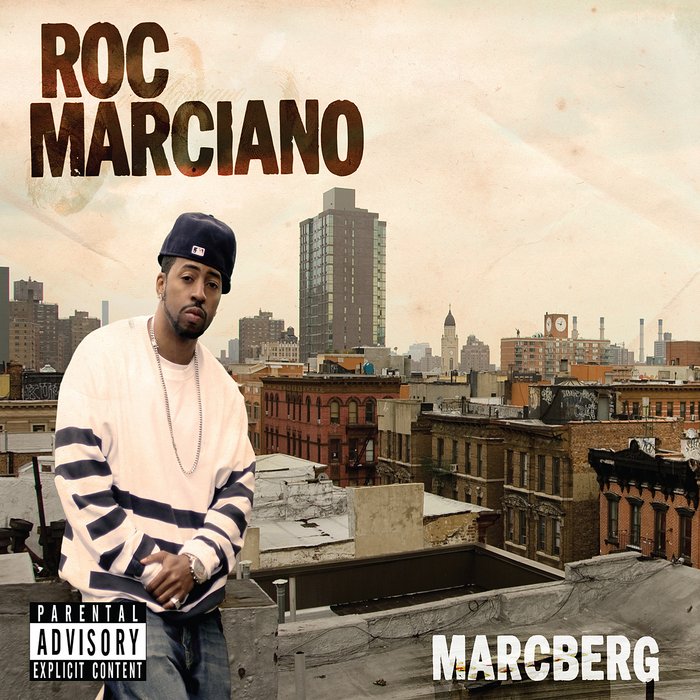
“Rex Ryan” ft. Conway, Westside Gunn and Roc Marciano

“It’s like, ‘Who would’ve thought?’ Because that was something that was made quickly. I didn’t think about it much, and didn’t think it would get to where it is today. Con just happened to pass out on the couch over here, and I’m here just trying to come up with something for the album. I heard a couple sounds, and just threw them together real quick. I cooked that beat up fast, and didn’t think much of it when I did it too. I just kind of saved it and went on to something else. 

“A couple hours later, Con was trying to work again. So I pulled up the beat, and he knew right there that was it. And I’m over here scratching my head like, ‘Really? You Sure?! This is probably the fastest beat I ever made, or one of them.’ But he wanted something stripped down, so I was already looking for something for him. Plus we wanted to get Roc on a track, so that was the motto—something stripped-down and simple but still raw. 

“Conway laid his verse to it, and we shipped it off with the hopes of getting Roc and West on it. Roc wound up fucking with it, and we got the audio back like, ‘Yeah. We got us one here.’ 

“We’re really excited about the response it’s gotten. We put the video out, which has the most views on it. It’s one of our more popular songs, for sure.

“I had my thoughts about it. I thought I could’ve done more to it. I could’ve added the big drums, but the boys wanted to keep it simple. It worked out. It sounds ill, with the snare kind of peaking in, the kick is still in there a little bit. It’s not like it’s drumless, it’s just not a boom bap track.”

Cooked In Hell’s Kitchen

“I was going through records, and that dark bassline just popped out. I was like, ‘This is kind of ill, let me see if I can find some drums.’ I’ve gotten so many questions about what I did with that beat. It’s another simple one, just the bassline and a guitar. I didn’t really do the toppings over it like I would normally do with the extra sounds on it. I just chopped those guitar sounds and threw a crazy effect on it, and people are thinking I got a live guitar player in here, hitting pedals. Or they think I got a crazy plug-in. I can hear a rock band playing that shit, it sounds like some ill metal shit almost. 

“That’s going on the G.O.A.T. That’s a good thing too about dropping it on the Soundcloud, in terms of what’s album-worthy and what’s just gonna be a loosie.” 

Flygod

“That was West in the studio, coming in from Atlanta and legit just pulling through everything I had here. A lot of those beats were already made, some were new. It was a collection of everything going on at the time, and some songs we had already started within that month we were putting it together. We worked on it for a couple months, he was cooking on the spot.

“The ‘Dunks’ joint is definitely one of my favorite songs on the album. It’s got the ill bassline. People were going ballistic over it when we performed it in Boston. They performed it with Just Blaze, and that was one of his favorites on the album too.”

Peer Love

“I’ve been getting flooded lately. The love has been overwhelming. It’s been crazy, anyone you can think of. People I don’t know, people I do know. It’s just been a huge array. It’s flattering. 

“As soon as we started getting it in with Roc and he started inquiring and actually paying attention, that was big. I always wanted to do a song with Marc, he’s one of my favorite MCs. And then, we started getting it in with Action and Meyhem and they started getting to know us and our work and kicking it with them, because those are two of the newer MCs that have been killing shit and paving the way. I still have yet to do an Action record, but he’s definitely listening and has inquired about some beats as well.

“I’m trying to keep working and get some other ill records done this year. They did the Prodigy joint, and all of a sudden he’s looking for a batch. It’s all across the board. We were just kicking it with Ras Kass and Planet Asia, they’re showing dumb love. Royce showing love and getting Conway on his mixtape. It’s dope to see these legendary artists co-signing our music. And not just the music—really fucking with it as a collective, wearing the merch, talking about the boys in interviews. For them to be showing that kind of love, we gotta be doing something right.”

What’s Next

The G.O.A.T. is next. That’s the cream of the crop. We’ve been working on it for months. There are some exciting pieces on it. That’s gonna be a special one.”

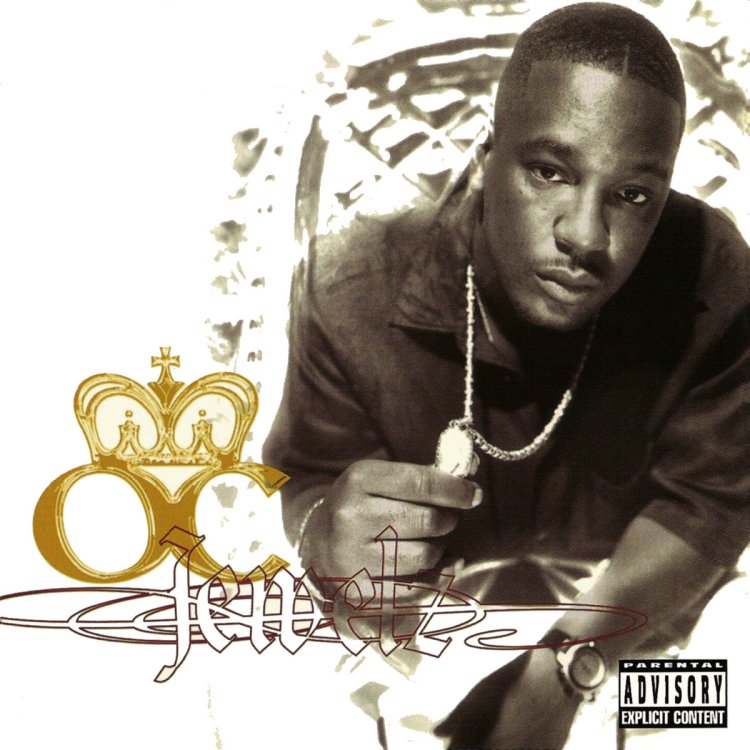
The Making of Jewelz with O.C. (2017)

Interviews, Music, Published Material, The Good Old Days

This article was originally published on NahRight.com in 2017 to celebrate the 20th anniversary of Jewelz.

Words by Daniel Isenberg

1997 was a crazy year for New York rap music. In many ways, the scene was thriving, with Jay-Z and Nas on the brink of superstardom, and groups like Wu-Tang Clan and Mobb Deep in heavy rotation. But the biggest artist of them all—Biggie Smalls—was murdered in March, two weeks before his sophomore double album was set to drop. It was a loss unfathomable to the Big Apple hip-hop community, and it forced the rest of B.I.G.’s peers to step up and rep even more to fill the massive void.

And with pride and perseverance, that’s what they did. Biggie’s Bad Boy brethren Puff and Mase turned tragedy into triumph with a series of platinum hits. Jay and Nas continued to excel, and would go on to lyrically duel for the now vacant King of New York slot. And in the midst of it all, New York continued to show its depth, with talent emerging and evolving throughout the five boroughs.

One artist in particular who had shown promise in the past was D.I.T.C. representative O.C. The Brooklyn MC was coming off his stellar debut Word…Life in 1994, which spawned underground hits like “Born 2 Live” and “Time’s Up,” and a critically-acclaimed appearance on the DJ Premier-produced single “Return of the Crooklyn Dodgers” alongside Chubb Rock and Jeru The Damaja. And in the summer of ‘97, he was set to drop his sophomore album Jewelz, and show the rap world that in the wake of Biggie’s death, there was another Godly voice from the streets of Brooklyn worth worshipping.

Jewelz, like its predecessor Illmatic, was led by a Dream Team of producers, including DJ Premier, Mr. Walt of Tha Beatminerz, OGee, and D.I.T.C. beat monsters Showbiz, Buckwild and Lord Finesse. But the star of the show was O.C. himself, the smooth and insightful lyricist with a knack for storytelling and wise wordplay. He wasn’t flashy or overly-celebrated by the masses, but to those who had their ear to the concrete, he was one of the illest in the game. And in the three years since his rookie LP, it was crystal clear with one listen to Jewelz that O.C. had matured both on and off the mic, and had something to say beyond the typical braggadocio bullshit.

Now twenty years later, O.C. is still recording rap albums. He has a joint project with Apathy out today, adding another chapter to his ever-evolving epic. And he’s still down with D.I.T.C., in case you had it fucked up. But being that Jewelz just celebrated its 20th anniversary, we caught up with the man also known as Mush to revisit his sophomore classic and break down the stories behind it, including why he scrapped an entire batch of Buckwild-produced songs, what it was like to record at the legendary D&D Studios in its heyday, and how his dope duet “Dangerous” with the late great Big L came to be. This is The Making of Jewelz with O.C.

Before Jewelz

O.C.: “After Word…Life came out, I toured for those three years. I toured a lot, and basically financed Jewelz myself before I got the second deal. 

“My crew was on my ass about starting the next project. Everybody knew the situation with me and Wild Pitch at the time—it wasn’t so great at the end. I was fortunate to be able to tour and make a lot of money. So Show, ‘Nesse, Buck was like, ‘In the transition of you coming off this album and maybe getting released from Wild Pitch and going into another situation, you’re making money, you’re doing your thing—why don’t you just start going in the lab and pre-recording music? That way, when you go into another situation, you’ll have a blueprint of what you want to do.’ And that’s what I did.

“I went into it head first. I was young, man. I was touring, doing things. Between ‘94 and ‘97, it’s a big change. It’s growth. You know, two weeks is a big change. So in three years, you’re different. 

“To be honest, Mary did the My Life album in ‘95, and me and Buck [coincidentally] recorded a lot of music similar to that album before it came out. A lot of the samples were the same. Yo, I don’t know Mary, I love Mary. It was just weird that what we started recording was a mirror of that. My album, if we had kept it, would’ve sounded a lot like that album, in a hip-hop mode. So we just trashed the album after that. My Life was an incredible album to me, but that’s not the direction I wanted to go.”

Switching Labels

“My manager, who wasn’t my manager at the time, was Mr. Dave. He came from the Gang Starr Foundation, and managed Jeru. He’s on the back cover of Daily Operation. Anyway, he was working up at Payday, and I was in the middle of starting to record music, me and Bucky.

“I bumped into Jeru at at a CMJ convention downtown. Me and Dave had a conversation, felt each other’s vibe and took it from there. I caught a meeting with him—that was a piece of cake. It was the greedy motherfuckers at Wild Pitch, Stu Fienne, trying to get his bread. I was like, ‘Damn, I just sold 100,000 records, we not eating?’ And he was like, ‘Nah.’ So that was the holdup within them three years. Other than that, the Payday deal would’ve been done ASAP.”

Biggie’s Murder

“We did a few shows together. I did a few runs with him and Craig Mack. But I didn’t have a real friendship with B.I.G. I didn’t have time to. 

“I had to do my album cover in L.A. for Jewelz right after B.I.G. got rocked. It was tension. What we seeing now with the skateboarders and tight jeans? There’s been dudes like that out there for years. 

“So I was out there doing the album cover right after Biggie’s murder. And me and my manager Mr. Dave was in the spot. For some reason, people kept stepping on our feet. Hoods is hoods, but certain demographics move different. I know my mouth get dry anytime I’m about to get into some beef, but I didn’t have direct beef with anybody. But I was getting that same sense of danger, like, ‘Caution.’ Next thing you know, my manager walked up to me and said, ‘Let’s get the fuck outta here.’ 

“Thinking back in hindsight, that might not have been a good time to go out there. I didn’t have anything to do with it, with what was going on between Pac and B.I.G. But the media made it a East Coast, West Coast thing. So a lot of artists wasn’t going out there, and a lot of their artists wasn’t coming out here. I wouldn’t have made that decision had I been a little bit older. I would have kept my ass in New York.”

In The Lab

“A lot of that shit was done in at D&D, so it was another day at the office. You see Black Moon, Smif-N-Wessun, Beatminerz, M.O.P. Nas and Jay and them was on the brink of superstardom, so you wouldn’t see them too much in there. Preem, Guru on the regular. You might see Heather B. Group Home. Jeru. KRS. It was the same, usual suspects. No real outsiders. 

“It was a different atmosphere, because I had never recorded a whole album in there before. I didn’t record anything from Word…Life in that studio. So Jewelz was more grimey. Pool playing, Hennessey, at the time I didn’t smoke too much weed. You know, bring bitches around to the studio. [Laughs.] Stuff like that. Just in a young boy’s state of mind, trying to get out what I wanted to say on this next record. 

“It was night and day from the first to the second album. Preem was the first guy to take me overseas and DJ for me. I was seeing things I had never seen before, money I had never seen before. And being in a different space and in a different studio, watching Preem and Guru work. It was weird how they worked, so I picked up a lot of things from them. M.O.P. would have two mics in the booth on their dynamic duo shit. So I was still in a learning process doing Jewelz, trying to do my thing.

“I remember being in the B Room, and Jay coming in like, ‘I need you to lay a verse on this.’ I did a record called ‘Crew Love,’ the original ‘Crew Love.’ The original record is me and Tone Hooker from Original Flavor, and Jay does the same hook. ‘It’s Crew Love, Roc-A-Fella ‘til we die…’ He walked up in my session, asked me to do the joint. I did it, then came back to my session. It was like revolving doors in that studio.”

Writing

“I was writing mostly at home, because I learned not to waste time in the studio. I wrote three, maybe four records in the studio. Everything else I would definitely write in the crib when nobody was around—peace of mind. I always felt you couldn’t really focus if you had your dudes in the studio. That might’ve worked for other people, but it didn’t work for me.”

Track-By-Track Breakdown 

Intro

“Opening an album is like opening a book. So that’s basically what the intro’s purpose is for me. It sounded good, and that was that. It was inspired by Organized Konfusion. They brought me in the game. I watched them make records, Large Professor make records. So I just took notes.

“I love Preem, and I love Beatminerz because they all came together with me on this album. They was the cohesiveness to the album, the producers. Buck, Preem, Beatminerz, OGee.  

“It was natural. It was family. The label had nothing to do with it. They couldn’t make nothing happen. Everything was at my disposal because me and these dudes was friends. Showbiz and Premier go way back. Show is Diggin’, that’s my people. And Finesse got the relationship with Preem. It was something that just came together.” 

“My World”

“I’m a Slick Rick die-hard. That first line is from ‘Runaway.’ That second Slick Rick album is slept on. If you’re a lyricist enthusiast, then you should know that you’re just now catching up to Slick Rick. But that was one of my favorite records when I heard that album. It was just dope, and that’s how the line became a part of ‘My World.’

“Preem didn’t give out beat tapes. He did his production on the spot. He came and scooped me up from my crib, and we went to the studio. He started laying a couple of joints, catching my ear a little bit. But then when he came with this record, with the bassline and the keys, and then he put the drums to it—he did the shit in like twenty minutes—and was like, ‘It sound like some Mobb Deep shit.’ And I’m like, ‘Yo, you buggin’. Get out the studio, leave me alone for like twenty, thirty minutes.’ And he was like, ‘I’m going to get me some weed anyway though, so I’ll be back.’ And when he came back, the song was written.

“He didn’t like that beat at first. He thought it sounded similar to ‘Shook Ones.’ But then when I said that first line to him—the Slick Rick shit—he was like, ‘Yeah yeah, go in the booth.’ So I went in the booth and I laid it, and he was like, ‘Yo, this shit hot right here. We good money.’ 

“That whole premise of ‘It’s my world,’ that wasn’t about me. That was about people in general. Have that confidence in yourself. Who else gonna have confidence in you, but you?”

“War Games” ft. Organized Konfusion

“First of all, going back to Preem. This dude was in high demand. His prices was crazy. So to get Preem to touch on your shit was one thing. To get Preem to get paid for one joint and then do the rest for free is some other shit. 

“Now, after ‘My World,’ he’s in the zone, like, ‘I got some ideas.’ And he’s playing me music. I’m like, ‘Who that for?’ He’s like, ‘That’s for some Gang Starr shit.’ I’m like, ‘Nah man. You shouldn’t have played that shit. I need that.’

“When I heard ‘War Games,’ I heard Pharoahe and Prince in my head already. I had the preconceived notion of how the record was gonna sound. It came together after I heard the music, right off the top. I heard their voices, and me doing the ad-libs for them on my record. And they kill the fuck out the hook. 

“‘War Games’ was like, coming off that first album, dealing with the record companies and lawyers, and then against some of my peers—you’re giving them credit and accolades and I’m like, ‘What am I, chop liver? I stand here with the best of them.’ I felt like that for a minute around that time. Like, ‘You know what? Now I gotta show my ass.’ That wasn’t my m.o., but I was prepared to go at it had the artist had something to say to me. I didn’t care who it was—Jay, Nas, B.I.G., whoever. I’m ready. Just in the spirit of competition. 

“But that’s the era we came up in. It could happen as easily as someone saying your name on a record. I was ready for that.”

“Can’t Go Wrong”

“That’s a true story. Put it like this—I don’t talk about my personal life, but that’s the same person I’m with today.

“I’m a fan first. I came up on LL. That’s another cat—he is the G.O.A.T., period. He taught me too. L made hard records, love records—he gave us that balance. It didn’t work for everybody who tried it.

“But my purpose wasn’t to give you ‘I Need Love.’ I was giving homage to the person who stuck with me since day one, just being honest. It was just part of the process of being involved with my music—you might get talked about, good or bad. But this one is definitely positive.”

“The Chosen One”

“Shout out to another one of my mentors, Jaz-O. He had a lot to do with that record. Jaz-O had an artist that sang, and we wanted to capture like a smoky, jazz feel, in the club, so I could get on my punk smooth shit. [Laughs.] That’s one of those records that’s dear to me, though I’ve never performed it. And Jaz-O was there with me, sitting in the studio when I did it.

“Lotta people fronted on me on the first album, production-wise. And a lot of people don’t know that Nas stood me up too, on the first album. He was supposed to be on a record with me. It’s all cool now, we was kids. 

“But fast-forward, I just felt a certain way. And I can admit that shit now. It could’ve been a little envy, jealousy. People don’t like to admit that because they think it’s coming off as a hater. But nah, it’s coming off as a young kid, in an industry where people build people up, and it can turn you against your peers. Albums like Illmatic and Ready To Die, they was getting a lot of burn. And I just felt like I was in that echelon, and I didn’t get that props I deserve at the time. That’s how I felt, at that time. I felt like, ‘I’m the chosen one.’”

“Dangerous” with Big L

“We was in the click together, obviously. D.I.T.C. L was in between deals too at the time. Show and ‘Nesse had got him a deal with Columbia in high school, that’s when he put out Lifestylez. And after he graduated, things didn’t go the way they should have. Or maybe he was destined to be on that label. 

“I seen this dude progress. He was in high school when he got his first deal. He was still a kid. So he graduates, his album comes out, gets a little fan fare or whatever. I seen him evolve from ‘Devil’s Son’ to being on the radio spitting with Jay with Stretch and Bobbito. I’m like, ‘Yo, dude is a problem.’ Lyricists know each other. And you can’t sit in a room with Jay, if he opens his mouth, and rock with him if you wasn’t on top of your shit. But that’s the cloth we was cut from. Everyone had a book of rhymes, everybody could execute. 

“But L, he was a problem. When he did ‘Da Enemy’ record with Joe, he said, ‘Yo, I’m gonna kill you on your own shit.’ I seen him find his pocket, I seen him evolve. But now that I think about it, it makes sense. He was young, man. 

“So anyway, I had to chase him around. ‘Yo, I got an idea.’ He’s like, ‘I’ll be there, I’ll be there, I’ll be there.’ He’s running around, doing things, starting Flamboyant. ‘Yo L, I got a check for you.’ He’s like, ‘I’ll be there in twenty minutes.’ He’s funny like that. He was coming anyway, but I’m like, ‘Nigga, I got some money for you.’ And he was there in twenty minutes. He’s like, ‘You got that in check or cash?’ He was funny, arrogant, he’d get on your nerves, push your buttons. But we laughed, he came in, and did his part. 

“He was on his grind. He was running out to Queens, chasing money. So I had to wait on him until the next day to do our back and forth parts. But the shit was magic, B. I was like, ‘You gotta come back.’ And I lied to him and said, ‘I got some more bread for you, too,’ just to make sure he’d come back. He came through on time, and stayed a little longer and did the back and forth shit. He was a quick writer. He was quick on his feet, on some Mayweather of rap shit. 

“The original breakbeat I think was called ‘Seventh Wonder.’ It’s a normal record that the DJs would play in the park jams. And I’m one of the cats that grew up on it. I loved it. I brought it to the crew, them niggas laughed me out the studio. ‘Get outta here with that shit. We D.I.T.C. We dig, we chop, we sample.’ 

“Did the same shit with Walt, and he did the whole Santa Claus laugh with me too. And I’m like, ‘Oh word?’ So I wrote him a check. Then he was like, ‘So when we going in?’ I’m like, ‘Ohhhhhh.’ But Walt is straightforward. He’d shatter your whole shit. He’s like, ‘I still don’t like the record.’ I’m like, ‘I’ll rip the check up then.’ He’s like, ‘Nah, nah, nah, nah. We gon’ make it work.’

“And, like the dude he is, he didn’t take credit for it, but Preem did the scratches on that. Preem was a pivotal point on that record. 

“That record got a lot of radio burn. ‘Dangerous’ was on primetime radio. Fat Boy was like, ‘Yo, you need to do a video. What are you doing? You’re stupid, O. You have to do it, you have to maximize.’ I’m like, ‘I’m not doing a video, Joe. I got no bread for it.’ He’s like, ‘I’ll do it.’ He was a con artist. He could talk a whale out of water. I should’ve listened to him, he was right. It would’ve maximized the album.”

“Win The G” ft. Bumpy Knuckles

“Foxxx was there for them Cold Crush, Fantastic days. Or at least he had the tapes. We’re from the same era, but there’s a couple things that I missed. And he came up with that whole concept, and it was dope.

“Foxxx is one of my most highly underrated MCs. Shout out to my man Panchi too from NYGz on the commentating. 

“Foxxx and Showbiz was peoples for years. I think one day I was recording in Uneek Studio on 49th and 8th. I was finishing the ‘The Chosen One’ record. I told Buck, ‘I’ma go downstairs and get something to eat.’ I go downstairs to McDonald’s and get on line, and who’s there but Freddie Foxxx. I’m like, ‘Oh shit.’ I didn’t say nothing though. You know, he’s like six foot and some change, had the no nonsense face on.

“But I’ll like, ‘Oh shit, that’s Show’s man.’ So I hit show like, ‘What’s the chance of getting Foxxx on a record?’ He’s like, ‘100 percent.’ He gave Foxxx my number, we talked, and the rest is history.

“I just performed that record with Preem maybe three years ago. I forget where, but it was in New York. Naughty performed, M.O.P. performed with Foxxx, Flava Flav was hosting, Eric B. was there deep with the whole Paid In Full posse. It was crazy.”

“Far From Yours”

“If you listen to that record, first of all, it’s a long record. It’s too long to be on the radio. Second of all, the chorus is too long. But it was just one of those records I grew up on. The Brothers Johnson version, the original, not the Tevin Campbell one. I grew up on R&B, Tower of Power. I’m a ‘70s baby. People don’t understand it was R&B before hip-hop. This shit ain’t ancient ruins. It’s soul music and gospel before rap. 

“But it was just a record. The label chose that to be a single, because that was the easiest one for them to work, and have an excuse to say, ‘We worked your record. We moving on now.’ They spent all this money on the video, and that shit ain’t even fly at radio like that. Because it wasn’t meant for that. 

“Yeah, it charted. And I was happy about that. But people had this misconception that I was targeting the radio. But I was like, ‘It’s too long. I got scratches in it, and a Rakim sample.’ The format of what was going on at radio at the time, that wasn’t the right record. It just happened to cut through and chart a little bit. But it wasn’t getting no add. It wasn’t gonna compete with Busta’s ‘Dangerous.’ It wasn’t happening.”

“Strongjay”

“That’s a straight reference from Boomerang. People be like, ‘What’s Stronjay?’ I’m like, Boomerang, man!’ They like, ‘Booma-who?’ People crazy, man. They don’t connect it. 

“I was watching Boomerang one night, bugging out, seeing Grace Jones throw her panties in dude’s face, and I just came up with the idea. I wanted to use that whole premise in the movie, but they didn’t want to get sued behind that. The funny shit though is the guy who ran Payday Records—Patrick Moxey—actually managed Grace Jones. So we could’ve figured something out to get her in the studio. But they was too cheap to do that shit.

“It’s a mix of fantasy with a little truth in it. Basically, I’m talking about cheating. [Laughs.] I was in a relationship back then, so I couldn’t air no chicks out like that, but I was a young and I was slingin’ it.

“The original record has a different beat. The original beat was produced by OGee. But the funny thing is MC Eiht used it for Menace II Society. And I didn’t want to disrespect MC Eiht, I thought his joint was better. So Beatminerz and O got together and remixed it. But if you listen to the cadence and the pocket on the original version, as opposed to the Beatminerz version, you’ll see the pockets are different and it fits to the original bassline.

I wouldn’t have been mad if the original came out. I like the pocket better on the original, but I like both of them, though. Sonically, the Beatminerz one fits the album.

“M.U.G.” ft. Freddie Foxxx

Money Under Ground. Once again, Freddie Foxxx came up with the concept. And he just told me to go in. Like, ‘Once you hear that [makes intro noise], come in right after that.’ And that’s how I started it, ‘Penicillin on wax…’ 

Funny thing about him is, even though I didn’t know Foxxx that long, it felt like me and him been in the basement doing routines forever. We have very few joints together, but the ones we do, the shit is a marriage. I can’t even explain how me and his chemistry is. It’s a weird connection, like, automatic. 

And people don’t know, this dude is a genius. He plays piano, horns. He’s a jack of all trades. He taught me a lot when it came to writing music—how to pocket the beat more, and cut down on words. Make it fit where it needs to fit, and don’t force it. He taught me a lot in that particular session. That was the first joint we did. We did ‘Win The G’ afterwards.

“The Crow”

“That’s a true story though, man. I was living in Crown Heights at the time. And you rarely see crows in Brooklyn, or New York for that case. They’re out here, but you don’t just see it on the norm. And that night, that shit just landed on my windowsill, with the shades up. And I’m looking dead at the shit, and I’m looking at the eye, and I’m thinking about The Exorcist, The Omen and all this shit. And I’m like, ‘Yoooo.’ The shit just bugged me out.

“I had an idea for it, and I stepped to Show about it. Show and Finesse and L had gone to Japan a few years before that, and he had this rare Japanese record. And he put that shit together, and it just fit. That shit fit perfect. I wrote the story in the studio after I told Show the idea. We recorded that shit in like an hour.  

“I’m talking some Busta Rhymes When Disaster Strikes post-apocalyptic shit. Actually, I was ahead of my time with it, when I thought about it years later. Like, ‘Who’s writing shit like this?’ It also goes back to me saying, ‘Damn, how people don’t have me in this upper echelon of MCs with these other cats?’ It’s one of those stories that you don’t hear too many artists creating. I think it put me in a class by myself. 

“Being around Monch and Prince, the music they used to write to used to be chaotic. I seen them do ‘Prisoners Of War,’ ‘Hypnotical Gases’ and shit like that. That shit definitely rubbed off on me.”

“You And Yours”

“‘Boppin’ with Jigga, droppin’ jewels to beats.’ I used to ride around with Jay and Bee High his cousin, and go to shows with them, Roc-A-Fella. He used to always ask me to get on stage with him, and I’d be like, ‘Nah, I’m good.’ I would just stand back and watch, and learn. This is after Word…Life too.

“I remember sitting with him in the Lexus, the bubble he always talk about, listening to Life After Death before it came out, when it was done. And listening to beats and shit like that. Me and Jay never had a rhyme session, we was cool. But I was more tight with Bee High. He would drive us around, or Jay would drive, and we would just listen to music. It was a friendship.

“That was one of those last submissions to the album, before it was closing out. It just felt good to me. I think around that time, me and OGee got the green light to do the Soul In The Hole soundtrack, and we recorded that probably in the same session. It was a last minute thing, because the album was basically done before I did that record. I put my man U Nasty on it to do the chorus, and that was it.”

“Hypocrite”

“I was talking about myself on that record. Funny story, I remember doing a show one time, touring for Word…Life. I was somewhere, maybe in Rhode Island. And this cat, a supporter, approached me and was like, ‘I’m a big fan.’ I was like, ‘Appreciate it.’ 

“Then he was like, ‘But yo, why do wear jewelry and all this other shit?’ The dudes around me were ready to pound him out. But he didn’t say it in a disrespectful way, but all the positive shit I was talking on Word…Life, to see me with tons of jewelry on, he didn’t understand that. I didn’t know him, but I thought, ‘Shit, I had a 190E before I had a record deal.’ 

“One thing we never did—and I say we as a collective, D.I.T.C.—you never knew what dudes did in the street or did behind the scenes. We always talked about positive shit. Runaway Slave, Word…Life, things of that nature. And this guy just didn’t understand why I had jewelry. And that shit just bothered me. It bothered me for a long time. That’s when I knew that music can affect people. 

“If he’s like, ‘Why do you wear jewelry, but when I listen to your music this is not the shit that you talk about?’ Well, Rakim didn’t talk about all this shit on his first album, but you see the Paid In Full album cover, they had jewelry, on the back with Dapper Dan suits looking like hustlers. Did you say this shit to Rakim when you seen him? In a nutshell, that’s what made me write ‘Hypocrite.’

“Once you release music to the world, it’s not yours anymore. It’s everybody’s. So you have to be careful how you move, how you put your influence out there, whether you say it’s influential or not. Because people will check you on it. And when that happened, I just felt like a hypocrite. You are what you eat, you practice what you preach. That would’ve been like me seeing Chuck D with diamonds on talking that Public Enemy shit. I get it.

“That’s definitely one of my favorites. You know, those album cuts, those are the joints in essence that shape the album. Those joints you know you’re not gonna perform but they’re something you’re gonna place on an album—those are the joints people fall in love with.” 

“It’s Only Right”

“That’s another record they used to spin in the park. It did sound like something Rakim would write some incredible shit to, with that bassline, that’s why I started it out with that line. It just took me back to the park. I was always around music. I seen the Infinity Machine, I seen Albino Twins. I seen things unfold that right now is considered legendary, a mystique. They think rapped popped up with Biggie, Nas and Jay, but nah. There’s a long history with this shit. And I was a part of it, from early on.

“The original record made me feel good, of growing up, listening to Moms and them play music, sippin’ on Miller nips, joints being passed around. They wouldn’t have us in the room while we was partying, but we was kids. We’d find excuses to pass through the living room to go to the kitchen, get slapped in the head like, ‘Go back to you room. This grown folk.’ Shit like that. But I would hear the music through the door. And years later, I would be in the park and hear the shit on a bigger scale, on Cerwin-Vega speakers. That shit would sound incredible. It’s nostalgic for me.

“So when I asked Mr. Walt to do it for me, it was a no-brainer. Like, ‘What, you want to flip this?’ I was like, ‘No doubt.’” 

“Jewelz”

“I went up to Finesse’s crib, because he didn’t get on the album yet. He played me “The Message,” which ended up on Dr. Dre’s album. I begged ‘Nesse to give me that ‘Message’ record, but he ended up giving it to Dre. He could’ve had my whole budget for that. He was actually holding onto it for himself, but business-wise it made sense when Dre came. Who wouldn’t get on a Dr. Dre album. But that was something in my mind that should’ve been on Jewelz. That might’ve been the title track. 

“After an hour or two of trying to twist his arm, it wasn’t gonna happen. He plays “Jewelz,” which was actually an interlude he was working on. I paused for a second, and it took me back on a rewind of my life. And I was just like, ‘Yo, you need to extend that record right there.’ Mind you, he didn’t like it. Well, not that he didn’t like it, but he felt he could’ve gave me something else. 

“We kicked it, we talked, think we had a sip. He gave me copy of the joint, I took it home. And I think in the next few days, I went into D&D and I played it for Preem, and Preem was buggin’ off that shit. So Preem called ‘Nesse and was like, ‘Yo, you don’t like this?! You buggin’. You got drums for it?’ ‘Nesse was like, ‘Nah, I ain’t got drums for it yet.’ So ‘Nesse hooks up drums for it. Then Preem’s like, ‘Give it to me. I’ll lace it up and I’ll mix it. 

“And that’s what he did. ‘Nesse added the drums and the elements to it, and Preem mixed the record. And Preem added the interlude to it. Preem loved that record—‘Nesse wasn’t so hot about it at first. 

“I didn’t have no title for the album until that record was done. But just the shit I was talking about, I was like, ‘I’ma drop a gem.’ But I couldn’t use that, because Mobb Deep had ‘Drop a Gem On ‘Em.’ So I was like, ‘I’m a drop a jewel on ‘em, and just give people a perspective on my life.’ 

“I always tell people, everybody’s lives are parallel. We might go through different things at different times, but we all basically go through the same shit, whether it be emotional, physical, mental, monetary, life, death—we all experience the same things. None of us are immune to anything. We’re prone to experience any of those things. 

“At the end of the day, when you’re telling a story, most people are gonna relate to that shit, because everyone experiences, in some form or fashion, the same things in life.

“People want to feel connected to you. I try to be as honest as possible and talk about things that other people might be going through too. I wasn’t sure how, but I knew people was gonna relate to it.

“It was like, ‘How can I sum up the album?’ I introed the album like the epilogue of a book, and how I’ma go close it now. And I felt like Jewelz was the perfect ending to a story.”

Initial Response

“I remember at first, people weren’t feeling me. When the video dropped, they’re seeing the jewelry, me on an island, it’s sunny. It’s sort of like how B.I.G. said in that interview with Joe Clair—you can’t talk about the same shit. He couldn’t talk about Ready To Die anymore. You evolve. Now it’s Life After Death

“And it was the same thing with Word…Life going into Jewelz. In those three years, I got jewels. I traveled, I seen places where people were poor, and they still came up with bread to pay for shows. I seen different ways of living as opposed to living in the States. I seen different kinds of women. Those are things I wouldn’t have seen staying at home. It was a change.

“But some people don’t want change. They want you to keep regurgitating the same shit over and over. And it’s like, ‘Yo, that’s impossible.’ Even if I tried to do another Word…Life, I couldn’t capture lightning in a bottle like that anymore. And I’m definitely far removed from that jazz-driven sound. I wanted to get into another space. And people weren’t receptive at first. 

“It took a second, man. And it kind of made me sad a little bit, to be honest. Like, ‘Damn man, people’ll love you one day then hate you the next. And they’ll move on.’ And I just felt like, ‘Damn, what did I do wrong?’ It had me doubting myself for a second.

“Then things started to pick up. The reviews came out late, and people just started, for some reason, paying attention. It took me going overseas and promoting the record with L to see. And that shit was a trickle effect back to the States. A lot of reviews were coming from overseas. To this day, we have a stronghold in terms of support over there. So they was elated. And it trickled back and changed the dynamics of the record afterwards. 

“I was excited about the album, but I’m always afraid—in a good way—about putting out music. I always say, ‘If I don’t get afraid before I go on stage or put out a project, if I don’t get that feeling, then it’s time for me to stop.’ And we human, man. People get so desensitized and think that we’re superhuman in professions of this kind. 

“It was a slow burn, but people finally came around. I was definitely happy with the project when it was complete, but once you put it out to the public, it’s up for scrutiny, whatever. And now you gotta let the people decide if what you’re doing is dope, or right, or whatever the case may be.” 

Ranking Jewelz

“I don’t rank my albums. These albums are chapters in my life. It’s evolution, it’s growth. You’re writing out the footnotes of pieces of your life for people to listen to. 

“I never ranked none of my records. Honestly, besides me performing a few of the songs off those records, I don’t listen to those albums. They’re chapters in my life. I don’t look back. 

“One thing I’ve always done is correlate each album to my life as a chapter. Each title to each album resonates with my life at the time. And I learned that from Rakim, looking at their albums and studying what they done, and what Public Enemy has done. I try to correlate each album title with what’s going on in my life. 

“So I never rank them. I look at them as pieces of my life, which they are. Hate ‘em or love ‘em, this is my life. Get with it, or you don’t. That’s it.”

Listen to O.C. Jewelz HERE.

The Green Room with Lil Dicky (2015)

Advertising, Comedy, Interviews, Music, Published Material, Videos

lildicky-professional-rapper-tour-5-1024x682-1

This article was originally published on NahRight.com in 2015, just prior to the second leg of Lil Dicky’s Professional Rapper tour, and also as he was first starting to write his hit FX comedy series Dave.

Written by Daniel Isenberg

Lil Dicky ain’t your stereotypical Jewish rapper. Okay yes, he has a silly name. And yes, he’s a lanky guy from the suburbs with a beard. And yes, he makes funny songs. He checks all those boxes. But there’s one very important thing that separates him from the pack—he’s not wack. Watch his video for “Lemme Freak” once and you’ll instantly understand. Dude is legitimately nasty with the bars, an insane storyteller, a natural comedian, and a born performer. Stop fronting and give LD his props.

With the spring leg of his Professional Rapper tour starting this week, we got on the horn with Lil Dicky for our latest edition of The Green Room to get a detailed look at what life is like on the road for the blossoming rap star. Turns out things aren’t as glamorous as you might expect, though it sounds like that might change this go-around. Read below to find out all about Lil Dicky’s live show steez, in front of and behind the curtain.

First Live Performance

Lil Dicky: “In my case, it’s bizarre, because I wasn’t a rapper to the world until two years ago. I never really did anything until my first mixtape. So I put it out as a guy in his room making these songs on his computer by himself, and it blew up. And I was faced with the situation that I had to start doing concerts.

“Literally, my first concert was in my hometown of Philadelphia. I sold out the TLA which is like 1,000 people, and I honestly had never even rapped in front of more than like three friends. Ever. I would actually label that day as one of the worst days of my life. Obviously, it’s not a tragic day—it’s a good worst day to have. But in terms of my overall stress level leading up to the show, that day was pretty unbearable.

“After that first show, it felt like I was born to do it. It came very naturally to me. However, my biggest memory is for my first song, I walked out there, and I had so much energy that I went way too hard in the first minute and a half. And I got extremely tired. From that point on, the whole concert was an uphill battle to survive. I was rapping my verses like, ‘Just make it to the hook. Just survive this verse.’ And I did that for twelve straight songs. The stage was huge, and I didn’t know how to pace myself.

“But it was great. It was my hometown. Some 76ers came. Like, this is my first public foray into rap. I knew people were paying attention in my mind, but that fact that Nerlens Noel decided to come to my rap concert just felt like an alternate universe.”

Rehearsing

“In between songs is really stand-up comedy-based. There are planned jokes. So what we mainly rehearse is the transitions. The songs just don’t end and then another one starts. Everything is driven by language. The rehearsal is less about me rehearsing my raps. Although, I want to do some more choreographed dancing. I haven’t done that yet. But it’s basically just making sure we’re all on the same page from a cue perspective.

“We put in like two rehearsal days before the tour. And then, you’re doing it every night which is like a rehearsal too, and then soundcheck every day too, so it just gets better and tighter as it goes on.”

Packing

“I’ve been working on my album, and that’s kind of been my sole focus, so I don’t even know what what my go-to on-stage outfit or what my look is for this tour. Since the tour starts tomorrow and I don’t know it, I’m gonna have to go with what I own.

“I’m less into basketball jerseys than I was before. And I can’t be in any sort of jeans or skinny pant up there. It needs to have air. Like, sweatpants or sweat-shorts are ideal, and those take up a lot of space. So I pack a few pairs of sweats, a bunch of hoodies because the hoodie is a great look on and off the court as a rapper. I pack a few choice button-downs that I would never wear on stage but that I would go to a bar afterwards in. And usually one or two pairs of shoes—I’m not a big sneakerhead.

“My big thing is that I have all of my bathing products sorted out. I bring a loofa, towels. I’m pretty anal about showering so I bring all my facewash. I make sure I have all that stuff at all times. I shower twice a day, and honestly, a lot of stuff that happens on tour is predicated around my showering.”

POFUJ5T7FNDZXJ5QAW3HHR5CH4

Travel Activities

“Last tour, we got an RV and went four weeks straight without going home. This tour, I have shows Thursday, Friday, and Saturday night, then I fly back to L.A. and I’m here Monday, Tuesday, Wednesday. We’re doing that so I can finish my album.

“I like to rent movies on my iTunes, but then my battery dies. But honestly, there aren’t a lot of movies that I need to see that I haven’t seen. I’m at that place where it’s great when I find out there’s a great movie out that I haven’t seen.

“Usually I’m listening to rap music. At this point in my life, I only listen to rap. The new Drake, the new Big Sean, those are like what I flip and flop back and forth on currently. And Forest Hills Drive, the new J. Cole. I’m in need of a new one. I’m over those to some extent. I’m looking forward to Kendrick’s album, that’s coming out at the right time for me.

“In the RV, there was like a full bedroom, so I was able to have a bed. There’s a lot of weed being smoked. I actually try not to do it during the day, because it will just make me burned out and tired if I have a concert. But everyone else is smoking weed.

“I’m actually working on a TV show right now, which is based off of my life. It’s like Curb Your Enthusiasm, but instead of being in Larry David’s world, it’s in my world, and I’m a 26-year-old rapper. So I take heavy notes on what’s happening at all times on tour, and then try to put them together. I don’t really write the show on the road. I get all my notes done and organize my thoughts and think about things.

“I don’t think I could be in a moving vehicle and write rap music. I can barely even be in a studio. I need to be at my desk and locked in. I pretty much spent every day writing raps for the past year-and-a-half, and I started doing this whole thing to be a comedian, to be honest. I didn’t know I was going to become as good of a rapper as I became. So when I’m actually on tour, it’s my only time that I can’t focus on writing raps. So I take advantage of that time to focus on writing TV.

“That’s where my head’s at on tour, because when I’m on tour, that’s probably the most entertaining backdrop of my life. So I can imagine a lot of Episode 5 coming from that. Like, I have grown men coming up to me like, ‘Yo, can you sign my dick?’ Stuff like that is happening.

“I just say, ‘No. I appreciate your enthusiasm, but I can’t be the guy signing everybody’s dicks. I can’t be that rapper yet.’”

Backstage

“I have friends who whenever I do a show are like, ‘Hey, can I come backstage?’ And I always warn them and say, ‘Sure, but it’s probably way more underwhelming than you’d expect.’ I haven’t been backstage at another rapper’s show, but I imagine it’s far more entertaining. Mine is really just four guys kind of sitting quietly. Half the time people are napping. I don’t really nap, I just kind of sit there.

“I used to never do anything in terms of drinking or smoking before went on stage. I used to just go on sober. Only recently have I started smoking weed before shows. I don’t do it every time, and I can’t go overboard. There’s been times where I’ve gone on stage high and it was too much stimulation to handle. I remember being on the first song, like, ‘Dude, please don’t collapse.’

“There’s usually dinner. A few menus being thrown at us, and then a conversation as to which type of food we should have that night. That’s what goes on, those type of discussions. It’s not like, ‘Oh man, Meek Mill just came through.’

“I’m open to change, though. I’m not absolutely sold on the current construct. And I think because it was it was my first tour last time, I took it seriously as a job. I was as responsible as responsible can be. But I think I’ll get more laidback in terms of letting myself have fun. My New Year’s resolution is genuinely to have more fun. There’s a lot more fun to be had. I don’t have any stories from my first tour to tell my grandkids that would blow them away. Even if it’s for my TV show, I just need to get out of my comfort zone a little more and see what happens.”

On Stage

“I’m still educating people. There’s still a PowerPoint presentation in the show, which I always think is really funny. There’s hundreds of drunk people who came to hear rap music, and all of a sudden I take them through a 12-minute slideshow. I show them a deck. I say, ‘Before I get into this, I just want to make sure everyone is on the same page. I don’t know if you know this about me, but I have a little bit of a business background.’ And I get everyone’s minds in the same place for the show.

“I’m not sure if I’m gonna stick with it, but I have added the ‘Star Spangled Banner’ to my set list. An acapella where I get real Whitney Houston. I make everyone take their hats off. [Laughs.] I tend to go into the crowd and rap. I go down there, I gotta get with the people. So new things keep presenting themselves, then I keep assessing.

“I don’t know if I’m there yet, but the more money I get—I don’t really care about money—the more I’m going to invest in my show. In three years it will be a Kanye times Book of Mormon experience, hopefully. Imagine me on top of a huge mountain called ‘The Rap Game,’ and there’s chocolate milk pouring down the mountain out of what appears to be my butt, with strippers drinking the milk. It can go a bunch of different directions.”

Dry-Humping Girls During “Lemme Freak”

My favorite person I’ve ever seen live was Usher. And this is a trick I saw Usher do back in the day, when these R&B guys bring girls on stage and do a lot of dry humping. So I always wanted to have an excuse to do that. ‘Lemme Freak’ was the first time I ever wrote a song where I’m asking girls to have sex with them. I’ve never done the song live without doing that.

It’s never really gone bad, but there was one time that the crowd was so male dominant and the girls there weren’t really volunteering, and it took too long to get a girl on stage. It was weird, like I was forcing the issue. But it was funny how it took like 25 seconds to make that happen. Normally, girls scream and they want to do it.

In theory, I don’t ask her permission to do this before, so it’s a longshot, but you could see someone—if they really hated me—suing for sexual harassment. So I make it a point to whisper in their ear as it’s happening, ‘Are you okay?’ That’s my favorite part of the show, when I ask the girl if she’s okay. She’s like, ‘Yeah, this is cool.’ And I’m like, ‘Cool.’ [Laughs.]

11-20-lildicky-02

Fan Interaction

“After a show, I’ll go by where I sell merch, and I’ll literally meet anyone who wants to meet me. So if the entire audience wanted to meet me, they would meet me. It takes like an hour and a half. People line up and it’s really fun.

“This is all so new, and I do so much of it by myself. Even now with my level of fame, I don’t really go out much or take advantage of it. My lifestyle isn’t any different than before I started. But when I’m here with all these people that are fans of my music, it’s like they see me as if I saw Denzel Washington, which is interesting to me. It’s so fun for me to meet people. I sign autographs, take pictures, and that whole thing.

“I want people to meet me and like me. A lot of me is reflected in the music, but I’m definitely Dave. 99% of the time, I’m not Lil Dicky. I want people to like Dave.”

Dream Female Tour Encounter

“After the show, I’m signing my autographs or whatever. Obviously, a beautiful girl walks up. And she’s not like the rest of them. [Laughs.] For whatever reason, I’m seeing a brunette. She says something like, ‘I had never heard about you until tonight when my friend…’ Basically, she’s not a huge Lil Dicky fan. She got brought there by a friend, and she just found out about it. So she’ll say, ‘I just found about about you. My friend brought me here. But I just want you to know I’m a believer, and I want you to know that I really appreciate what you’re doing and I think it’s awesome.’

“Then I’ll say, ‘Oh, thank you. What’s your name?’ And she’ll say like, ‘Kirsten,’ or something. I don’t know. And I’ll say, ‘Kirsten, do you live out here? Well, you’ve gotta tell me where I should be going next.’ And I’ll be able to know from that interaction if she’s interested in hanging out. Ideally, there’s a shower at the venue, and I say, ‘Kirsten, I think we should hang out after the show. Let me just shower real quick. Are you down to hang out for like fifteen minutes?’

“Then we end up going to some bar where me and Kirsten are really in our own world. It’s not that loud, and we’re just simply talking. She’s probably like 25, and she’s really confident. And I think it’s a situation where it’s the end of the night and everyone’s leaving, and I’m like, ‘Listen, I can’t leave now.’ I’m just kind of locked in.

“Ideally, we’d have sex. But that’s not what this is about. I think we could end up just talking. To me, when I watch movies and stuff, there are times when you meet a girl and you’re just blown away. I feel like that happens all the time in movies, but it never happens in real life. I’m waiting for that to happen. So I think this is an example of where it’s like, ‘Holy shit. This girl seems like she’s legitimately perfect for me.’

“I’d probably end up spending the night with her, and then try to get her to come with. She never will, because she’s got her own job and her own life. She’s got such an impressive life that she would never entertain the idea of doing that. But we’d stay in touch, and keep texting, and maybe it even turns into like Skyping every now and again. Then I’d see her when I’m back in town, and the connection is just as real. Maybe she moves to L.A., I don’t know.

“It’s not a drunk night where I’m grinding with a girl having the best sex I’ve ever had. It’s like a sober night, where it’s heavily conversation-based. And the first kiss is just as exciting as sex.”

Eating on the Road

“I’m pretty into fast food. I’ve got a bunch of fast food favorites. I’d say the Taco Bell/KFC combo is my favorite thing, because under one roof you’ve got great options. Chipotle is a great thing for me. I love Wendy’s—the Spicy Chicken sandwich has been a big factor in my life. Then, there are occasions where I’ll insist on going to Morton’s Steakhouse one night. It’s fast food, then every now and then there’s an unnecessarily nice dinner.”

img_4223

Favorite Tour Stops

“My favorite show I’ve ever done was Madison, Wisconsin. All my shows before Madison seemed to be in major cities. Those are cool, but they’re not like a college town. The first time I went to Madison was the first time I was faced with a college crowd. And they just want it more. College kids go out every night with the sole purpose of having the best night of their lives. It’s really great. Everyone just buys in. So I’m really looking forward to going back to Madison.

“It’s my birthday on Saturday, and I’ll be in Utah. I’ve never been to Utah, so I’ll be spending my birthday in Salt Lake City. Maybe that will be cool. Actually, I’m looking forward to going to Indiana. I feel like that will be a very similar vibe to Madison. Chicago I’m looking forward to. I had never been to Chicago before, and after being there once, I think it’s a top 3 city in America. Minneapolis sold out like a month ago, so I think I have a really strong fan base in Minneapolis. Plus I’ve never been there. Going to places I’ve never been is great. It’s like, everyone’s seeing a PowerPoint presentation at a rap show for the first time, and I love that.”

Upcoming Tour Goals

“My goal is to have fun. The more I have fun, the more fun the shows will be. Beyond that, it’s just growing the fan base and connecting with the people I’ve never met. I think once people meet me, it will be even easier to be a lifelong fan. Then once the album comes out, I have different goals. But this tour is pre-album, so it’s getting people to keep spreading the word.”

The Professional Rapper Album

“I’m making it thinking that I’m going to get a lot of first time listeners. I know my fans are going to be into it, but I’m thinking about it from the perspective of people who haven’t heard anything. I think it’s great. I think it’s one song away from being truly tremendous. I think it’s still tremendous even if I don’t get that last song. But I’m always fighting for that last song, that cherry on top.

“I’m not gonna give anything away, but there are definitely some really cool features. And it shows off my diversity. My style is in the way I say things and my lyrics, but I don’t have a go-to sound. I don’t want to be limited to one sound. Also, before my music sounded like a comedian who could rap. But now, half my songs aren’t even funny. It sounds more like a rapper who’s funny half the time.”

*Bonus*

After our NahRight interview, I became friendly with Lil Dicky’s manager Mike Hertz. And we ended up working together to bring LD to Trojan Condoms—a brand/client I was writing for during my early advertising days—for what would become a long-term relationship.

Here’s the first video we made with Lil Dicky and Trojan Condoms, titled “The Big Talk with Lil Dicky.” I love this so much, and I’m still so grateful I had the chance to work with LD and his team—they really are some of the most creative and talented people on the planet. 

Special thanks to Mike Hertz for all of the above! And big congrats to LD for all the success! You deserve every bit of it!

Slick Talkin’

Interviews, Published Material

81WXrfaVN2L._SL1400_

This article was originally published by Urban Legends in celebration of the 30th anniversary of Slick Rick’s The Great Adventures of Slick Rick.

Words by Daniel Isenberg

The Notorious B.I.G.’s “I Got a Story To Tell.” Nas’ “Blaze a 50.” Kendrick Lamar’s “The Art of Peer Pressure.” These captivating songs all use storytelling as a device to make their raps come to life inside our minds. And though these three MCs and many others have been praised for their storytelling abilities, there is only one who has been undisputedly crowned by rap fans, critics and his peers as the greatest hip-hop storyteller of all-time—and he goes by the name of Slick Rick. And if there’s one body of work that defines this greatness, it’s his debut album The Great Adventures of Slick Rick, which celebrates its 30th anniversary this month.

The Great Adventures of Slick Rick, originally released by Def Jam Records on November 1st, 1988, is a timeless collection of hip-hop hits, anchored by story-driven street raps like “Children’s Story,” “Mona Lisa,” and “Teenage Love.” Hip-hop records will often sound stale when aged three decades, but not in the case of this era-defining opus. Sure, there are moments on the album when the production is defined by ‘80s trends, but Rick’s futuristic rhyme schemes, melodic cadences, crisp delivery, and one-of-a-kind, English-infused accent make the songs still sound as fresh as the day the album dropped. 

Ricky Walters a.k.a. Slick Rick was born into a Jamaican household in South London in 1965. As an infant, he was blinded in his right eye after an incident involving broken glass, hence the distinguishing eyepatch he’s rocked throughout his career. But Rick was shy as a kid because of the injury and spent most of his time inside, where he developed a love for writing stories. And this passion for storytelling would prove to be invaluable when his family moved across the pond during his adolescent years, settling down in the burgeoning home of hip-hop—The Bronx.  

Rick’s coming-of-age in the Baychester section of the BX aligned perfectly with the popularization of rap music, and though he held tight to his British accent, his assimilation into hip-hop culture came naturally. At the Fiorello H. LaGuardia High School of Music & Art and Performing Arts, he formed his own rap circle, The Kangol Crew with fellow MC and classmate Dana Dane. But it was his run-in with Doug E. Fresh at a talent show in 1984 that led to an official release on wax with The Get Fresh Crew, giving the world its first taste of his uncanny storytelling skills. 

On the B-side to Doug E. Fresh’s 1985 single “The Show” was the beatbox banger “La Di Da Di,” a highly-quotable party cut that details a wild encounter—described play-by-play—with an older woman. It was Rick’s breakthrough moment—and one that compelled Def Jam executive Lyor Cohen to sign Rick to a solo record deal in 1986. Lyor spoke to us about his first time seeing Slick Rick perform, and why he was determined to add him to the Def Jam roster. 

“Slick Rick was one of the most unique storytellers I’d ever heard,” Cohen says. “To me, he represented something in such a high quality—unreplicable. He’s a remarkable person, but he is a different type of person. He’s in his own imagination, in his own head. They performed ‘La Di Da Di’ and ‘The Show’ all over the place. That was back when him and Doug E. could do five shows a night in the tri-state area. I saw him, and I wanted to sign him desperately. He was gonna be my first signing, and it was really critical and important to me. All I wanted to do is sign him and protect him as best I could. I knew that by signing him, he would make Def Jam greater. And that’s the only thing that mattered to me—making Def Jam greater. In terms of the storytelling and conceptual architecture, I left that to him.”

From there, Rick worked with the powers that be to piece his debut album together, pairing songs he masterfully-crafted himself with tracks produced by The Bomb Squad and the late Jam Master Jay. Two years later, The Great Adventures of Slick Rick was finally released, at a time when Def Jam was thriving with acts like LL Cool J, Public Enemy and the Beastie Boys. But quite easily, Slick Rick stood out from the pack—and not just because of his accent or the patch over his eye. It was his abilities both as a storyteller on the mic and a beat-maker behind the boards that led to the birth of hip-hop’s newest superstar, and the creation of one of the most revered rap LPs in hip-hop history.

And now, ladies and gentlemen—and Lo-Lifes—the story behind the making of The Great Adventures of Slick Rick, as told to us by the G.O.A.T. storyteller himself. Heeeere we go.

tumblr_l7h7kj7Tvn1qzbwkjo1_640

“I was always into telling stories, and humor.”

Slick Rick: “I was just being myself. Everyone else was into battle raps, and—no disrespect or nothin’—there was a one-dimensional thing going on. I wasn’t really into the battle thing as much as telling stories and humor, with my leftover English accent. It stood out because of the accent and the stories, and it gave rap variety instead of just being one big battle for supremacy.

“I wrote them like an essay form, where you have your introduction to what it’s about, your body of the story, and your ending—with a moral message or something. In high school English class, that’s how you’d lay out the format. I’d start with four cute, hot lines. Then I’d just keep going and going until I’d have a whole record length. An intro, a body, and an outro.

“I was always into telling stories, and humor. It’s like watching the Eddie Murphy movie Raw, when he shows you in the very beginning how he used to do stand-up in front of his relatives? It was very similar to that—telling stories in front of your friends, and seeing what makes them laugh. So when I played with my friends in my age group, that’s how we would play. I would tell them stories, give a little humor and shit. Then when rap came about, I just transferred it into rap form. It just rhymes now.”

“Your imagination is just running wild.”

“‘Treat Her Like a Prostitute,’ and all that type of stuff—that’s really just young, adolescent, girl crazy shit. Getting your heart broken, you’re new at romance, your hormones are raging. Think back to when you’re like between 18 and 23, this is the mentality of most youth. So you tell stories that match your age and your environment. 

“It wouldn’t be like a Joan Collins book—it wouldn’t be that sophisticated, because she’s a mature, older woman. It would be more of how kids talk and what’s happening with them at your age. If you were a young adult in the ‘80s, this is how you interact with each other. This is how you talk. Like, ‘Imagine if I met a cute Indian girl, and I was running around with that raccoon hat Davy Crockett was wearing, and I had to meet her parents.’ Your imagination is just running wild.

“And you get it from old TV shows. Like the melody, ‘Davy, Davy Crockett, king of the wild frontier.’ Shit like that. It’s like when Will Smith made ‘I Dream of Jeannie’ over—it was something his age group was familiar with. It’s pretty much the same thing—they all grew up on it. You draw from your environment, and have fun like the kids your age.”

“I tried to take what I was banging on the desk, and transfer it to the drum machine.”

“We used to just bang on the desks, and repeat songs that were popular in the early ages of hip-hop—duplicate the break beats.

“Then, the first time I went to Teddy Riley’s house, I saw he had a drum machine and an organ and stuff, that he used to make songs. I found out what the name of the drum machine was, and the organ that he had, and I got it myself. Once I tried to take what I was banging on the desk, and transfer it to the drum machine, it worked instantly.

“I couldn’t really play instruments, I just knew they had the sounds on it. And if you take, one, two, three steps, you can basically come up with a bassline. Once I got the organ, I knew how to get the upright bass and the sax and the violin loaded up. Then I’d get the drum track together, and then decorate it with the instruments.

“Sometimes, you’d get inspired by other records that was hot, like breakbeats or ‘70s, ‘80s records, and you’d try to duplicate them in your own way. So it has that feel that minorities liked at the time. Anything that moved your feet, that gives you that soul, I tried to put it down like that with the drum machine and the organ. 

“I learned to play the organ—not fancy like Stevie Wonder, just one finger at a time. Because bass lines are not that complicated. The bass player has a simple job. It’s just repetition. Then the violin gives it that nice, angelic feel. And the sax gives it that fulfillment, that substance. So you’re basically just relying on the drum track, and the melody to go with it. 

“I went to the High School of Music & Art, but I was there for art. But hip-hop was like, grabbing from our youth. Hip-hop wasn’t really musically inclined, from Flash to Melle Mel to Cold Crush Brothers—you had a good ear for music, and you’d take other people’s music and make it even better. There was no real musical training like that. Once you learned the drums and put the little melody on top and it felt good to you and your people, you just kept it moving like that.”

im-75781

“When you’re making an album, that’s when the pressure comes in.”

At the time, I was only used to making a single here and there. ‘The Show’ with Doug E. Fresh, and “La Di Da Di. I wasn’t really looking at it like a job, like, ‘Oh, I gotta make this and bring it to the record label, hope I get a contract.’ We was just having fun and shit, getting noticed. And if it works that instantly, it should continue to work the same way when you make your own album.

“But it’s a lot more songs when you’re making an album, that’s where the pressure comes in. If I said to you, ‘All you have to do is make one hit record a year’—that’s nothing. But if I said you gotta make, ten, twelve—now you gotta narrow it down to your best ideas. But you still ain’t finished, because they want twelve! So let’s say you got eight, nine. Now you’re gonna have to toss a couple album fillers in there to make the whole cake.

“I had ideas that were just sitting there. It wasn’t really like demos, or anything like that. It was like playing with a toy. You play with drum machine and the organ, you come up with something, like ‘That sounds kinda hot.’ Then you get an idea of how to rap on it—a pattern—and a story that would fit it.”

“It was a laid-back, dark, creepy spot.”

“Back then, there was a studio called Chung King, somewhere near Canal Street. It was a laid-back, dark, creepy spot, but I guess it was the birthplace of Def Jam Records and stuff. So that’s where we went.

“I had an 8-track, a drum machine and an organ at home. Once I got to the studio, now it was 24 tracks, a drum machine and an organ. So now I had 24 tracks, for whatever. Ad-libs, sound effects. You see how ‘Mona Lisa’ has a sound effect of an audience clapping in the front, when I say, ‘Ladies and gentlemen, and Lo-Lifes.’ That’s because I had 24 tracks I could play with. ‘Mona Lisa’ is like two voices talking to each other, but it’s really just me. I just rewinded the track and filled it in. 

“Most of the sessions, you’d have your engineer, and a couple execs to make sure everything is going according to plan. But when it came time for other producers, that’s when they’d give you their tracks, and then you gotta rap on their stuff. It wasn’t like someone was overseeing my stuff, but when it came to other people’s stuff, it was like that. We did song songs with Public Enemy’s people—Hank Shocklee and them—Jam Master Jay, and that’s pretty much all I can remember.

“Back then, nobody was really doing collabos. Eric B. and Rakim did their own album, LL Cool J did his own album, Public Enemy did their own album. It wasn’t really collabo time yet.” 

“I leaked it to Red Alert.”

“I pretty much made ‘The Ruler’s Back’ by myself, and I leaked it to Red Alert. Def Jam was taking too long to release stuff. I had been on the shelf since ‘86 to like, late ‘88. So I needed something to keep me alive. So I took one of the songs I made at home, and I leaked it to Red Alert. It was a cassette.

“I said, ‘Red Alert, I need you to to play this shit on the radio and keep my name alive, because, I don’t know, niggas is moving slow over here.’ So when Red Alert released it, it rejuvenated my name and career, instead of just sitting there like you ain’t doing nothing, or you’re lazy, letting rumors spread. Then after that, Def Jam started doing what they had to do. It was like, ‘Let’s get this moving, kid. Can’t just sit here for three years doing nothing.’” 

“I wanted to put out ‘Children’s Story’ first.”

“The first record they dropped was ‘Teenage Love.’ I wanted to strangle them niggas. [Laughs.] ‘Cause it’s slow. I got ‘Children’s Story’ in the stash, I got ‘Mona Lisa’ in the stash, so I’m like, ‘Come on, now. What is this, ‘Kill A Nigga’s Career Day?’’ I was a little upset about that.

“The record label went a different direction. They put out the slow one first. I’m like, ‘Nah nigga, you gotta strike while the iron’s hot.’ Then you trinkle down to slow stuff. I wanted to put out ‘Children’s Story’ first, then ‘Mona Lisa,’ then ‘Hey Young World,’ and then maybe ‘Teenage Love.’ But they went with ‘Teenage Love’ first. So what’cha gonna do? They the power. 

“At that time, Big Daddy Kane was out, Rob Base, and lots of fast-paced stuff was running around. So it’s best that you put your best foot forward, then go into slow love songs. See LL can do that, because he’s already famous. And he started off with ‘I Need a Beat,’ and built up a reputation. And he was a ladies man, so he could do that. But you can’t come out the gate like that when nobody’s heard from you since ‘85, ‘86.  

“Hip-hop is not really into love songs like that. It’s cute, sometimes, like LL Cool J shit. But hip-hop is really more upbeat and gritty.

“‘Children’s Story’ was the one I was most excited about, because I knew it was gonna be a hit, before it even hit the air. I knew it was gonna be a problem. When I saw what ‘La Di Da Di’ and ‘The Show/ did with the listening audience, I knew that ‘Children’s Story’ had to match or go beyond it.

“We had just pulled up to a gas station, and we was playing ‘Children’s Story’ in the car. Me, my friends, a couple girls was in the car. And I knew that right then it was a problem. It gave me a sense of confidence, and they wasn’t saying nothing negative, so I knew it was over. Once they started playing “Children’s Story” on the radio, I was good to go.”

“I had my little ring game going on, with the Ray Bans.”

“It was right before Christmas, ‘88. We had an album release party, and we had on Santa Claus hats. A couple other celebrities was in the house, like Eric B. and Run. We was just having a good time. You had girls with the hats on trying to promote it. I had my little ring game going on, with the Ray Bans—it was very exciting.

tumblr_m0ey1bMZbh1qzbwkjo1_1280tumblr_m1lvy2dfG51qzbwkjo1_1280

The Great Adventures of Slick Rick was embraced instantly by both fans and critics. Def Jam publicist Bill Adler remembers the time around the album release fondly. “It was recognized as a masterpiece from the day it came out,” he told us. “The popular reaction to the album was huge, and the critical reaction was very, very positive—immediately.” And that favorable critic response has continued on to this day, with The Source granting it an honorary Five Mics rating in 2002, and Complex ranking “Children’s Story” No. 1 on their 50 Best Storytelling Rap Songs list in 2012. 

Artists have also used Great Adventures as a source of creative inspiration for their own music, with everyone from Montell Jordan to Mos Def to Action Bronson interpolating album favorites for their own hits, and heavyweight producers like Kanye West still using his vocals to create hooks for modern-day rap releases. The influence of Great Adventures on hip-hop over the past 30 years has been endless, as cited during Complex’s 25 Favorite Albums interview series by legendary Slick Rick collaborators Nas and Big Boi of Outkast, as well as one of rap’s most celebrated MCs of 2018—Roc Marciano.

Nas: “It’s a musical storybook. It’s from a New Yorker with an English accent with an imagination that’s never been heard of before in music. He’s just amazing.” (Complex)

Big Boi: “He was one of my favorite MCs coming up. I had that tape as well. I might’ve been in the 5th or 6th grade or something like that, and he was just the coolest rapper on the planet. Him and Big Daddy Kane were just the coolest guys ever. And not just for the roast. He spit game. He was one of the greatest storytellers of all time, when it comes to hip-hop music. And that was just a great record. You could visualize the words and things he was saying. He was so cool. I’m all about the cool shit.” (Complex)

Roc Marciano: “Storytelling at its finest. Nothing but hits. Records to this day that dudes still have not topped. Who’s made a record better than ‘Hey Young World’ since? Is there anything that’s been released between then and now that can really touch that? Storytelling like ‘Mona Lisa’? Has anyone done that? They’ve tried, but dammit, they failed. Slick Rick is top five for me, forever. Who’s fuckin’ with Slick Rick? There’s nobody that can out rap Slick Rick. Slick Rick’s The Ruler, and this body of work proves it.” (Complex)

It’s clear that The Great Adventures of Slick Rick has been cherished consistently since its release in ‘88. But there still are young rap artists who may have never heard the album. Lyor Cohen stressed to us the importance of these new artists—and fans—doing their hip-hop homework, and delving into Slick Rick’s debut.

Lyor Cohen: “I think all these new rappers—and fans—should spend a couple minutes in understanding the art form. And by doing so, they’ll have to bump into Ricky. I think there’s a lot of things they can take away. In my mind, part of art is about borrowing. It’s just the nature of art. I think they will be richer artists and richer fans for understanding the historical references. And by the way, the joints still feel fresh—to this day.”

As for Slick Rick himself, well, he still gets a kick out of listening to Great Adventures—and performing it—30 years later. And he’s proud of the impact the record has made on hip-hop through the years. 

tumblr_l53iwfAWwm1qzbwkjo1_1280

“Certain songs will always last the test of time.”

Slick Rick: “Listening to it again 30 years later, some things still crack me up. Some of the humor is still refreshing, and makes me earnestly chuckle. The sex scene part in ‘Indian Girl,’ I still like on ‘Mona Lisa’ when I say, ‘Shut up, eat your slice of pizza and be quiet.’ I like ‘Moment I Feared,’ because it had a gritty effect. But the humor, and the beats. 

“‘Children’s Story’ and ‘Mona Lisa’ will still move a modern hip-hop audience. Certain songs will always last the test of time because of something about them—a James Brown song will always rock a party. Some records are dated, and some can go beyond. And that’s what some of these songs still do—that’s why we’re able to still do shows and bring about intrigue, and have an audience nostalgic about their youth or the ‘80s.”

“I’m flattered that artists would remake the songs they like.”

“I’m flattered that artists would remake the songs they like. It’s a form of flattery. A lot of them are inspired by the stories, maybe it grasped some part of their youth.

“A lot of my records are easy to sample, because you got a lot of nice, crisp, clear sentences that can be used as another individual’s chorus. Hip-hop is a lot of samples, and it was easy to make choruses from my vocals, taking lines and making nice choruses and do what they need to do on their newer records. I’m part of their creativity.

“I liked the Lost Boyz version of ‘Hey Young World,’ and Nas ‘Cops Shot The Kid,’ that joint was hot. And I liked Color Me Badd ‘I Wanna Sex You Up,’ and Snoop’s remake of ‘La Di Da Di,’ that was appreciated.”

“I’m not trying to cater to one small, youthful audience.”

“When I make a new record, I’m not trying to cater to one small, youthful audience. It’s better to show that your audience from your generation still exists, and it draws other ages towards you. It’s like when you see younger kids like Stevie Wonder. 

“You don’t want to seem too preachy, because that’s what everyone expects—that’s not really the market I want to go for. I want to be more of a Redd Foxx. He was hilarious, and that’s what stands the test of time. Like, a Richard Pryor. You talk about where you’re at now in life, and then it resonates. They’re not catering to anyone, and that’s what makes them become classics, icons—legends forever.”

“You gotta keep your identity.”

“It’s still a pleasure to perform—it’s still a joy. If you truly enjoy it, then it resonates with the audience and they truly enjoy it. Then you’re good to go.

“I’m happy that younger audiences enjoy themselves. They enjoy the grit, the soul, the groove of the song. It makes you dance, it makes you happy. Being yourself, your audience comes to you, whatever age—young, old. You gotta keep your identity. There’s a lot of pressure for an older artist to act like a younger artist, but sometimes it won’t work. Because you don’t seem authentic to yourself.” 

5I2A9775-X2

“I ain’t playing no bubble gum trap shit tonight,” exclaims Funkmaster Flex as he addresses the Sony Hall crowd on one of the last summer weeknights of the year in Manhattan. With Slick Rick and co-headliner Jay Electronica waiting in the wings, Flex warms up the “25 and older” rap fans with an onslaught of ‘90s gems, ranging from Brand Nubian’s “Step To The Rear” to Redman’s “Tonight’s Da Night” to the DMX, LOX and Mase posse cut “Niggaz Done Started Something.” It’s the type of red carpet rollout only Flex could provide for an artist of Slick Rick’s royal rap stature.

After almost an hour of Flex destroying the decks, Slick Rick emerges from backstage draped in a self-designed tank top, a diamond-studded eyepatch and in his signature, oversized truck jewels—the same ones he so gracefully sports during a cameo in the new French Montana and Drake “No Stylist” video (he even dips out mid-set to change chains, displaying the full breadth of his majestic collection). Backed by his dancers “The Slickettes,” Rick runs through his most notable classics and smiles as the spirited crowd shouts out every quotable, controlling the mic with the confidence of a king. It’s clear that 30 years later, nothing has curbed Slick Rick’s desire to tell his stories—all hail The Ruler. 

Photos via UpNorthTrips and Photo Rob. And a very special thank you to Lauren Nostro!

The Making of Marcberg with Roc Marciano

Interviews, Music, Published Material

RocMarciano_Marc

This article originally appeared on nahright.com on May 4th, 2014.

Words by Daniel Isenberg

The trajectory of Hempstead, Long Island-bred MC/producer Roc Marciano’s career is not that of the norm. He made his entrance into hip-hop as a solo artist a decade before he dropped his debut album, working on group efforts and collaborations (yes, that was him on “The Heist” with Busta Rhymes, Raekwon, and Ghostface Killah in 2000) before he ever got a chance to officially flex his skills for self on his own project. But sometimes things just happen that way, and like the saying goes, everything happens for a reason. And by the time Roc released his first solo LP Marcberg on May 4th, 2010, he was in the right position to properly display his godly talents on the mic and behind the boards, and he ended up giving the world a fully self-produced classic that helped put real Rotten Apple rap back on the map.

Just a few days shy of the fourth anniversary of Marcberg’s release on Fat Beats Records, we chopped it up with Roc about the making of the LP in-depth, discussing the time period leading up to its recording, the intricacies of his brilliant lyrics and production track-by-track, and the album’s reception after it dropped. And along the way, we touched on his adventurous digging trips in New York City with Large Professor, the night he hung out with Guns N’ Roses rock legend Axl Rose during the “Pop” mixing session, how Sean Price ended up on the “Snow (Remix),” and how he was approached by Jay-Z back in the late ’90s about taking his talents to Roc-A-Fella Records. Plus so much more, including where he ranks Marcberg in his growing discography. This is the story of a modern-day classic, told first-hand by one of our generation’s most underrated rap artists. Salute.

81XoFeJbrwL._SL1500_

The UN

Roc Marciano: “I was always a solo artist. I was doing records with my crew The UN at the time. I even gave some of the beats that I was gonna use for my solo album up for The UN project. A few beats that I did for that project were joints that I was holding for my solo shit. Basically, with The UN shit, we put it out, but it didn’t pop off. It’s not that it wasn’t received well. People liked it, but it just didn’t pop off. So they went back to their regular lives, working and doing shit that they normally do. And I decided to focus on my solo career, and start working on the Marcberg project.

“The UN was doing a deal with Loud Records before it shut down. That was actually the plan. So Steve Rifkind was already aware of us, and wanted to work with us, because we were working closely with Schott Free and Matty C. We put The UN shit out on the underground, it made some noise, but like I said it just didn’t pop. But I think in the process of making that project, dudes got to really see what I could really do, as far as my producing qualities. Everyone in the crew would have to agree that I pretty much executive produced that project and A&R’d it. I picked most of the beats, and made sure I was spearheading what the music would sound like.

“I think it didn’t work because we were doing too much collaborating at the time, with Pete Rock, and Large Professor. I felt like they should have been sprinkled in there with me and my man Raw, and have just us producing most of the sound of it. I don’t think people got a chance to really hear what we could do. But as far as me coming in and adding some of my tracks, I think that made people wake up inside the business structure we were working within, which was Jon Rifkind who is Steve’s brother, and Schott Free and Matty C. I think that they saw what I could actually do as a solo artist. If they weren’t firm believers before The UN project started, by the time it was done, they were. And I think that’s what helped catapult my deal over at [Steve Rifkind’s new label SRC].

Strength and Honor

“That was a joint I put out in support of The UN project, because I didn’t feel we gave them enough of our own sound. So I went to the lab real quick and put Strength and Honor together. If anyone still had any question of what it was, and you heard The UN album and Strength and Honor, you fully got it now.”

From SRC to Fat Beats Records

“I recorded Marcberg after I got the deal with SRC. He heard the album and had a first single in mind and everything. But the single he wanted me to come out with, it didn’t even make Marcberg. I forgot the name of it, to be honest. There was still some tension in the air between Free and Steve, because Loud just folded one day. People came to their job one day and found out the doors was fuckin’ locked. He didn’t let everyone know what was going on. So there was still bad blood. I don’t know if that was Steve’s problem or what it really was, I wasn’t really connected with it, but they were having issues over that. But being that Steve had faith in them, and he already saw what I could do, it was like, ‘Alright cool, to sign Roc as an artist isn’t a bad idea.’ He had success with Free and Matty’s opinions in the past, so what would be different this time? But to make a long story short, they had a falling out, and gave me my walking papers.

“My ego’s not big to say, ‘Yeah, it’s because of the fall-out.’ I’m sure they had trouble thinking about how to market me or whatever the case may be because of how rap was at that time. It was like big money business going on. Everything was some real shiny shit at the time. So me coming back with Marcberg, a sample-heavy album with a lot of gritty shit, that wasn’t poppin’ at the time. So I’m sure they was like, ‘How we gonna sell this to people?’ So giving me my walking papers probably wasn’t a bad idea.

“Being that there was still respect, he let me walk with my music. He didn’t have to do that. They paid me to do an album, and they didn’t have one record when I signed my deal. They gave me a budget, and I kept the budget, and I produced the album myself. I didn’t pay producers to do the album. I took the budget, and I ate off that album. And nobody had a problem with it because they saw that I could produce.

“After the SRC deal folded, there was nothing going on. No other bidders was coming to the table. I was an artist with no buzz. I just lost a deal. [Laughs.] Sign me for what? There was no other reason for a company to just jump up and sign me. I was basically chilling, like, ‘You know what? I’m gonna find a lane to put this record out.’

“I took it up to Bill Sharp who was at Fat Beats at the time, and he was signing projects up there. He heard Marcberg, and he was like, ‘Yeah, bet.’ When I brought it up there, it was about 80% done. So he took it off my hands, I added a few records to it, and there you have it.”

In The Lab

“I was renting an apartment out in Queens, right in Shadyville. Queens Village. I was making the beats on the 2500. The 2500 just came out, so I didn’t even have anybody to call to help me work the damn machine. I had to live off reading the manual and YouTube tutorials, because all my homies used other drum machines. I had a drum machine that nobody had.

“I got it actually before it came out. Large Professor put me on to his man Armon, he sells a lot of drum machines and shit, right in the Madison Square Garden vicinity. And he had some early, some test models. When I found out he had one, and I saw the tutorials on what it could do, I was like, ‘Yeah, that’s the machine I’m getting.’ So I went up there, and I snatched that shit up to make Marcberg, then I went out and bought a bunch of records.”

Digging

“I always was into records, but when I use to dig back in the days, we used to snatch shit from thrift shops and spots like that. People’s record collections would be in the back, and you get them for cheap like that. But the new record spots that producers were digging in, I wasn’t hip to. So dudes like Large Professor, and my man Jyere, they would take me to record spots, and I bought a bunch of records.

“I was with Large one time out in Brooklyn at Academy Records, and me and this white dude was about to scrap over the record player, because I was hogging up the record player. [Laughs.] Word up. My record knowledge at the time was limited to the basic stuff that was in regular collections. I knew a little bit, but I was still a newcomer as far as knowing what to listen to. So I would just grab everything. You know, when you go in the spot, you’re probably only supposed to listen to like five records. I’d go in there and listen to like, thirty, forty records. But this dude didn’t like that, and for real, we squared up. It was about pop off. People came and got between us and shit. [Laughs.] Large was like, ‘Yo, you crazy, nigga. You about to knock a nigga out in the record spot. What the fuck?’ But it’s like, I’m not listening to the records in their entirety, I’m just skipping through them real quick.

“We’d go to Academy in Manhattan, Sound Library before they closed. I used to see dudes up in there like Lord Finesse and Showbiz going down in the basement, like, ‘See, these niggas got seniority.’ I stopped going there because it was like, ‘They lettin’ niggas go downstairs and get all the good shit, and then they throw the rest up here for us.’ [Laughs.]”

Recording

“I had my own little mic, but I didn’t do a lot of recording at the crib. I would go over to my man DOA’s crib in Long Island, and he would do my recording and engineering. We laid a lot of the verses right at my man’s crib. He had a little studio up in his attic. It would be me, my man Dino Brave when he was around, my man Knowledge. You know, my same friends was around. We’re up in there smokin’, chillin’. I’d come over there with my rhymes, lay a joint or two, see how they come out, and keep it pushin’. And the newer stuff I did on the album I laid at my man Ray West’s crib.

“We knew we was making good music. We wasn’t going in the studio recording duds. I’m a professional. I don’t waste my time. I don’t need to make a hundred records to have a good ratio of songs. If you know what you’re doing, your ratio of good records to bad records should be good.”

Evolving/Self-Production

“I’m not a rapper that raps all day. I grew into being a recording artist. I was growing up in the streets, battle rapping and doing all that stuff back in the days. But when I signed my first deal, I learned how to make records that sound good versus me just ripping a track. That was a hard adjustment to make. You have to put your ego aside. It’s not about trying to blow your mind with the rapping, it’s about fitting in the pocket and making music that people wanna listen to. That’s two totally different things.

“That’s a mistake I made earlier in my career, even by using beats by other people. I wasn’t getting my opinion across on music. I was doing more collaborating rather than putting my full views out there of how I feel my music should go. Too much collaborating didn’t help me with my MCing process. When I started doing my own beats, it made me a better artist. I don’t have to rip your beat because everybody already thinks it’s hot because such and such did it. Now I have to compete on your beat so people are not saying, ‘Yeah, the beat is dope, but he ain’t doing nothing.’ When I got my own beats on, there’s no ego. I can just get right to business. It don’t matter who did the beat. So now I just gotta get in there and do what I do.”

1024px-The_Cool_World_(1963_poster)

Track-by-Track Breakdown

1. “Pimptro”

“My man Jyere put me on to that flick, [The Cool World]. It’s a black and white film. It’s earlier, but it got a lot of the same actors as The Education of Sonny Carson. So I was like, ‘Yeah, I gotta use some shit from this.’ It’s all about a gun. Nobody used to have guns back in them days. It was rare to have a gun. These young dudes, they had little gangs. And this dude was trying to get a gun from a pimp. So he was trying to get the bread to get this gun so he could run the toughest gang out in New York. And the dialogue in the movie was dope, so I had to use some of it, for sure.

“That was absolutely inspired by Cuban Linx, The Chronic, all that shit. You want to sit down, and you want the album to feel like a picture.”

2. “It’s a Crime”

“I did that at Ray West’s crib. That was a later cut, added to what I already had done before I initially brought the album to Fat Beats. I felt like it was a good start for the album, just the feel of it. I thought it would help you digest the rest of the project, so I put that in the front. It’s a nice groove, and me just spitting on it. It’s to let niggas know, ‘If you listen to this project and you hear that cut first, you gonna be hearing a nigga get loose on this album.’ I felt like it was a good bar song. Like, expect nothing below that.”

3. “Whateva Whateva”

“There’s about three tracks I added late, and ‘Whateva Whateva’ is another one. I just thought that beat was so crack. I thought that beat was just ridiculous. That’s one of my favorite beats I did. So I felt like that should come next. If you wasn’t feeling like the first beat was all that, I felt like the next one you’d be like, ‘Oh, that’s nasty.’ Just off beat choice alone, that was the next one to go.

“I wasn’t thinking I wanted the hooks to be super-fly. The hooks were afterthoughts. Sometimes I’ll do songs and I’ll put the hook first, but this album, I never did that. I would let the hook flow from the rhyme, and let the rhyme give me the hook. I wasn’t going into the record like, ‘The hooks gotta be fly.’ The rhymes gotta be fly, and the hooks gotta be supportive of the rhymes.

“My mental was—real shit—not even financially, I just knew artistically it had to work. I had been making music for too long in my life for me to put together a solo album and niggas not get it. To me, the album had to work artistically and musically. It wasn’t about financial success, or would the radio support. I just knew it had to be an album that niggas respected. It was about my artistic contribution to hip-hop. The music had to work, or I would’ve came out as a solo artist, and no one would’ve understood Roc Marciano.”

4. “Raw Deal”

“My man Jyere brought me that sample, and I put it in the drum machine and flipped it that night. Put the little stutter on it, added one of the kicks from the sample, and put it all together. That’s another one of them no-brainer beats. You get that sample and it’s like, ‘Of course this got to be on it.’ Word. That’s just one of those type of joints. He was like, ‘Damn, you move fast! You cooked that up quick!’ I was like, ‘What you expect? This is easy work.’

“All my homies played a part in this album. My man Jyere, Dino Brave, my man Knowledge, Schott Free, they was all around when I was making the shit. So anybody that had anything, they’d be like, ‘You should hear this.’ Skits from movies and shit. People definitely other than the main artist always contribute in order to make a masterpiece.

“That’s Richard Pryor and Max Julian in The Mack [at the end of the song]. It’s some funny shit, give the album some humor.”

5. “We Do It” ft. Ka

“I linked with Ka from the joint that I produced on the GZA’s album. It’s called ‘Firehouse,’ on the Pro Tools album. I rhymed on the album too, but not on that song. Dreddy Krueger was bringing producers to the table to help Genius put his project together, that’s how I got the call.

“He told me that they used one of the beats for the project. He played me some shit, and I’m expecting to hear the Genius, and he’s playing Ka, and Genius is just on the hook. And I’m like, ‘That nigga ill.’ Word up. I understood Ka immediately.

“Sure enough, after they put the record out, Ka reached out because he had liked the production so much on ‘Firehouse’ and he wanted to do some more records. I was like, ‘I ain’t got many beats besides the ones I’m making for my album. So we started kicking it, and I had a couple of joints I wanted to record to finish up the album, and ‘We Do It’ wound up being one of those cuts. We was at Ray West’s crib, niggas heard the beat, went back to the crib, wrote their rhyme, came back to the studio, and we knocked it out like that.

“Some people you meet along on your musical journey and become family. You just understand each other, you’re on the same page musically. Ka just happened to be one of them people. That was just a no-brainer. I’m a big Ka fan.”

6. “Snow”

“I wrote ‘Snow’ at my mom’s crib when I went over there for Sunday dinner. I wrote it on her couch, and my mom was cooking in the kitchen. I had ‘Snow’ on an iPod—all the beats I would make I’d put them on my iPod to ride and listen to them, or to be able to listen to them whenever I wanted. I wrote at least the first verse and the hook, and I was like, ‘This gonna come out aiight.’

“Even if people didn’t feel a certain way about the rhymes, I knew for sure that I made a classic beat. When people started coming to me for production, they’d be like, ‘Can I get a beat like ‘Snow?’’ But it’s like, ‘’Snow’ don’t happen every day in the studio, my G.’ Every time you turn on the beat machine, it ain’t gonna pop off like that.

‘I remember I found that record at Academy. When you hear shit like that, it’s like, ‘I don’t care what it costs.’ Luckily, the price on the record wasn’t crazy. $25, $30 record. But when you hear a certain sample you like, you’re like, ‘I’ll buy it.’ When you hear some fly shit, you don’t care if it’s $150, $200. You immediately look at the price, and be like, ‘Okay, that’s feasible. I’m buying a classic.’”

7. “Ridin Around”

“I thought all the beats just had to be fire. I had something to prove as a producer. When I found the record and heard the switch and everything in it, and took the loop and put drums to it, I was like, ‘Aiight, this is definitely one of those feelings that the album needs in order for it to be well-rounded.’ It wasn’t necessarily gritty. It had a soulful sound, and an uplifting feel. It wasn’t that dirty, like, ‘We out here fucked up’ kind of beat. It was one of those beats that make you feel good. But it was still hard. A full album needs those moments.

“That’s my man Lisaan’dro rapping. He’s one of my homies who I grew up with, one of my good friends. A good guy. He was around, in there chillin’ and shit, and was like, ‘Yo fam, let me take the end away.’ I was like, ‘Go ahead, nigga. We all in here together. Take it away.’ So he hopped on the end. It was one of them organic moments in the studio, up in there high, smokin’, drinkin’. The record’s coming out good, niggas is feeling good, like, ‘Go up in there, nigga.’

“He spits every now and then. He ain’t a dude that’s rappin’ professionally. None of my niggas are trying to be rappers actually. I make music, and some of them just happen to have talent, and if they feel like letting off a shot, they’ll let off a shot and say what they wanna say.”

8. “Panic”

“I was running around, and me and my man ended up in Guitar Center. He was looking to buy something. I went over to the microKORG, it’s an analog keyboard, and it has an old look. So I knew I would get some good sounds from it. I was in there just playing it, and I was like, ‘Yo, I’ma buy this shit.’

“I wasn’t using it much, but I made a few beats with it. ‘Panic’ was one of those beats. I had the sample, and one day I started playing with the microKORG with that little sample. I don’t play keyboard, but I caught some good keys. [Laughs.] Word up. I was playing along to the sample, looped what I was playing, and it was like, ‘This is ready to rhyme to.’”

9. “Thugs Prayer”

“I found that record when I found ‘Snow,’ same spot, same day. I knew I had found two definites. I was playing that record, and I knew immediately, ‘Oh, that’s gonna be on the album.’ When I heard that, I was like, ‘Damn, I was looking for that!’ That shit resonated with me. It was one of those moments where you feel like the universe is coming full circle. That record brought me to times in my life that needed to be expressed on the project.

“That was about a dark period. I had lost my best friend. Me and the homie was kicking it real tough at the time, and he just passed away. It was a dark period, and I figured I’d share a little bit of that on the record.”

10. “Pop”

“I remember when I found that loop, I was like, ‘I got some drums that could go with that.’ I thought the loop was real sinister. That’s another standout in my eyes. We was all at my man DOA’s crib, and my man Kenyatt was there. And when I was done, he was like, ‘Damn man, that’s some hard rapping.’ [Laughs.] I felt like it was more of that Ice Cube, storytelling shit. That’s where it brought me. It’s some of that old school, storytelling rapping over a real hard beat. It was a good fit for the project.

“Axl Rose came to my session at Electric Lady when we was mixing ‘Pop.’ My man Vegas who’s a club promoter used to run with him, and he brought him to the session, and he was vibing to ‘Pop.’ He gave me some love for it, said he liked it. He was real cool, just one of the dudes hanging out in the studio that night.”

11. “Jungle Fever”

“I wanted to make sure I had a concept record on the album. I wanted something slick and conceptual that people would have to really listen to, like, if you don’t listen close you might miss it. I really don’t remember how I came up with the idea of that being the concept actually, it kind of just happened. As I was writing the rhyme, it came to me.

“When you’re on that coke, you’re on that girl. When you’re on that dope, you’re on that boy. So it’s that white girl, so I started finding a niche on how to play it. Then the concept started growing as I was writing it, and I was like, ‘This can actually stretch the length of a song. I can get a song out of this.’ It ended up being my concept record on the album, but it happened organically. Once the concept was coming to me, and I had the full direction, I was like, ‘To call it ‘Jungle Fever’ is a no-brainer.’”

12. “Don Shit”

“Honestly, I don’t really remember much of when I laid ‘Don Shit.’ The homies was around I know that. But one of the moments that sticks out about making ‘Don Shit’ was the drive home, and I was playing it in the car, and that shit was knockin’!! That shit sounded crazy, like something I had never heard before. It was definitely a keeper. On the low, ‘Don Shit’ is one of my favorite cuts off that album.”

13. “Marcberg”

“That skit actually happened, but the recording wasn’t actually me in jail. It was art imitating life. [Laughs.] I did get locked up on the way to the studio. Smoking weed in the car, driving too fuckin’ fast. Got caught speeding, cops smelled the bud. Had to sit in jail and wait ‘til morning to get out, and I missed my session.

“But, I already had the verse. It was actually a verse that I did at the crib on my own mic, and it had a distortion to it that sounded like I was on the phone, so that’s what gave me the idea. I recorded it at the crib, and it wasn’t a good recording. But it still sounded ill—it was still a keeper. So I put the skit of me getting locked up on the way to the studio to record to that verse. Voila.”

14. “Hide My Tears”

“That got pulled because of sample clearance issues. Somebody found out we used it, so I said, ‘Give them their little cheese, I’m not trying to be in court on no suing shit. And to make sure we have no further issues, take that bitch off the album.’ We paid them for it, but we couldn’t continue to use it.

“People who already heard the album knew what the album was, and that it was on the album. That’s gonna be a special edition. People who got that got the real album. But, I don’t know. Other people that don’t have that, they got ‘Scarface Nigga.’ So you’re still getting a quality product either way.

“I take what the beat gives me. My job as an MC is to flow on there and not fuck the groove up. So I went in there, and I wrote the rhymes and laid them like that because it felt natural. It wasn’t about having a double-time song on the album, because a lot of people was doing double-time rapping. But that beat was so hard—that was the best way to flow on it.

“I’m definitely gonna put my own shit on it, but it was a double-time beat. You can’t use certain cadences on a double-time beat. You can, but I just wanted to make sure the record sounded good. And I thought it came out aiight for me rhyming in a double-time cadence. I had an ill Pete Rock double-time joint on Strength and Honor.”

15. “Shoutro”

“I did the hook in the studio with Ray. I had the melody in mind, and Ray was like, ‘Yeah, run with that.’ So we put it together, and then we killed ‘em with the shoutouts at the end. No one was doing shoutout records anymore. So I was like, ‘If we feel it’s a classic project, why not end it in a classic way. Do a little rhyming, and then at the end it’s just shoutouts over a dope beat.’

“What’s crazy is, I caught that loop when me and my man went upstate to see this lady who was selling her collection. It was on the way to some other shit we was doing. We went up there, and the lady had a bunch of bullshit fuckin’ records. But this bitch had like two crates of CD, but not new CDs, like ‘80s, early ‘90s. Just a bunch of shit that was foreign to me. And that sample was in that CD case. I went through a bunch of CDs, and I caught some good music listening to those CDs. Sometimes people miss what happened between like ‘89 and ‘91. You still had a lot of musicians making music. I wasn’t listening to all the alternative rock groups at the time. I don’t know what kind of music it was, but I know I got it out of that CD case.”

*Bonus* “Scarface Nigga”

Marcberg was done, but I was still making music. I felt like there was no need to stop. I still had leftover tracks, and ‘Scarface Nigga’ was one of them. ‘Scarface Nigga’ and ‘Pop’ have the same drums, so that’s why I didn’t want to use them both for the album. I just used them differently. It was around the time that we were re-pressing it, and ‘Hide My Tears’ was coming off, so I wanted to replace it with something. And I replaced it with that. The track alone hit so hard. You can’t miss that one. It’s one of those powerful sounding songs, the same way ‘Pop’ is. Those drums pick everything up.

“I got better with the rhymes on this. As I was recording Marcberg, I was getting better and better, and more comfortable as an artist.”

*Bonus* “Snow (Remix)” ft. Sean Price

“P just reached out like, ‘Yo fam, send me that ‘Snow’ beat.’ I was like, ‘Aiight nigga, here you go.’ I didn’t know P like that. I was definitely a fan of his music, so I knew of him. I just respected his music as an artist. I was like, ‘If P wanna get on it, I ain’t mad at that.’ I wouldn’t have sent that record to anybody just because they was somebody that had a name. But I respect P. When he asked for it, I was like, ‘Damn, that makes sense.’ It’s kind of weird how that happened. He was the man for the job. He killed it. And I didn’t expect nothing less. I knew he was probably reaching out because he felt like I felt about the beat. That beat is crack. That’s murder.

“I wasn’t even there that night to do the record. I was just there. I came through chillin’. I was backstage, way behind the DJ. I wasn’t on stage where the people could see me. He turned around, and he peeped me. And I was like, ‘Yo, this nigga gonna pull me out.’ [Laughs.] Sure enough, he was like, ‘Yo put that ‘Snow’ shit on.’ That shit was funny. That’s peace.”

Cover Art

“I shot that in Queens. I took the picture in this alleyway with mad graffiti. And my man Charlie Edmiston visually imposed some the city behind it. I liked the picture that I had, but I didn’t feel it was for the cover of the album with the backdrop. I don’t know where the fuck the new shit he put in was at. But he put that shit together, and that shit looked dope. I was like, ‘Yeah, that’s the album cover.’ I wanted it to be simple. Just, me. Then the fire and all that shit was added to the reissue.”

Marcberg Instrumentals

“I didn’t mind putting the instrumentals out, because I’m proud of them. I wanted those instrumentals to be out there so people could hear what I did. That was my production debut, and I wanted to not only make my mark as an MC but also a producer. And I felt like what I did with those songs was strong enough that even if someone raps on them, people know where that shit came from.”

Reception

“Damn man, that shit was so many blunts ago. I just know the reception was good, but it was slow. Eventually, it seemed like a lot of people reached about it. It wasn’t happening like back-to-back, with the phone going off every day. But every other month would pass, and you’d hear something, or this person would say this. I can’t really put my finger on one particular thing, I just know that it opened infinite doors for me. It really cleared up any confusion about who I was as an artist, as you can see with all the fuckin’ features that followed up. [Laughs.] I ended up making music after that with pretty much everybody.

“But still, a lot of people are not convinced with one album. But to follow up with Reloaded was like, ‘Okay, he ain’t no fluke.’”

Screen Shot 2020-05-04 at 7.52.00 PM

Questlove and Jay-Z Debating About Marcberg

“I had other run-ins with Jay. There was talk with us in the past about doing some business as an artist. But I had a deal, I couldn’t just come over there. This is the Hard Knock Life years. He’s an intelligent dude, so I’m sure he remembers. But a few times he had stepped to me about doing something with Roc-A-Fella, and it didn’t pan out. I had a deal already, so it was what it was.

“As far as debates with Jay over Marcberg, maybe he feels like it’s not as hot as Questlove feels it is. Who knows? If they’re talking about it, I appreciate it. In my opinion, it’s all about people wanting to share good music with each other. If he loves it, he’s probably putting Jay on to it, and they’re talking about it. Either way, if people are listening to it, I appreciate it. That’s what I put it out there for. I ain’t put it out there to keep it a secret. I’m glad people fuck with it on different levels. I think more than anything, I’m just surprised when people I don’t expect to like the projects like the projects, like singers like Mayer Hawthorne or a guy like John Mayer, or Axel Rose. That’s when you’re breaking down barriers.”

“For a remix? I’d put Jay on ‘Raw Deal’ or something like that.”

Marcberg vs. Reloaded

Marcberg is the foundation to the house. It’s that simple. That’s the framework. It’s the first brick. It’s the blueprint. The original stone that started it off. To me, it’s kind of been a tug of war between that and Reloaded. I’ve heard people say Reloaded made them appreciate Marcberg even more. It’s different. It depends on the person.

“I don’t have a favorite, but I have favorites for different reasons. I like Marcberg for its production. I think by Reloaded, I’m a better rapper than I was on Marcberg. And as a producer, I love how Reloaded is on the beats, too. That’s a tough one. If you wanna say for rapping, I’d say Reloaded. If you wanna say for production, I’d say Marcberg.”

*Congrats to Roc Marciano of the 10th anniversary of his classic debut. Special thank you to eskay and Jazz!!

My Name Is Spit: The Dunk Dance

Published Material

spit cover - front and back

My first chapter book My Name Is Spit: The Dunk Dance is now available on Amazon!

Life After College

Interviews, Music, Published Material

asherrothAITBA10yearlead.jpg

Here’s my Urban Legends 10 year anniversary piece on Asher Roth’s debut album Asleep In The Bread Aisle, featuring an extensive interview with the man himself.

Flesh of My Flesh, Blood of My Blood

Articles, Music, Published Material, The Good Old Days

dmx-flesh-of-my-flesh-oral-history-ruff-ryders

Check out my Urban Legends piece on the 20th anniversary of DMX’s second No. 1 album of 1998, Flesh of My Flesh, Blood of My Blood HERE.