
The hood’s favorite podcaster Taxstone hits the chicken spot with Action Bronson’s right-hand man Big Body Bes to talk about everything from his criminal history to his supporting role on Fuck, That’s Delicious. This is quite entertaining. Listen above, and then peep this week’s episode of FTD below, where Bam Bam, Body and the gang tour the Pacific Northwest in search of good eats and weed.
Interviews
Panda
Interviews, Music, My DudesMy boy Chopz that I used to work closely with at Complex interviewed arguably the hottest new hip-hop artist in the game right now—Brooklyn rapper Desiigner—who is the man behind the hit song everyone is talking about, “Panda.” Why? Well, not only is it a banger on its own worthy of praise, but it’s also prominently sampled on the new Kanye West album The Life of Pablo (he just signed to G.O.O.D. Music). Crank the track above, and read the interview below.
Desiigner Talks About the Success of “Panda” and Comparisons to Future
Howard and Marshall
Interviews, Music, VideosIt’s #WhiteboyWednesday, so let’s celebrate by watching the greatest white rapper of all-time—Eminem—go head-to-head with the greatest white interviewer of all-time—Howard Stern. Take a trip back to ’99 and get to know a young Marshall Mathers, who was still fresh off the release of his debut album and on his early ascent to superstardom. My favorite part is listening to Howard bust Em’s balls about talking “like a black guy” haha so funny. Classic stuff right here, enjoy.
Spade Speaks
Comedy, Interviews, PodcastsI’m an SNL baby, so dudes like David Spade were huge influences on my sense of humor as a middle/high school kid. I just finished listening to his sit-down with Marc Maron, and it was surprisingly one of my favorite WTF episodes in a long time. Lots of interesting and funny stories about his upbringing in Arizona, his career as a stand-up comic, and of course his stint on Saturday Night Live with Adam Sandler, Chris Farley, and the rest of the gang. Plus current personal shit I never knew about, like his relationship with his 7-year-old daughter, and a crazy story about an assistant of his who broke into his house a few years ago and basically tried to kill him while he was sleeping. Listen above, or stream on whatever podcast outlet you prefer.
Rap Dad Talk
Comedy, Interviews, My Dudes, PodcastsMy boys ItsTheReal—the hip-hop comedy duo with Harrison roots—continue to pump out quality podcast episodes with the music industry’s brightest and most interesting artists and personalities on their show A Waste of Time. Their latest episodes star two dudes who I interviewed for my 2014 NahRight Father’s Day Feature on Rap Dads, The Kid Mero and Shea Serrano. Mero is a comedian from the Bronx who cracks me the fuck up with his witty hood commentary, and Shea is an extremely talented and hilarious writer/author (The Rap Year Book is available now on Amazon). And they both hold down the fort as dedicated Dads and family men.
Shea’s episode just dropped so I haven’t peeped it yet, but I already know it’s amazing just off how amazing a guy he is. As for Mero’s, I’m about halfway through, and the story about him saying what’s up to Slick Rick while helping his son pee into a Poland Spring bottle outside the Dollar Tree had me laughing out loud in my car (mad loud) today. Listen to The Kid Mero’s episode above, and Shea Serrano’s below. Shouts to my boys Eric and Jeff aka ItsTheReal, thanks again for coming through to rep with me the other night at Mercury Lounge!
Corvettes and Coffee
Comedy, Interviews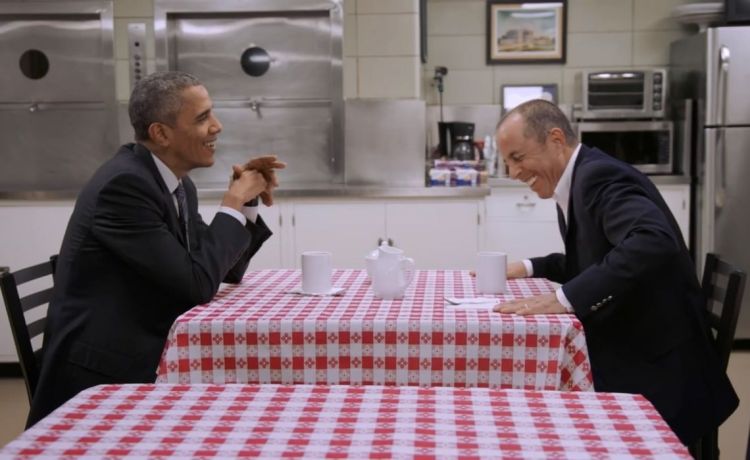
The new season of Jerry Seinfeld’s Comedians In Cars Getting Coffee web series is here, and the first episode features none other than President Barack Obama. Jerry pulls up to the White House in a ’63 Corvette Stingray, and asks Obama some great questions as they drive it around the property, check out the President’s limo, and grab some coffee inside. There are lots of laughs and memorable moments throughout—click the link below to watch.
Comedians In Cars Getting Coffee with President Barack Obama
Lefrak Legend
Interviews, PodcastsThere are a shitload of hip-hop podcasts out right now, which for heads like me is a great thing! The more the merrier, ya heard? One of my favorite new ones is Tax Season, hosted by Brooklyn bad guy Taxstone. His latest episode is with the one and only Noreaga a.k.a. N.O.R.E. I always wanted to interview this guy myself because he’s such a character, and he’s in a great mood during this talk with Tax. Lots of incredible history and hood anecdotes, including memories of the first time he shot someone (he was 11), and the time he got tight after losing a basketball game to 112 haha. I’m only halfway through, can’t wait to listen to the rest. Instant classic.
RELATED: Heavy Rotation with Taxstone
#TBT: The Tanning Interview with Common
Interviews, Published Material
This is an interview I did with Common back in 2011 for Steve Stoute’s site The Tanning of America where we discussed race and hip-hop. The site no longer exists, so I wanted to share here as an exclusive Westcheddar throwback. Enjoy…
There was a time in Common’s life when he was known simply as a rapper. Well, that young man from Chicago has come a long way since the release of his breakthrough album Resurrection in 1994, expanding his visibility from the Rap City countdown to the silver screen, appearing in films alongside Hollywood’s brightest stars, such as Just Wright with fellow rapper turned actor Queen Latifah, and Date Night with Steve Carell and Tina Fey. He even landed himself a role in the new AMC television drama Hell On Wheels, playing a post-Civil War freed slave, which has welcomed in a whole new audience for him as well. To boot, his memoir, One Day It’ll All Make Sense, was just released to stellar reviews, creating different opportunities for press and public appearances. And quite impressively, Common has successfully managed to maintain a reputable presence in the hip-hop community throughout his transformation from rapper to rapper/actor/author. In fact, his new LP The Dreamer, The Believer is one of the most anticipated albums dropping in the fourth quarter.
We spoke to Common about the various “tanning” moments he’s had in his professional career as a rapper, actor, and now an author. We also got his take on the recent backlash he received for his poetry reading appearance at The White House, type-casting in Hollywood for black males, and his friend and collaborator Kanye West’s VMA incident with country music star Taylor Swift.
I wanted to start off by talking to you about your Chicago roots. Tell me about the racial makeup of your hometown.
In the South Side area of Chicago that I grew up in, it was predominantly black. I was raised around black people, which provided me with a good sense of self, and [allowed me to] know my culture and where I come from to a great extent. Not far from my neighborhood was an area of Latinos. Most of the other nationalities were far away downtown. That’s the way we viewed it. Most of the white people stayed in downtown Chicago or in other areas.
Did you have any white friends growing up?
I didn’t have any white friends while I was growing up.
Can you remember any personal experiences with racism from when you were younger?
With it being so segregated, Chicago definitely had racial tension. It had stemmed from the ’60s, and probably before that. There was a time that I was with my mother and my god-brother, and we were going into a grocery store, and this little white kid was spelling B-L-A-C-K [over and over when he saw us]. He was kind of saying it in a derogatory way. His mother caught him, but didn’t really stop him. I couldn’t believe it. Like, “Man, why is he downing me for being black?” It felt bad, and I was hurt, but at the same token, I was like, “Man, forget him.”
You were still in high school when you started performing, opening up shows with your first rap group for N.W.A and Big Daddy Kane. That must’ve been thrilling. What were the crowds like for rap shows back then? Were they all black?
For sure. When I opened up for Big Daddy Kane and N.W.A, there were all black audiences. The shows weren’t far from where I lived, on the South Side at The Regal Theater. The hood was there to see those shows.
When you got signed to your first deal, did you have a hard time dealing with the white employees and executives at your record label?
Nah, because by the time I came in to the industry, the business [of hip-hop] was starting to become lucrative. It was definitely growing, and most of the corporate people working there that were not black had been dealing with black artists, so they knew [how to interact with me]. But don’t get me wrong, I definitely felt the dynamic of, “You work for me.” They really felt, in many ways, more intelligent. You had to prove your intelligence.
Did they have a stereotype about you as a rapper? Like, maybe you didn’t understand certain things?
They had a stereotype about young black men, because of the language we used, the style that we spoke with, and the way we carried ourselves. Until you proved it to them, they didn’t know if intelligence was within that.
Your first album was dope, but didn’t sell many units. But the success of Resurrection certainly gave you more national exposure. Did you notice your fan base start to look different after the popularity of that album?
Yes. I definitely noticed that at my shows it was becoming multi-cultural. I started seeing different nationalities [in the crowd], like white and Latino. It wasn’t funny to me, but it made me smile. I kind of would chuckle at it.
What do you think the appeal was?
I think the truth in hip-hop. There’s something about hip-hop that is really heartfelt and true. There’s people sharing their experiences that don’t filter and don’t try to be politically correct because that’s not the environment we come from. With hip-hop, it’s like you’re having conversations with your friends, with your people. So you don’t change the way you think and talk. And I think other nationalities are able to respect that truth. Truth is the universal language. You could be speaking in another language, but if it’s true, it still resonates with people.
What would you say was your first major “tanning” moment in your career?
I would say it was after the Resurrection album [was released]. I went on tour with The Beatnuts, Organized Konfusion, and The Artifacts, and at our shows there were blacks, Latinos, whites, and Asians. And I would go back and tell my friends [at home] that there would be a lot of white people and Latino people. It felt overwhelming, but in a good way though. At a certain point, you realized that the music was what we were all embracing. It basically broke down some walls.
That’s a crazy tour line-up.
Yeah, that was a fun tour. It was really my first tour.
You tried out some new sounds on Electric Circus. That album has some gems on it, but it was criticized for not being accessible. Did people back home in Chicago or in the black community think it was a bit weird that you were fusing rock and electronica with your music?
In certain parts of the black community, but I wouldn’t say the whole black community. I would even say it was more of the hip-hop community, because it wasn’t only black people [Laughs]. They were like, “We think this is too far left.”
They were used to a more traditional, boom-bap sound from you.
Yeah. I have people come to me now that music has opened up a little more and say, “Man, Electric Circus had some shit on it.” It definitely felt like [more of a backlash from the hip-hop community in general] than anything else. I remember having white journalists saying, “Man, you really changed it up on us.”
Did your change in appearance and the way you started dressing around that time play a part in that?
My appearance definitely played a part. My friends were like, “Why are you dressing like that?” And they reflected some of the black community. The way I was dressing and presenting myself was really what made my community be like, “I don’t know about this, man.” The music just put icing on the cake. It left a bad taste in their mouth.
Did you notice other races gravitating towards you more after you switched up your style?
I don’t think any of it made any other nationalities warmer towards me. I look at acts like Wu-Tang Clan and Mobb Deep, and there were white and Asian people that loved them, and the way they presented themselves was street. I don’t think those nationalities were so keen on saying, “Well, you’re dressing a little more eccentric so we feel you’re more accessible.”
You starred in a holiday commercial for The Gap, featuring an original song you put together for them. Did you start being recognized by more people after it aired?
Yeah, different people started to notice me. I can remember this older lady who my mother worked with wasn’t familiar with my music, but when that Gap commercial came out, she was like, “Oh, I really like that!” But if I do something in that vein, I’ve got to be Common, and present myself the way I am. But at the same token, there needs to be a benefit from it. I need to be able to reach that new audience.
How is being in Hollywood different than hip-hop? Did you have an experience on a set when you first started acting where there was resistance at first to you being there?
I don’t remember specific incidents where people were outwardly saying, “Yo, who is this guy?” But I know that was definitely a concern. There was a stigma that came with hip-hop artists that were making a transition in to film that was like, “They do this, they do that.” There were some negative stereotypes. More than people saying something or turning up their nose, it would be more like they were keeping their eyes open to see how it would be. They came in with an expectation, and I could tell they would be like, “Wait. This guy is not like what we thought a rapper would be like.” It’s just America. No matter how much we know we’re progressing, people still have stereotypes.
You’ve played some bad guys, and starred in Just Wright as a basketball player, and now you play a freed slave in the television show Hell On Wheels. Do you find that you are type-casted with the roles you are offered because you are a black male?
I feel I have to overcome the stereotypes of not only being a black male, but also coming from a hip-hop background. They see you in a certain way when you do certain roles. And this exists not only for black people, but just for actors in general. Once they see you do a certain type of role, then that’s [who you are]. It feels like to me that when roles are written for a street person, a lot of times it comes to mind to get a black or Latino person. Some people in Hollywood feel like, “That’s what we’re going to do. Let’s go get that person.” And some people feel like, “We can’t do that because it’s stereotyping.”
So they’re purposely trying to avoid the stereotypes?
Yeah. There were times where there was a role of a drug dealer, and I wanted the role. And they were like, “We don’t want to put a black person in there because it’s too stereotypical.” And then there are times that there is just a good leading character, but they just don’t have a black person in mind for it. But you know that you can play that character, but because they are not picturing someone like you playing that role, you get looked past.
Have you seen that there is more diversity in the roles offered to black actors since you started acting? Has there been a shift in the past few years?
I believe it’s starting to grow. Even with the role I’m playing in Hell On Wheels, I’m playing a freed slave. The show takes place in 1865, so the majority of black males in America were slaves [at that time], so that was inevitable. But this character is written as a very intelligent, strong leader and thinker. And that’s something that I celebrate and honor. So I really love the fact that I’m getting to play that role.
Has being in movies and now on television broadened your fan base as a rap artist?
Yes. I notice the correlation of more people just knowing who I am. A 65 year old white man could be like, “Wait, I know you. Were you in that movie with…?”
Right. Just your fame in general has grown.
Exactly.
Have you seen that translate to more album sales?
It will. It does, and it gets me attention. I haven’t come out with an album in three years, but I think with The Dreamer, The Believer it will translate. Put it this way: the [quality of your] music is what is going to get you the album sales. The popularity though will help people be aware of you.
Getting back to the music, tell me about doing “Go” with John Mayer for your album Be. Was his friendship with Kanye West what brought him in to the fold?
He and Kanye were cool, and we were all hanging out. We went to the movies to see Ray, and then later on that day we went to the studio, and we were making all different types of songs. And Kanye started making the beat for “Go,” and John Mayer had the idea and put it on there. It was really organic. Just hanging out and having a good time.
Have you ever talked to Kanye about appealing to a wide audience but still keeping the content authentic when you’re creating music together?
We never discuss it, but I think Kanye is a genius for being able to make music that is pure and truthful, but he has the sensibility to reach the masses. It’s not only with his music. It’s in his personality, and things that he sees. It’s just a thing that we are creating this music that we love, and it just naturally has some things that will appeal to broader audiences. And I think Kanye is cognisant about making music that is not limited. He takes pride in that, and so do I. I want to make the purist art possible, but I want it to appeal to and hit as many people as possible. I want it to touch the universe. To me, that comes from being the most creative and being aware. As long as I’m in tune with and not far removed from what’s happening in pop music and hip-hop music today, and I have the pulse of what’s going on, I can go in my world and go create, and it will still be relevant, but it will be unique.
Do you think race played a part in that whole Kanye West and Taylor Swift VMA incident?
Yeah, I believe it did. As far as the core of it, anyone would feel a certain way about the way it went down, because it’s a young lady receiving an award, and a man comes up and disturbs it. Whatever color she was, some human being would feel a certain way. But I think it became more of an issue because she was “America’s Sweetheart” of country music. Race made it a bigger issue, but I think most people would say [to Kanye], “Man, that ain’t how you should do it.”
Are you aware that Taylor Swift’s a big hip-hop fan? She brought out T.I. and B.O.B on tour, and even rapped Nicki Minaj’s “Super Bass” during a recent radio interview.
Nah, I didn’t know about that. But I think that’s great. Hip-hop is a powerful phenomenon and force. It’s an incredible blessing. I’m proud that people from Taylor Swift to people in Japan to the President [of the United States] are aware of it.
How do you feel about white rappers? Were you a Beastie Boys fan coming up?
I definitely loved the Beastie Boys. When it came to hip-hop music, there were so many more blacks and Latinos expressing it. But if you were good and you were white, I liked you. I liked the Beastie Boys, 3rd Bass. If you make a fresh song, I like it.
What about Eminem?
Eminem is one of the greatest MCs to ever do it. His impact is well deserved. He’s a hip-hop dude to the core. I don’t care what color he is. He deserves it.
Are any of the new white rappers on your radar, like Mac Miller or Yelawolf?
I know the names, but I haven’t heard their music enough to comment on them at this point. I did see Yelawolf in the cipher on the BET Awards with Eminem and their crew, and it was dope.
You took a lot of heat when you were invited by the Obamas to read your poetry at the White House, specifically from Bill O’Reilly. What was your take on that whole backlash?
I can’t speak for Bill O’Reilly, because he is who he is. I think that when it came to him and Sarah Palin, they just weren’t aware of me. Because if they were, they definitely wouldn’t have portrayed me as a vile rapper and a thug. But I will say that I was honored to go to the White House, and able to say that poem that I said. It’s called “The Believer,” and it’s actually on the new album. For me, it was victory in the fact that the President and the First Lady, even through all the hoopla, said, “Look, we want you here. We invited you here. Please come.” That was an honor in itself.
With your memoir being released, are you finding that you’re being accepted in circles that may have not welcomed you before now that you’re an author?
Yes, truly. It’s not only being accepted, it’s being exposed in different circles. I was on this show called Morning Joe [on MSNBC], which was a show I wasn’t even aware of [before I was a guest on it], and I had people greeting me in the airport like, “I saw you on Morning Joe. It was so good.” Doing the book, I’m going to different places to do interviews, and it’s giving me different exposure.
I love your new songs “Blue Sky” and “Sweet,” and the collaboration with Nas, “Ghetto Dreams.” Tell me about the new album.
This is one of the greatest albums I have made. The single “Blue Sky” is out, and we just shot the video for “Sweet” in Haiti. This is pure hip-hop music that will hit your heart and hit your gut. This music is done with the love of hip-hop in it, and [sticking to] the basis of that and just making really fresh music.
Finally, what do you think of Jay-Z’s statement, “Hip-hop has done more than any leader, politician, or anyone to improve race relations.”
I think everything counts. Everything that has happened, whether it was Malcolm X, Martin Luther King Jr., Ghandi, John F. Kennedy Jr., or Robert Kennedy. Even the negative things. Hip-hop is the ongoing catalyst for race relations, and it really organically just happened, it wasn’t like, “This is what hip-hop is about, bringing together races.” It’s lasted, and continued to help. But I think all those things counted.
Previously: The Tanning Interview with Action Bronson
Interview with an Outkast
Interviews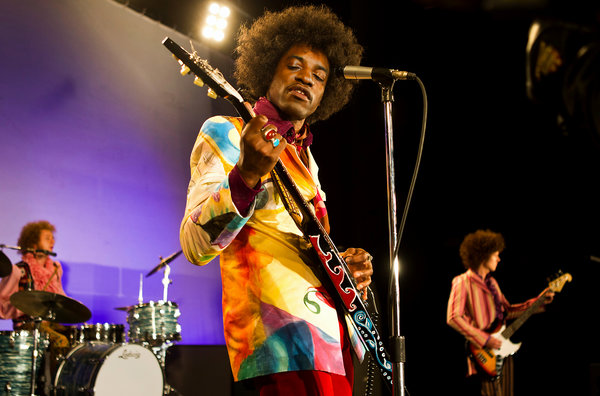
Read this rare interview with Andre 3000. He talks about his upcoming lead role in the Jimi Hendrix biopic and Outkast’s latest tour. By Jon Caramanica.
André 3000 Is Moving On in Film, Music and Life | The New York Times
#TBT: My First Action Bronson Interview
Interviews
Back in 2011, I had the opportunity to interview Flushing, Queens rapper Action Bronson for Steve Stoute’s The Tanning of America website. At the time, I was a new fan who couldn’t stop listening to his debut album Dr. Lecter in the whip. So when I got the call to see if I wanted to do a Q&A with him for the site, I was definitely down. Not only did his background as a white rapper from New York City intrigue me for the Tanning series, which focused on race in hip-hop and the music and culture’s overall effect on our country, but there was a significant white rapper boom going on with the success of dudes like Mac Miller, Yelawolf, Machine Gun Kelly, and Asher Roth, and also an Eminem resurgence, so I was curious to find out his perspective on it all and where he thought he fit in. And also, I just thought he was dope, so I wanted to find out about his background and influences and early experiences in the rap game.
What transpired helped lead to Action Bronson becoming my favorite rapper of all time, no exaggeration. I’ve since interviewed him twice more, once for Complex about the making of his project with The Alchemist Rare Chandeliers, and once for NahRight about his 2013 European tour. Each time was a pleasure, and I hope to interview him again in the future. Here’s our first conversation, with intro, which is no longer available on the TOA site. So this is a Westcheddar #TBT exclusive, ya heard?! Enjoy…
Even with the slew of new white rappers on the scene in 2011, Action Bronson has no problem standing out. The 300-pound bald-headed and bearded professional chef turned MC from Flushing, Queens, who is still an unsigned artist, is having a very successful rookie year to say the least. The Albanian-American’s debut album,Dr. Lecter, which is filled with fiery raps and sample-heavy authentic New York production, was received by hip-hop tastemakers with rave reviews. In addition, his live show, where he showcases his stamina and flair for witty humor, caught the attention of The New York Times, and GQ Magazine was intrigued enough by his culinary roots to feature him in a Guide to New York City Dining, highlighting his favorite grub spots in the five boroughs.
After returning home from a recent trip in Los Angeles to work with seasoned rap producer, The Alchemist (they are collaborating on series of upcoming releases), Action Bronson took some time out of his busy schedule to talk to us about his early exposure to hip-hop growing up in Queens, how he forged friendships in high school through writing graffiti, and why he stopped using the N-word when he first started rapping. Plus, he breaks down his culinary background, the diversity at his shows, why he thinks white producers and industry legends gravitate towards him, and the state of the white rapper in 2011.
Interview by Daniel Isenberg
I want to start off by talking about your roots. I know you are Albanian, but are you a first generation American?
Yes. My father is full Albanian, and my mother is a Brooklyn Jew, so I get the best of both worlds. I hate myself, you know?
Yes, I know. I’m Jewish myself.
Congratulations. [Laughs.]
[Laughs.] Thank you. Tell me about your upbringing in Queens. Did you have a lot of friends with different ethnic backgrounds?
Of course. I live in Flushing, but I live closer to the Jamaica side of Flushing, so my neighborhood is pretty much right across the street from Promenade Project Houses in Queens, which is one of the biggest Project Houses there is. Growing up, I had all kinds of different friends, from every different kind of race that you could imagine. Color was never really an issue or an interest with me. It’s just the person.
Can you remember your first exposure to hip hop? Was it something that all your friends were listening to?
It wasn’t something I found following my friends. I found hip hop myself, to tell you the truth. My cousins put me on back in the day, with like The Box, and just watching them and what they were doing. My cousins would be driving around Astoria bumping the new Mobb Deep, and they always had the newest sneakers and the newest tapes. My family really put me on.
But then, me and my man Troy, we went all out with it. We were addicted. I would just buy any tape in Sam Goody that was rap. All the tapes. Then, in Queens, we would go to a lot of flea markets, and we would get the tapes with the neon cover. Those would have all the ill shit. And right up the block from my crib, they had all the DJ Clue? and Ron G mixtapes.
I know you’re a big Kool G Rap and Cam’ron fan. Were there other rappers early on that you really liked?
We listened to a lot of Beatnuts at that time, in the early days. They’re from Queens, and they were legends around the hood.
Did any specific rappers have an influence on your lifestyle?
I would say just hip hop culture in general influenced me. I can’t really look to one specific person [or group]. Just watching all the old movies, like House Party, and all those types of things were influential.
Were you a big Beastie Boys fan? Eminem?
I gotta be honest with you. Being white, I don’t like other white rappers. I never was a fan of the Beastie Boys, ever. I was a fan of Eminem during his underground era, like in ‘98 and ‘99. But after that, I wasn’t really listening to him. But he’s obviously someone I really respect. He’s made it easier for someone that’s white to be looked at as really nice. He’s a legend. You can never take that away. And he’s still nicer than everybody now.
You’re not only a rapper, you’re a professional chef. Take me back to your first job in the food industry.
I worked at several different places. I went to culinary school, and I worked at my father’s restaurant in Forest Hills for a while. I was there for the majority of my career. I worked at Citi Field for the Mets. I worked at a lot of places. But it all started in the deli section at Key Food on 164th Street and 69th Avenue.
Fast forward to this year, and you had an Action Bronson New York City dining guide published in GQ magazine.
That’s not even the illest one to me. The illest one was in Zagat. I don’t even know how to explain [those]. People catch wind of things. Being a rapper, they’re not expecting you to be a chef as well. I’m a chef that happens to rap. This wasn’t my choosing, it’s just something that happened. I guess it’s my calling at this point.
Those are pretty good looks for an underground rapper from Queens, huh?
Yeah, but I hate being called an underground rapper. Can I just be a regular rapper?
Sure.
I’m just a regular rapper, I’m not an underground guy. I don’t want to pigeon-hole myself into an underground role.
I can appreciate that.
I guess I am, because not as many people know about [my music], but that’s not my goal.
Do you get upset when people put the “white rapper” stamp on you?
I mean, my skin color is tan. It’s not white. There’s no color lines for me. I don’t even give a fuck, I just look at myself as me. As stupid and simple as that sounds, that’s what it is. I understand the white rapper label is going to be there regardless because of how I look.
It’s unavoidable.
But there are a lot of people out there that will come to my defense as say, “Yo, he transcends color.”
You really just started rapping recently, right?
Yeah, I’ve been [recording songs] for like two and a half years.
What was it that made you want to start pursuing a career as a rapper?
My man Meyhem Lauren, my brother that I grew up with, was a rapper for a long time. And I would always go with him to his shows and watch him do it. And he kept going, “Yo, write something. Do it, do it, do it.” So I just did it. This is like four or five years ago.
So I just started writing, like, funny shit. Not even serious, just for fun. Not knowing how to count bars or to make an actual verse. And then, like two or three years ago, I just said, “Fuck it, I love it so much, let me make some music.”
I broke my leg in the kitchen, and I was laid up for two and a half months. And in those two and a half months, I became who I am now. I had my mind set that I was going to get paid off this rap shit, and that I was going to do it full-fledged, whether I was successful or not. And here we are.
Did you have any touchy racial moments when you first started?
Never. But you don’t realize that the rest of the world doesn’t really get where you’re coming from. When I started rapping, I would say the N-word. Because that’s how we talked to each other. That’s how my friends addressed me, so I thought it was okay. And once you put yourself in the public eye, you realize that’s just a death trap. You become that guy. So I stopped using it completely. I took it out of my vocabulary.
I never really had a moment where anyone said anything to me about it. But my man Meyhem Lauren took me to the side as a friend and was like, “You shouldn’t even go there. You’re already white. You’re just going to give them more reasons to try and hate.”
People aren’t going to understand.
Exactly. And I understand that I’m stupid for trying [to use the N-word in my raps]. That’s not me. That’s not what I want to portray in the music anyway. I say a lot of other crazy things, but that’s where I draw the line.
You’ve worked with a lot of white producers. You’ve got the album coming out with Statik Selektah, Well Done, at the end of this month. You’ve done projects with Tommy Mas and J-Love, you were featured heavily on a Peter Rosenberg mixtape, and now you’re working with Alchemist. Is there something comfortable for you about working with white producers? Have you noticed them gravitating towards you because you guys are both white?
You’re the first person that has ever brought that to my attention. But nah, I really doubt that, because they work with some of the thuggest black dudes that you know about. Lil’ Fame and Bumpy Knuckles love Statik. Alchemist, I didn’t even know he was white. I thought he was Spanish or something until I met him.
Yeah, you’d never know he was a white dude who grew up in Beverly Hills by the sound of his beats.
Exactly. But he doesn’t even act like that. That’s just one cool motherfucker right there. He’s not stuck up on any level whatsoever. But I’ve worked with every kind of person that you could even imagine. It’s not about color, it’s about music. It’s about what I hear.
Statik was one of the first people to take interest in me. I didn’t even know his music like that. When we started working, I realized how talented he actually is, and it just elevated from there. Alchemist I know because of that Queens shit. He’s made some of my favorite music ever. That was an honor for him to want to work with me.
What are you guys working on?
I was just out there, and actually just came back to New York today. We finished an album with twelve, thirteen songs. I’ll probably go back out there towards the end of the year and do another ten or twelve, and get this series together.
Did you enjoy collaborating with him?
Yeah, he’s the man. I love him. He’s a great guy.
Do you think white producers like Alchemist and Statik Selektah, who are affiliated with black rap artists, helped open up the door for a rapper like you?
I don’t know. I don’t think so. I don’t look at it like that. I think everyone makes their own lane. Of course, there’s gotta be people to innovate and be the first. But at the end of the day, I think skill, and attitude, and actually just being in the right places at the right time and knowing the right people is what makes you. You could be the nicest motherfucker, and you could be white, and no one could hear you because you’re not nowhere. You’re not on the scene, you’re not pushing yourself to where you think you need to be.
I didn’t know about putting music out on the Internet until this year. I got put on this year. Last time I had a computer was AOL 3.0. And I tell this to everybody. I just got a computer this year, and last time I remember music on the Internet was Napster. Straight up, no bullshit. Now, it’s a world. You can make a full career off the Internet. You don’t have to ever sign a contract with anybody. You can just do it yourself. That’s pretty much what made me. I put all my shit out there, and motherfuckers liked it, and it steamrolled from there.
How’d you link up with your manager Dante Ross? He’s a legendary white guy in the music industry.
Yeah, he’s another white guy [who reached out to me]. I don’t know what’s going on, man.
That’s what I’m curious about. Maybe it’s not you, but them.
Obviously, I would say [me being white is a reason they want to work with me]. That’s for sure. It’s like an anomaly. It’s something mysterious. Like, “This fucking white guy raps like that? Whoa.”
Here you are, this white guy who raps just as dope as the black rappers they’ve been working with, so they are intrigued.
Yeah. I’m just gonna say this, though. There’s only two types of music: good music and bad music. You could be a turban-wearing Arabian. I don’t give a shit. If you’re spitting some shit that I can relate to and I can fuck with it, then I fuck with you. Peep this: I love Das Racist. And they’re Indian dudes. And those are my people. I fuck with them.
Yeah, Das Racist is dope. Getting back to Dante Ross, how has he helped you since he became your manager navigate through the music industry?
We’ve been working together for four or five months at the most at this point. He’s doing his thing, managing, and connecting dots. I had a lot of things on the table I couldn’t handle anymore, you know, email wise. I’m not really that computer savvy, and I’m also a little bit lazy, so I just won’t check for it, or just go continue with life.
You need support when a lot of people are checking for you.
Exactly. It’s overwhelming at times. So, I just pass people off to him. I never had a manager, so I never knew how a manager acts. It’s a learning curve right now. But we’re pretty comfortable with each other, and we work well together. He is legendary. But I’m not gonna front, he knows I had no idea who he was when I first met him. Some people get offended by that shit, but you can’t because you don’t know how my life was.
He’s a guy that unless you were reading liner notes, you might not know about him.
Exactly. And I wasn’t reading no motherfuckin’ liner notes.
There are a lot of new white rappers popping in 2011, from Yelawolf to Mac Miller to Machine Gun Kelly. Is there no longer a concern about what color people are in hip hop?
I think the music has totally transformed now. It doesn’t matter who does it. Things catch on, and people like it. The white shit doesn’t matter. Yelawolf is very talented. People who come from where he comes from relate to it. It’s just like people who come from where I come from relate to me. Everyone is reppin’ where there from. It doesn’t have to be a specific type of person any more. Does any music have color lines any more? One of the best salsa pianists, [Larry Harlow], is a Jew, you feel me?
When you do shows, do you notice who’s out there in the crowd?
There’s definitely a mix of everything. Older dudes, younger dudes, younger girls. It’s definitely a mix. It’s weird to me who listens to the music. I’ve had 65 year old TV producers coming to the shows. It’s crazy at this point.
Does it vary if you go out of New York to certain places? Have you been in spots where you’re in front of an all black or all white crowd?
Of course. But they always react in one specific way: with fuckin’ cheers and joy.
[Laughs.] Right, right.
I’m also 300 pounds, but in my live show you would never be able to realize that. I don’t rap over any tracks [with vocals on them], I just rap over the beat, and it sounds like the song. And I take pride in that. If you’re going to pay to come to the show, you’re going to get real shit, not bullshit.
What kind of music outside of rap do you listen to?
I love oldies, like real oldies. I love salsa and Spanish music, and just Latin music in general. I listen to a lot of jazz. I also like listening to sports talk radio. I get sick of music sometimes, and I gotta just listen to some guys talk about sports.
How heated are you about the lockout now that the Knicks are back in playoff form?
I’m disgusted with basketball right now, man. The Knicks finally have a decent team, and we’re getting shit on over here. It’s rich people getting mad at other rich people and fighting over crumbs. It’s disgusting. At least I got my Jets playing right now.
Outside of sports and cooking, what else are you into that maybe the stereotypical rapper might not be interested in?
I’m into sharks, and marine life.
Is that connected to your love of eating fish?
Of course. I like studying animals that I consume.
What’s the biggest misconception people have about you when you tell them you’re a rapper?
I don’t really tell people that I’m a rapper. If you know, you know. I don’t know what people think, I can’t even call it. I know what I would think. I’d be like, “Are you fuckin’ stupid? What are you doing right now? Go chop wood or something.”
But you’ve had a successful year. Are you finding that you’re going to be able to make a nice living as a rapper?
Absolutely.
Are you surprised by your success?
I’m surprised in a sense, but now I feel there should be more [success]. And this is all fairly new. This is without any label. This is just me by myself. This is without anybody pushing anything. All this is off the strength of me. That’s what I’m the most proud of, because it’s not made up. It’s real love.
I must say, you pick great beats. How involved are you in that process?
I only rhyme over shit that I like. I don’t rhyme over bullshit. Whether it be a down south beat, or some raw New York hip hop that I know about, it’s going to be quality. But I’m definitely hand to hand with the way I want shit to sound.
You love trees.
I do.
Tell me how you’ve seen weed in your life bring people of different cultures together.
I can attribute many relationships to two things: weed and graffiti. If I didn’t do graffiti, I wouldn’t know a lot of people. If I didn’t smoke weed, I wouldn’t know a lot of people. Those two things forged a lot of relationships in high school. Smoking weed makes you chill with people you normally wouldn’t, and then you become cool. But then you become friends, and you learn shit about each other’s lives, and this and that.
You were into bombing, huh?
I wouldn’t know most of the friends I have now if it weren’t for graffiti. Smart Crew. We were bombing all the time. But I don’t have time for that shit now. I still love it though. I still look at who’s up, and I know all about it.
There’s a lot of white rappers still on the scene now. We mentioned Yelawolf and Mac Miller and Machine Gun Kelly, and Eminem who is still making noise. Plus, there’s Asher Roth, who I know you’re cool with. I saw you make a cameo in his latest video.
That’s my man. That’s a nice dude right there. I don’t care what anyone thinks about his music, that’s a nice fuckin’ kid.
Yeah, he’s a good guy. What do you say to the people that are trying to put all you guys in a box?
All you have to do is literally listen to my music. And do a little research. Don’t just look at the cover, you have to open up the book and read the pages. Don’t just peep the way we look, go check the music out, blindly. If you like it, you like it. If you don’t, go ahead and move on with your life. No one is forcing you to listen to it.
Did you shut a lot of people up when you did the collaboration with Ghostface Killah, “Meteor Hammer?” I know people were giving you a hard time, saying you sound like him.
Of course. Everyone knows that I love Ghostface and Wu-Tang and all that old school Kool G. Rap and Mobb Deep, but I am me. I can only be one person, and that’s me. I don’t play those games. Nothing is fraudulent, and nothing is unoriginal. Nothing was ever stolen or plagiarized in my entire life, in any aspect of my life, [including] my music.
So what’s the future for Action Bronson? I’ve heard you mention that you want to own your own restaurant.
That’s kind of generic. I’m just bullshitting. Yeah, of course, but I don’t want a restaurant with my name on it like Mickey Mantle’s. It wouldn’t be my name, like Action Bronson’s. It would be some quaint shit you didn’t know I owned. It would be some next level shit.
What about in terms of your career in rap?
To be honest, I don’t know what’s in store for me. I want it to be where I’m able to live. I don’t know if I want to be like Eminem, or if I could be like him. I want to be able to walk down the street, and still be able not get bombarded or punch someone in the face if they’re coming too close. Fans get excited when they see people, and they get a little over the top sometimes. I want to be popular, but secretly.
Read all my other interviews and features HERE. And follow ya boy on Twitter if you don’t already. Peace and love.
 Westcheddar