
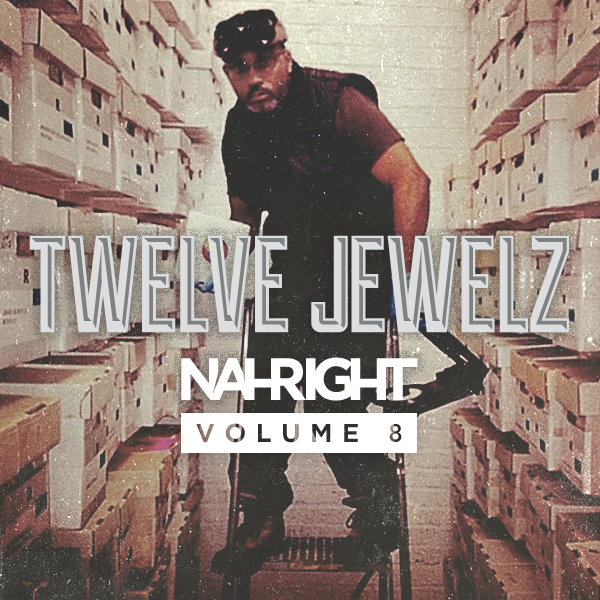
Check out my latest edition of Twelve Jewelz, featuring throwback rap gems from the ’90s and early 2000s…
Check out my latest edition of Twelve Jewelz, featuring throwback rap gems from the ’90s and early 2000s…
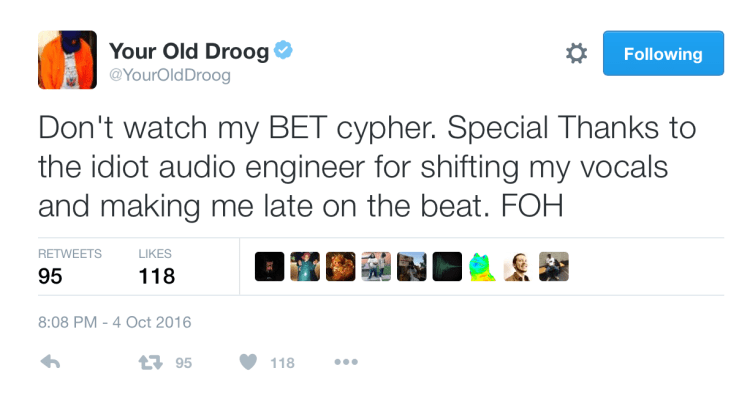
I usually don’t write op-ed stuff, but what happened with Your Old Droog’s BET Hip Hop Awards cypher verse really bothered me. Read below…
Why Your Old Droog Should Be Pissed After His BET Hip Hop Awards Cypher
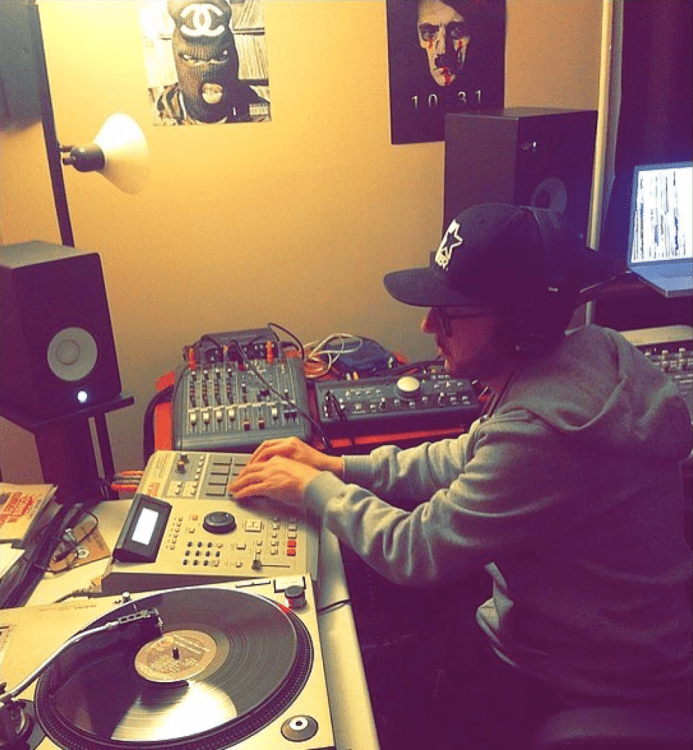
My latest NahRight feature with the illest new rap producer in the game…
*Bonus*
Daringer mentions this Gary Burton “Las Vegas Tango” song during the interview, saying that it’s one of the early records he discovered in his father’s record collection that inspired him to start producing and also become a dedicated digger. Cypress Hill and Big Pun fans should recognize it immediately.
Here are the new Trojan Condoms commercials my agency worked on with Lil Dicky that will officially debut during the MTV VMAs this Sunday. Above is the 30 second spot “Alphabetization,” and below is the follow-up 15 second one titled “For You.” Really proud to be a part of these, props to LD and everyone involved on his team and ours for the great work. And I appreciate the shout out in the Adweek interview!
This dude Brandon Wardell cracks me up. Check out my Heavy Rotation interview with him HERE.

I was looking back at my interview archive recently, and I was amazed at how many of my favorite rappers and producers I’ve had the honor of talking with over the years. Seriously, it’s insane. So in my new Westcheddar series Five From The Archive, I’m going to dig back and highlight the stories behind some of my favorite rap songs ever, as told to me by the artists themselves—five at a time. Think of these as oral history rap mixtapes, presented in EP format. Enjoy the first batch.
1. Pete Rock & CL Smooth “They Reminisce Over You (T.R.O.Y.)”
Pete Rock: “Troy was a close friend of the neighborhood that we grew up with since we were little. His older brother’s name was Gary. I wasn’t on the road when this happened, but they were on tour with Kid ‘n Play and Salt-N-Pepa. They were playing around throwing empty garbage cans at each other on stage.
“Troy was a playful person like that. He was at the edge of the stage and it was twenty feet high, and he slipped off the edge and fell [and died]. I don’t know how I made that beat while being depressed for such a long period of time. He was really close with everyone in the neighborhood. Mount Vernon is not that big, it’s four square miles wide and long. Everybody knew him.
“I found the record [for the sample] when I was digging with Large Professor. I made the base of the beat at my house, and I finished the rest at his house using his SP-950. Q-Tip had nothing to do with [making the beat]. I think what happened was he liked the horn riff that he heard. I had already sampled it, but I filtered it to make the bass line. The horn was already there, but he just thought it was a good idea for me to put it in there. And I put in there. I made the beat, he just suggested I put that in there.
“We used to all go digging together a lot. I used to come to Queens, and they used to come to Mount Vernon, back and forth, going record shopping together, everything.
“CL came up with the lyrics even before I came up with the beat. He didn’t have the beat [to write to]. He already had the song written. The beat made me emotional so I figured it would work. When the lyrics came together with the music, that was the match made in heaven. Thank God it matched the way it did. It was a great outcome.
“When we finished the song and mixed it, I had Charlie Brown from Leaders Of The New School in the session, and when we listened back to the record we just started crying. When I felt like that, I was like, ‘This is it.’ Deep in my heart I felt like this was gonna be something big.”
2. Fat Joe ft. Grand Puba and Diamond D “Watch The Sound”
Fat Joe: “Grand Puba was the hottest dude in the game. So we were cool. He came to the ‘Flow Joe’ video. That’s my man for years. I knew Grand Puba through the streets. See, before I was rapping, I was always around the rap game, even though I was in the streets.
“I would be at all the parties, and all the events, and I was pretty hard to miss. I was one of the few Spanish cats sitting there with jewelry on, Dapper Dan suits. It was pretty hard to miss me. I also knew Puba from Jazzy Jay, and Strong City Records, before he was on a major label when he used to fuck with all the Zulu Nation cats. So I figured we should do a song together.
“Then Diamond came up with the beat, and it had the little Jamaican sample in it. And it was an honor for me, because Diamond D was probably the hottest real hip-hop producer in the game.
“[Stunts, Blunts, and Hip-Hop] is a classic album. I did every ad-lib on that album. He says something, and I’m like, ‘Yo, what the fuck you talkin’ about?’ And the girl’s like, ‘Yo, chill!’ Or I’m in the background going, ‘Yo, that’s that shit…’ And that shit is crazy to me, because it is such a classic album.
“To this day, when we listen to Backspin [on satellite radio] or something, and a Diamond D record comes on, I’m like, ‘Yo yo yo yo, that’s me! That’s my ad-lib right there, nigga!’ [Laughs.]
“We actually shot that video in one of the most gangster places in the Bronx. Thinking back, I don’t even know how we pulled that shit off. That’s when niggas were buying crack on line like it was the stock market. We shot that shit in the middle of that.
“It was really exciting for me, for it to be the second single I ever dropped, and to be doing something with these guys at that magnitude. It was my first album, and I think my first record I did with a feature, so to have Grand Puba and Diamond on it was really crazy. When I look back in time, and I look back at early interviews I did, I can’t believe how I was blessed to have these kings around me.”
Diamond D: “I wasn’t really [a big reggae head], but that was one of the joints I did like, the Sister Nancy joint. That was one of the beats that I think I just had, and I was playing him a couple, and it was one that he picked. Again, everyone was in and out of Jazzy Jay’s studio, so that’s where Puba and Joe go back to.
“I know Joe laid his verse first. I don’t remember if Puba did his then too, or if he came back and dropped it off. All the sessions back then were like that, you know, [everybody] smoking. Joe doesn’t smoke, but he tolerated it in his sessions. But you can tell that session had a party vibe to it.
“We shot the video in the South Bronx over by Alexander Avenue. I remember Tommy Hilfiger or his brother Andy came over to the video shoot in person in a big body 600, the top of the line Benz back then, and opened up the trunk [which was filled with clothes] and said, ‘Back up, this is all for Puba.’ He drove to the South Bronx just to bring him some clothes. It was hilarious.”
3. Gang Starr ft. Nice & Smooth “DWYCK”
DJ Premier: “Nice & Smooth did a record called ‘Down the Line,’ and they wanted to use the ‘Manifest’ sample. So we did it, and hung out with them at Power Play Studios. That’s how we met Bas Blasta, and everybody that was there that day that was on that record. So we said, ‘Let’s do one in return.’ And we needed a B-side for ‘Take it Personal,’ because doing records that weren’t on the album was a big deal back then. Public Enemy was doing it, Ultramagnetic [MCs] was doing it.
“But when we did it, we didn’t know it was gonna be such a big hit. That summer, it was running things! Daily Operation was already out, so the label was like, ‘Let’s add it onto the album and re-release it.’ We remastered it, added it onto the album, then they reneged and said, ‘We’re gonna pass on it and leave it as a B-side.’ So we were pissed because mad people were buying Daily Operation looking for ‘DWYCK.’ And it was only on 12”. People were like, ‘Fuck, I bought the album for that song.’ I was like, ‘Damn, you don’t like anything else?’ But that’s what they wanted.
“So to fix that, when this album came out, we were like, ‘Let’s make it available this time so if anyone’s ever looking for ‘DWYCK’ on any of our albums, there’s an album that has it.’ It wasn’t like, ‘Let’s capitalize and get rich off it now.’ And where you put it is always important. I sequence everything. That’s my DJ mind.
“We made it in 1992. WC was here from L.A. And Don Barron from the Masters of Ceremony was here, because he was cool with Greg [Nice]. I remember everybody laid their verse. Guru was wasted, and at first, we were like, ‘He’s gotta say his verse over.’ Because he was just saying anything. ‘Eenie meenie miney mo.’ ‘Lemonade was a popular drink…’ ‘What the?’ He was just all over the place. We were like, ‘His verse is the weakest.’ And now when you hear it, everybody loves it!
“I’ll never forget, Smooth B kept going, ‘‘Yo Keithy E, I left my Phillie at home.’ ‘Hold on, stop it. Okay, I’m ready.’ ‘Yo Keithy E, I left my Phillie at home.’ ‘Hold up, run it again.’ ‘Yo Keithy E, I left my Phillie at home, do you have another?’ He didn’t even have the ‘I wanna get blunted my brother.’ We did probably like twenty takes of that same line, then we were like, ‘Yo, why don’t you just come back tomorrow?’ And he came back, and laid it in one take. And we were like, ‘Yo, we got a jam.’
“We didn’t even have a title at first. But ‘DWYCK’ was a thing everybody used to do, Biz Markie was very big on it. It’s like catching you with your pants down. You would mumble to somebody to get them to go, ‘What?’ So you’d go, ‘Hey, did you see that dadadada?’ And they’d go, ‘What?’ And you’d go, ‘My dwyck!’ [while you grabbed your dick]. So we just called it ‘DWYCK’ because we had no title. Back then, everyone had t-shirts that said, ‘My Diiiiiiiiiiick.’ That was the thing, so that’s how it came about. Flat out.”
4. Jay-Z “Can’t Get Wit That”
DJ Clark Kent: “That was the record he felt the best about to the point where he wanted to put it out. If you look at the logo, it’s says Jay-Z featuring DJ Clark Kent. It’s hilarious to think that’s what it was. It was like DJ Jazzy Jeff and the Fresh Prince, because we believed the DJ was important.
“I’ve got records with Jay, at least three records, where all he’s talking about is his DJ. And they’re crazy. People will never hear them, but still, that’s what it was about: us making these records.
“That was made at my house. Practically everything after a certain point was made at my house, because I had a studio at my house.
“I made a beat, that I didn’t think he would want, and he walked in and heard it and said, ‘Yo, let that play.’ He sat around, bobbed his head, walked out of the room, came back, and was like, ‘I’m ready, let’s do it.’
“At that point he wasn’t writing nothing. I don’t remember him writing since he was 15, 16. He had this notebook that had like a million rhymes in it. [Laughs.]
“It’s funny because, the way he wrote them back then, no one could have read the rhymes anyway. I don’t know if he could look back and read the rhymes. [Laughs.]
“He was saying things that people couldn’t fathom, and he looked like people couldn’t fathom. They were like, ‘He’s talking about being a millionaire. We’ve never heard of this dude, and all of a sudden he’s talking about being a millionaire?’
“With rap, it’s like people almost have to believe you. So when you’re talking about being a millionaire, they’re like, ‘Nah.’ And then, your rhymes are just so out of this world that they’re not even understanding you. So I think people just missed it.
“But when people look back at ‘Can’t Get Wit That,’ they go, ‘He was going crazy with his rhymes!’ He was spitting retarded on there. He was spitting on [Original Flavor] ‘Can I Get Open.’ He was nuts on ‘Can I Get Open.’
“We used to ride around listening to 2Pac, B.I.G., N.W.A., Ice Cube, UGK, Nas, AZ, Slick Rick, we just used to listen to whatever was happening. Driving around, in the burgundy Acura, just listening to it. His songs came from wanting to be way better than them.
“He thought, ‘From the beginning to the end, this song has to be a cohesive thought so that everybody gets it by the time it’s over.’ That’s why his songs are really, really, somewhere else.
“Back then, he was saying shit like, ‘I press more skirts than the cleaners.’ Like, who the fuck is saying that? He was saying incredible shit. And then, his two best friends, Jaz-O and Sauce Money, were insane lyricists, so he had to be good. These were the dudes that were on his neck all day.
“We were a group at one point called The Hard Pack—no homo. Me, Jay-Z, Sauce, and Jaz were The Hard Pack. And they were insane. Some of the best rhymes I ever heard came out of that stuff.
“It’s funny because ‘Can’t Get Wit That’ came out way before ‘In My Lifetime.’ And then they re-packaged it with ‘In My Lifetime.’
“That was Lil’ Shawn’s white Lexus in the video, who actually was the person who took Jay-Z up to Hot 97 and introduced him to the Program Director so he could get his songs played on the radio.
“[He was rocking the Reggie Miller jersey in the video] because he liked Reggie. And be clear, I’m in that wearing a Cleveland Indians jersey, and that was way before the jersey thing. We were just sports fanatics.
“We loved sports, we loved sneakers, we loved getting fresh, we loved music, and we loved money. That was our shit. What you see in the video was us. This is how we do, daily.”
5. Raekwon ft. Ghostface Killah “Heaven & Hell”
Raekwon: “‘Heaven & Hell’ definitely is one of my favorite beats. It was something totally slow, and made me reminisce about another story. ‘Heaven & Hell,’ that was a hook that me and Cappa made up way back in the day before we were even thinking about becoming stars and we used to have our little bars that we used to write, and that happened to be in one of our songs. And I just remembered the hook for this beat. And I called it ‘Heaven & Hell’ because we wanna be in heaven but we’re living in hell.
”Heaven is something once you make it, hell is what you go through. So, I was just telling a real nigga story ‘cause shit like that really take place on the block. And I just started rhyming to the beat and I realized that the beat wasn’t hard. So I was like, ‘I still like how it sound. It sound like champagne bottles, the bar, coolin’.’ It was just cinematic to me, and I just wanted to tell a mean story.
”We just started talking about some niggas that’s getting some guns and they on they bullshit, but they scheming to rob something. This is a dude who got stupid money, but he doesn’t realize it could happen, but you’re still living in hell even though you’re in your heaven. So, me and Ghost just decided to go back and forth on it. I think I probably had like 65% of the rhyme, and me and Ghost came in and finished it off together. And we felt like just rhyming together and bouncing it off each other on some ‘slow motion’ shit would be something to excite people.
“We did the video and I was pissy drunk. If you look at the video, when I was walking in, my hat was all fucking crazy. I’m in the limo just intoxicated like, ‘Wow, I’m really doin’ this shit.’ And we just set it up like we were the richest niggas in the town, like silk shirts. Try to really go away from the hardcore shit for a second, and just show the versatility.
”So I was always the dude that initiated like, ‘Let’s come in like this, let’s get the silk shirts.’ And you know everybody else will be lookin’ at me like, ‘You sure?’ And Ghost’ll be the one to be like, ‘Yeah, yeah, yeah lord. Yeah, we gon’ get the hats. We gon’ get the shoes.’ We felt like we was the black Frank Sinatra. Word.”
Stay tuned for Five From The Archive (Volume 2) coming soon…

I’m overwhelmed by the amount of positive feedback I’ve been getting from this article. Had no idea this story would connect with and inspire so many people. Thanks to everyone for the love…
The Year I Faced the Reality of My Rap Career | Pigeons & Planes

This is an interview I did with Common back in 2011 for Steve Stoute’s site The Tanning of America where we discussed race and hip-hop. The site no longer exists, so I wanted to share here as an exclusive Westcheddar throwback. Enjoy…
There was a time in Common’s life when he was known simply as a rapper. Well, that young man from Chicago has come a long way since the release of his breakthrough album Resurrection in 1994, expanding his visibility from the Rap City countdown to the silver screen, appearing in films alongside Hollywood’s brightest stars, such as Just Wright with fellow rapper turned actor Queen Latifah, and Date Night with Steve Carell and Tina Fey. He even landed himself a role in the new AMC television drama Hell On Wheels, playing a post-Civil War freed slave, which has welcomed in a whole new audience for him as well. To boot, his memoir, One Day It’ll All Make Sense, was just released to stellar reviews, creating different opportunities for press and public appearances. And quite impressively, Common has successfully managed to maintain a reputable presence in the hip-hop community throughout his transformation from rapper to rapper/actor/author. In fact, his new LP The Dreamer, The Believer is one of the most anticipated albums dropping in the fourth quarter.
We spoke to Common about the various “tanning” moments he’s had in his professional career as a rapper, actor, and now an author. We also got his take on the recent backlash he received for his poetry reading appearance at The White House, type-casting in Hollywood for black males, and his friend and collaborator Kanye West’s VMA incident with country music star Taylor Swift.
I wanted to start off by talking to you about your Chicago roots. Tell me about the racial makeup of your hometown.
In the South Side area of Chicago that I grew up in, it was predominantly black. I was raised around black people, which provided me with a good sense of self, and [allowed me to] know my culture and where I come from to a great extent. Not far from my neighborhood was an area of Latinos. Most of the other nationalities were far away downtown. That’s the way we viewed it. Most of the white people stayed in downtown Chicago or in other areas.
Did you have any white friends growing up?
I didn’t have any white friends while I was growing up.
Can you remember any personal experiences with racism from when you were younger?
With it being so segregated, Chicago definitely had racial tension. It had stemmed from the ’60s, and probably before that. There was a time that I was with my mother and my god-brother, and we were going into a grocery store, and this little white kid was spelling B-L-A-C-K [over and over when he saw us]. He was kind of saying it in a derogatory way. His mother caught him, but didn’t really stop him. I couldn’t believe it. Like, “Man, why is he downing me for being black?” It felt bad, and I was hurt, but at the same token, I was like, “Man, forget him.”
You were still in high school when you started performing, opening up shows with your first rap group for N.W.A and Big Daddy Kane. That must’ve been thrilling. What were the crowds like for rap shows back then? Were they all black?
For sure. When I opened up for Big Daddy Kane and N.W.A, there were all black audiences. The shows weren’t far from where I lived, on the South Side at The Regal Theater. The hood was there to see those shows.
When you got signed to your first deal, did you have a hard time dealing with the white employees and executives at your record label?
Nah, because by the time I came in to the industry, the business [of hip-hop] was starting to become lucrative. It was definitely growing, and most of the corporate people working there that were not black had been dealing with black artists, so they knew [how to interact with me]. But don’t get me wrong, I definitely felt the dynamic of, “You work for me.” They really felt, in many ways, more intelligent. You had to prove your intelligence.
Did they have a stereotype about you as a rapper? Like, maybe you didn’t understand certain things?
They had a stereotype about young black men, because of the language we used, the style that we spoke with, and the way we carried ourselves. Until you proved it to them, they didn’t know if intelligence was within that.
Your first album was dope, but didn’t sell many units. But the success of Resurrection certainly gave you more national exposure. Did you notice your fan base start to look different after the popularity of that album?
Yes. I definitely noticed that at my shows it was becoming multi-cultural. I started seeing different nationalities [in the crowd], like white and Latino. It wasn’t funny to me, but it made me smile. I kind of would chuckle at it.
What do you think the appeal was?
I think the truth in hip-hop. There’s something about hip-hop that is really heartfelt and true. There’s people sharing their experiences that don’t filter and don’t try to be politically correct because that’s not the environment we come from. With hip-hop, it’s like you’re having conversations with your friends, with your people. So you don’t change the way you think and talk. And I think other nationalities are able to respect that truth. Truth is the universal language. You could be speaking in another language, but if it’s true, it still resonates with people.
What would you say was your first major “tanning” moment in your career?
I would say it was after the Resurrection album [was released]. I went on tour with The Beatnuts, Organized Konfusion, and The Artifacts, and at our shows there were blacks, Latinos, whites, and Asians. And I would go back and tell my friends [at home] that there would be a lot of white people and Latino people. It felt overwhelming, but in a good way though. At a certain point, you realized that the music was what we were all embracing. It basically broke down some walls.
That’s a crazy tour line-up.
Yeah, that was a fun tour. It was really my first tour.
You tried out some new sounds on Electric Circus. That album has some gems on it, but it was criticized for not being accessible. Did people back home in Chicago or in the black community think it was a bit weird that you were fusing rock and electronica with your music?
In certain parts of the black community, but I wouldn’t say the whole black community. I would even say it was more of the hip-hop community, because it wasn’t only black people [Laughs]. They were like, “We think this is too far left.”
They were used to a more traditional, boom-bap sound from you.
Yeah. I have people come to me now that music has opened up a little more and say, “Man, Electric Circus had some shit on it.” It definitely felt like [more of a backlash from the hip-hop community in general] than anything else. I remember having white journalists saying, “Man, you really changed it up on us.”
Did your change in appearance and the way you started dressing around that time play a part in that?
My appearance definitely played a part. My friends were like, “Why are you dressing like that?” And they reflected some of the black community. The way I was dressing and presenting myself was really what made my community be like, “I don’t know about this, man.” The music just put icing on the cake. It left a bad taste in their mouth.
Did you notice other races gravitating towards you more after you switched up your style?
I don’t think any of it made any other nationalities warmer towards me. I look at acts like Wu-Tang Clan and Mobb Deep, and there were white and Asian people that loved them, and the way they presented themselves was street. I don’t think those nationalities were so keen on saying, “Well, you’re dressing a little more eccentric so we feel you’re more accessible.”
You starred in a holiday commercial for The Gap, featuring an original song you put together for them. Did you start being recognized by more people after it aired?
Yeah, different people started to notice me. I can remember this older lady who my mother worked with wasn’t familiar with my music, but when that Gap commercial came out, she was like, “Oh, I really like that!” But if I do something in that vein, I’ve got to be Common, and present myself the way I am. But at the same token, there needs to be a benefit from it. I need to be able to reach that new audience.
How is being in Hollywood different than hip-hop? Did you have an experience on a set when you first started acting where there was resistance at first to you being there?
I don’t remember specific incidents where people were outwardly saying, “Yo, who is this guy?” But I know that was definitely a concern. There was a stigma that came with hip-hop artists that were making a transition in to film that was like, “They do this, they do that.” There were some negative stereotypes. More than people saying something or turning up their nose, it would be more like they were keeping their eyes open to see how it would be. They came in with an expectation, and I could tell they would be like, “Wait. This guy is not like what we thought a rapper would be like.” It’s just America. No matter how much we know we’re progressing, people still have stereotypes.
You’ve played some bad guys, and starred in Just Wright as a basketball player, and now you play a freed slave in the television show Hell On Wheels. Do you find that you are type-casted with the roles you are offered because you are a black male?
I feel I have to overcome the stereotypes of not only being a black male, but also coming from a hip-hop background. They see you in a certain way when you do certain roles. And this exists not only for black people, but just for actors in general. Once they see you do a certain type of role, then that’s [who you are]. It feels like to me that when roles are written for a street person, a lot of times it comes to mind to get a black or Latino person. Some people in Hollywood feel like, “That’s what we’re going to do. Let’s go get that person.” And some people feel like, “We can’t do that because it’s stereotyping.”
So they’re purposely trying to avoid the stereotypes?
Yeah. There were times where there was a role of a drug dealer, and I wanted the role. And they were like, “We don’t want to put a black person in there because it’s too stereotypical.” And then there are times that there is just a good leading character, but they just don’t have a black person in mind for it. But you know that you can play that character, but because they are not picturing someone like you playing that role, you get looked past.
Have you seen that there is more diversity in the roles offered to black actors since you started acting? Has there been a shift in the past few years?
I believe it’s starting to grow. Even with the role I’m playing in Hell On Wheels, I’m playing a freed slave. The show takes place in 1865, so the majority of black males in America were slaves [at that time], so that was inevitable. But this character is written as a very intelligent, strong leader and thinker. And that’s something that I celebrate and honor. So I really love the fact that I’m getting to play that role.
Has being in movies and now on television broadened your fan base as a rap artist?
Yes. I notice the correlation of more people just knowing who I am. A 65 year old white man could be like, “Wait, I know you. Were you in that movie with…?”
Right. Just your fame in general has grown.
Exactly.
Have you seen that translate to more album sales?
It will. It does, and it gets me attention. I haven’t come out with an album in three years, but I think with The Dreamer, The Believer it will translate. Put it this way: the [quality of your] music is what is going to get you the album sales. The popularity though will help people be aware of you.
Getting back to the music, tell me about doing “Go” with John Mayer for your album Be. Was his friendship with Kanye West what brought him in to the fold?
He and Kanye were cool, and we were all hanging out. We went to the movies to see Ray, and then later on that day we went to the studio, and we were making all different types of songs. And Kanye started making the beat for “Go,” and John Mayer had the idea and put it on there. It was really organic. Just hanging out and having a good time.
Have you ever talked to Kanye about appealing to a wide audience but still keeping the content authentic when you’re creating music together?
We never discuss it, but I think Kanye is a genius for being able to make music that is pure and truthful, but he has the sensibility to reach the masses. It’s not only with his music. It’s in his personality, and things that he sees. It’s just a thing that we are creating this music that we love, and it just naturally has some things that will appeal to broader audiences. And I think Kanye is cognisant about making music that is not limited. He takes pride in that, and so do I. I want to make the purist art possible, but I want it to appeal to and hit as many people as possible. I want it to touch the universe. To me, that comes from being the most creative and being aware. As long as I’m in tune with and not far removed from what’s happening in pop music and hip-hop music today, and I have the pulse of what’s going on, I can go in my world and go create, and it will still be relevant, but it will be unique.
Do you think race played a part in that whole Kanye West and Taylor Swift VMA incident?
Yeah, I believe it did. As far as the core of it, anyone would feel a certain way about the way it went down, because it’s a young lady receiving an award, and a man comes up and disturbs it. Whatever color she was, some human being would feel a certain way. But I think it became more of an issue because she was “America’s Sweetheart” of country music. Race made it a bigger issue, but I think most people would say [to Kanye], “Man, that ain’t how you should do it.”
Are you aware that Taylor Swift’s a big hip-hop fan? She brought out T.I. and B.O.B on tour, and even rapped Nicki Minaj’s “Super Bass” during a recent radio interview.
Nah, I didn’t know about that. But I think that’s great. Hip-hop is a powerful phenomenon and force. It’s an incredible blessing. I’m proud that people from Taylor Swift to people in Japan to the President [of the United States] are aware of it.
How do you feel about white rappers? Were you a Beastie Boys fan coming up?
I definitely loved the Beastie Boys. When it came to hip-hop music, there were so many more blacks and Latinos expressing it. But if you were good and you were white, I liked you. I liked the Beastie Boys, 3rd Bass. If you make a fresh song, I like it.
What about Eminem?
Eminem is one of the greatest MCs to ever do it. His impact is well deserved. He’s a hip-hop dude to the core. I don’t care what color he is. He deserves it.
Are any of the new white rappers on your radar, like Mac Miller or Yelawolf?
I know the names, but I haven’t heard their music enough to comment on them at this point. I did see Yelawolf in the cipher on the BET Awards with Eminem and their crew, and it was dope.
You took a lot of heat when you were invited by the Obamas to read your poetry at the White House, specifically from Bill O’Reilly. What was your take on that whole backlash?
I can’t speak for Bill O’Reilly, because he is who he is. I think that when it came to him and Sarah Palin, they just weren’t aware of me. Because if they were, they definitely wouldn’t have portrayed me as a vile rapper and a thug. But I will say that I was honored to go to the White House, and able to say that poem that I said. It’s called “The Believer,” and it’s actually on the new album. For me, it was victory in the fact that the President and the First Lady, even through all the hoopla, said, “Look, we want you here. We invited you here. Please come.” That was an honor in itself.
With your memoir being released, are you finding that you’re being accepted in circles that may have not welcomed you before now that you’re an author?
Yes, truly. It’s not only being accepted, it’s being exposed in different circles. I was on this show called Morning Joe [on MSNBC], which was a show I wasn’t even aware of [before I was a guest on it], and I had people greeting me in the airport like, “I saw you on Morning Joe. It was so good.” Doing the book, I’m going to different places to do interviews, and it’s giving me different exposure.
I love your new songs “Blue Sky” and “Sweet,” and the collaboration with Nas, “Ghetto Dreams.” Tell me about the new album.
This is one of the greatest albums I have made. The single “Blue Sky” is out, and we just shot the video for “Sweet” in Haiti. This is pure hip-hop music that will hit your heart and hit your gut. This music is done with the love of hip-hop in it, and [sticking to] the basis of that and just making really fresh music.
Finally, what do you think of Jay-Z’s statement, “Hip-hop has done more than any leader, politician, or anyone to improve race relations.”
I think everything counts. Everything that has happened, whether it was Malcolm X, Martin Luther King Jr., Ghandi, John F. Kennedy Jr., or Robert Kennedy. Even the negative things. Hip-hop is the ongoing catalyst for race relations, and it really organically just happened, it wasn’t like, “This is what hip-hop is about, bringing together races.” It’s lasted, and continued to help. But I think all those things counted.
Previously: The Tanning Interview with Action Bronson
 Westcheddar