
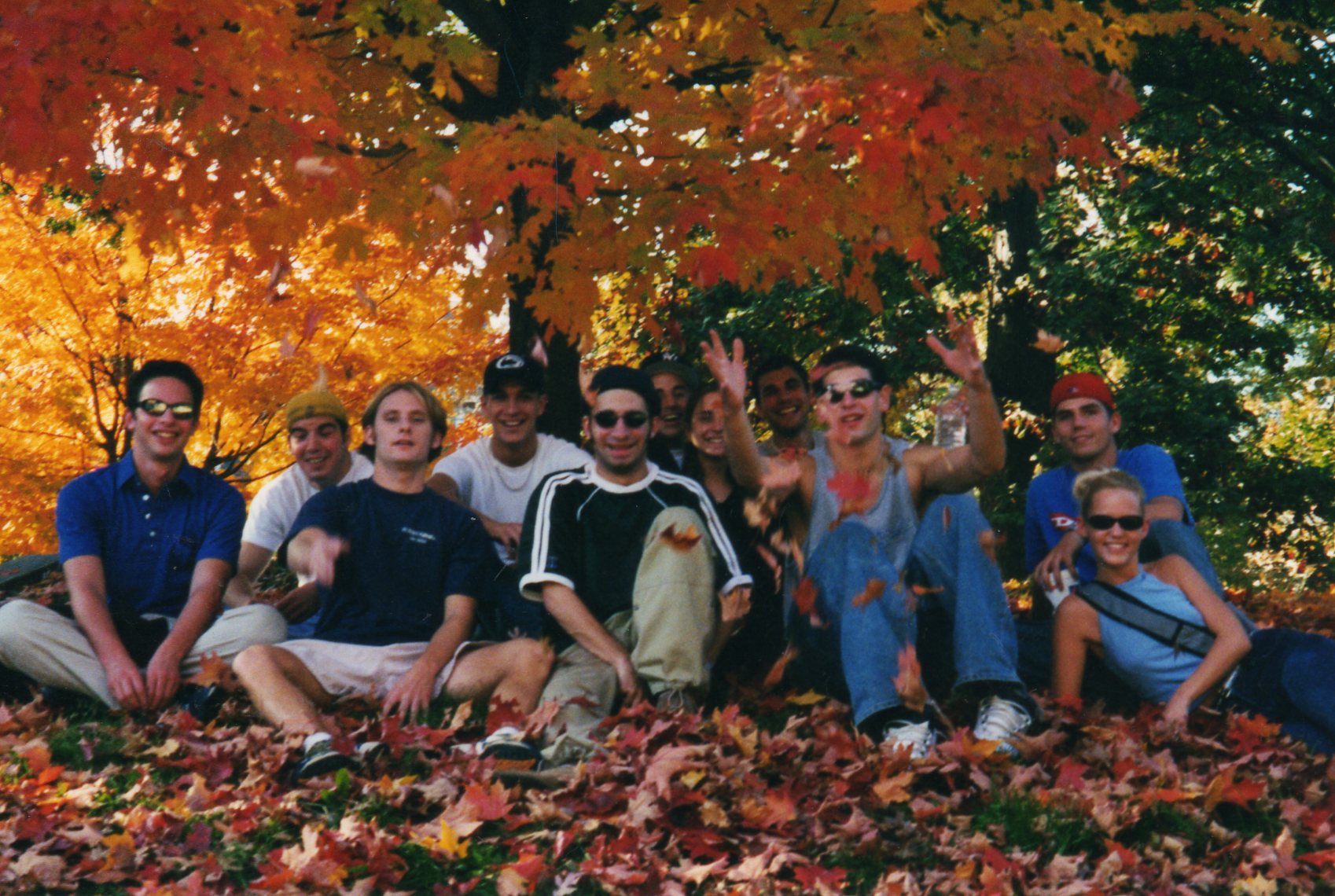
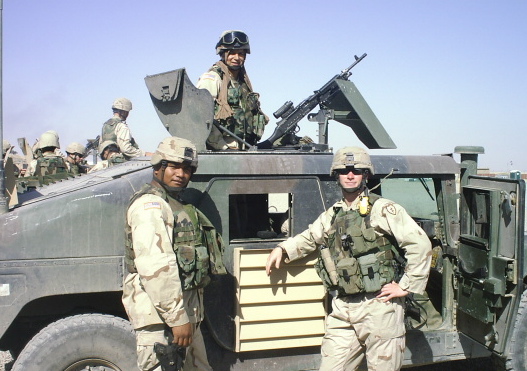
Mike Halas (above right with the sunglasses) moved in next door to me on Ogden Avenue back in the 1980’s when I was 9 years old. He was a year younger, and our families shared a long driveway in between our houses, but it wasn’t long before we basically shared backyards. His Dad, a direct relative of the Chicago Bears “Poppa Bear” Halas and new head coach of the Columbia University basketball team, put a hoop up in the driveway, and Mike and I spent most of our after school time and weekends playing knockout with his younger brother Johnny (who went on to play in the CBA) and other neighborhood kids. But in addition to hoops, Mike was always into “army stuff” like watching Platoon and Navy Seals, hanging up pictures of fighter planes in his room, and of course playing the game we all affectionately called “Guns”.
As we got older and closer, our families became FAMILY. Mike joined the armed forces after attending Johns Hopkins University and in 2004 he was called to duty in Iraq. Now in 2008, after going back and forth a couple times to war, Mike is home in the United States. Check out the interview with him below, where Mike talks about his rise through the ranks, his experiences as a platoon leader in Iraq, and what it’s like to be home from war…
IP: What was it that initially made you want to join the military?
MH: From as far back as I can remember, I always wanted to be a Soldier. Both my grandfathers served in the Second World War. Around the neighborhood, I was always trying to organize games of Manhunt, Capture the Flag, and Cops ‘n’ Robbers (which we called Guns). So basically, I grew up moving through the few wooded areas in the Highlands section of White Plains and pretending I was running operations.
IP: Tell us about your different levels of training. I know you’ve gone through some fairly intense shit. What’s it like getting ready for war and what exactly was your rank? Did you have guys under you out there, and did your roles/rank/duties change as the war went on?
MH: I went through ROTC in college and following that I went down to Fort Benning, GA. At Fort Benning, I first went through the Infantry Officer Basic Course. In IOBC, we are taught the basics of being an officer in the Army with regards to duties, responsibilities and what is expected of us. We also learn the rudiments of small unit war-fighting operations, concentrating mostly on squad and platoon level combat operations that included attacks, reconnaissance missions, and ambushes.
Following IOBC, I went to Ranger School. Ranger School is the preeminent small unit leadership course in the US military. There you learn not only your own physical and emotional limits, but how to continue to motivate your subordinates when they are at their physical and emotional limits to complete the mission. It is one of the greatest things that I never want to go through again.
I went to Airborne School after that and learned how to jump out of airplanes on a static line parachute. After Ranger School, that school was just a lot of fun.
All this time I was a 2nd Lieutenant, an O-1, the officer entry level. I went to Hawaii to report to my first unit, 1st Battalion, 14th Infantry Regiment, “Golden Dragons”. I pinned on, or was promoted to, 1st Lieutenant, in late November while I was serving as a rifle platoon leader. As a platoon leader, or PL, I was responsible for a 34 man light infantry rifle platoon. The lives of 34 soldiers and non-commisioned officers (sergeants) was quite a thrill and a tremendous responsibility for a 24 year old. It was an incredible job and a fantastic experience.
IP: Where were you during the September 11th attacks? Were you pretty sure that you were headed out to war soon after that?
MH: I was actually at the Dean’s office dropping a class when I first heard that a plane hit the World Trade Center. From there, I went straight to my ROTC building and watched the second plane hit. As I was walking from one to the other, I called my mom and dad to see if they were okay. My cousin Patrick worked in the South Tower and no one had heard from him. I found out later that he was late to work that day and had never even been in the building.
I spent the rest of the day glued to the television in my fraternity house. Most of my brothers were from the New York, New Jersey, Long Island, and collectively, we knew a lot of people in the city and a lot of people who worked in the Towers.
Yeah, I was pretty sure we would be headed somewhere after that. At that moment, I didn’t know where, but figured Afghanistan would be a safe bet.
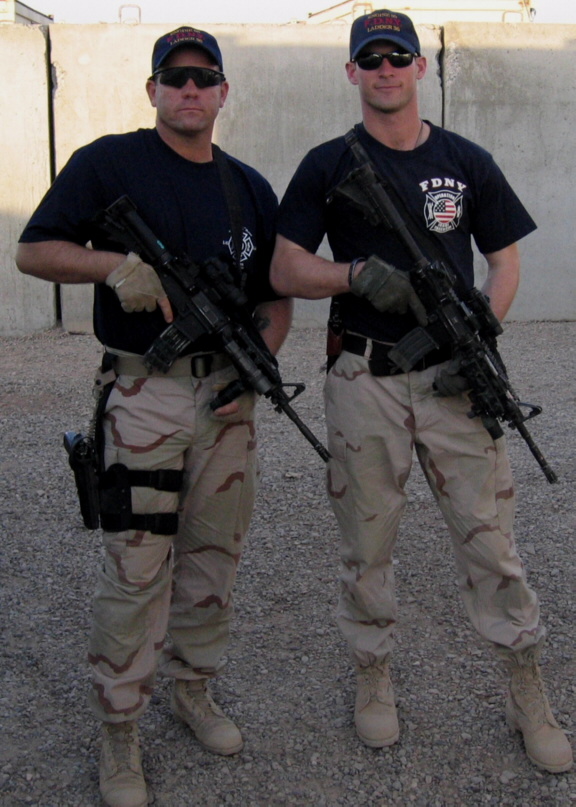
IP: Can you remember the day you first touched down over there? Where were you stationed? Did you move around alot once you were over there?
MH: My unit, 1st Battalion, 14th Infantry, the “Golden Dragons”, took off from Hickam Air Force Base in Honolulu, HI on the 19th of January 2004. We landed in Kuwait at Ali Al Saleem Air Base on or about the 22nd of January 2004. Like every unit, we spent a couple weeks there in Kuwait training up and getting acclimatized. On Groundhog Day 2004, we crossed the berm and were on our way towards Tuz, a small city of 50 thousand approximately an hour south of Kirkuk. And boy did we ever move around a lot. Not more than a few weeks after we took over Tuz from the 173rd ABN BDE, the Golden Dragons became the Division and then MNC-I (Multi-National Coalition-Iraq) reserve. We spent time in Tall Afar, north by the Syrian border; An Najaf, fighting against Muqtada Al-Sadr and the Madhi Army; Kirkuk; Ad Diwaniyah; Samarra; and Mosul. The soldiers took to calling our deployment the Golden Dragon Iraqi Tour 2004. Most units will get into country and be in one place for the duration of their deployment. We went the other way, not staying in one town for longer than 8 weeks in a 14-month rotation.
IP: Take us inside the daily mentals of a soldier at war. What was going through your head? Are you so focused that your world back home is blocked out, or is that constantly on your mind?
MH: As a rifle platoon leader, I was responsible for 34 soldiers and non-commissioned officers. They consumed my time. Planning operations, supervising the execution of orders already given, exercising, discussing with my platoon sergeant and squad leaders about what and how we could improve our platoon’s performance. There are so many things to do. I am not a parent, but I can only imagine that it is very similar a feeling to be responsible for the lives of 34 others.
IP: Compare yourself to the other guys you were fighting with. Does everyone kind of share the same mentality towards the war, or is there a lot of clashing ideals and personalities?
MH: The 34 soldiers I had in my platoon, no two were alike. You take a handful of kids from all over America and put them into one room, that was my platoon. There were as many different ideas and backgrounds as there were kids. Oh, and I refer to everyone in my platoon, except for my platoon sergeant, as one of my kids. Not sure when it started, but that’s how I thought of them.
IP: Did your political views about the war shift once you were actually there? Are most of the people fighting in the war even aware of the politics of it all?
MH: No, as a young lieutenant, I was fired up and excited to be there and excited to be in the duty position.
IP: Do you know anyone personally that died in the war? What happened? Tell us about it if you can.
MH: I do know a few. And I am sure that as time goes on and we continue to maintain ground forces in Iraq and Afghanistan, there will be more. It is inevitable and an unfortunate consequence of the profession of military arms.
My friend Luke Wullenwaber was killed in Iraq in the fall of 2004. We were in the same IOBC class and we were also in the same platoon during Ranger School. During Mountain and Florida phases, we were members of the same machine gun team and spent a lot of time together. He was great guy, a great leader, a great friend. He is missed.
IP: Does it get so violent out there that you get used to shooting at the enemy or being shot at? How violent is it really on a day to day basis?
MH: Some days were that violent. Most days were not.
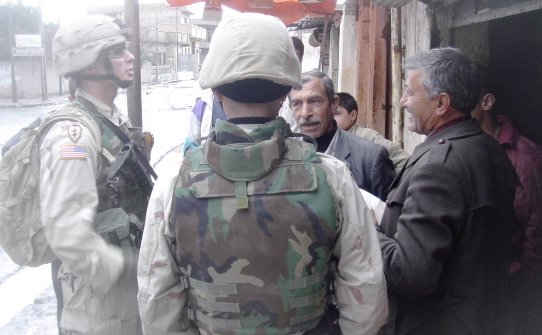
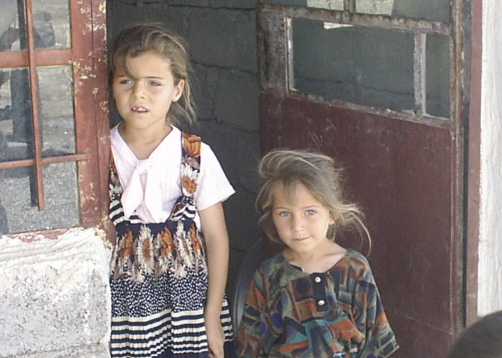
IP: Did you kill anyone?
MH: I am responsible for the deaths of others. My platoon killed people and, as a platoon leader, I am entirely responsible for all my platoon does.
IP: On a lighter note, what’s the most fun you had over there? What do you do for entertainment? Is there time for that, you know, socializing, listening to music, watching movies or sports?
MH: In different places, we relaxed in different ways. Some places we had electricity, so we’d watch DVDs or listen to music. Some places we didn’t have electricity, so we’d play chess, read anything we could get our hands on, and talk. While we were in Ad Diwaniyah, we stayed in captured Iraqi Army barracks and there was a sand volleyball court in the middle. My unit being from the Hawaiian Island of Oahu, we played a lot of “beach” volleyball!
IP: How do you stay in touch with people back home? Is email the easiest way? Can you call home? How does that work?
MH: Email was usually the easiest method. I think the key was typing out all your emails to people before you got to the computer because there was always a time limit and a long line. So when your turn came, you could copy and paste all the emails sent to you and copy and paste the outgoing ones. There were opportunities to call home, but I usually left that method for the soldiers to use. Of course, I did my best to call home on birthdays and special occasions.
IP: You went back and forth a couple of times to war? What was that like, coming home knowing you had to go back?
MH: The first days being home and the last few days before I went back were always challenging. But, I really didn’t pay a whole lot of attention to it. The way I saw it, I had a job to do and Iraq and Afghanistan were where I had to do them. The biggest change is going from having the freedom to choose where and when you wanted to go to dinner or catch a movie back home to being told when to eat, where to go, etc. After my first tour in Iraq, I volunteered to go to the 75th Ranger Regiment where I knew I would deploy.
IP: What has your life been like since you left the military? I know you’re still on call as a part of the National Guard, but on a daily basis, what have you been up to? Are you having fun? Are you happy? Are you working? Where are you living?
MH: My life has been pretty interesting since I left the Army. I have traveled all over, seen friends and family that I hadn’t seen in years. I moved out to the Rocky Mountains and taught little kids how to ski last winter at Beaver Creek in Colorado and I am planning on doing the same thing again this winter. I have read and read and read and I started to write, as well. I just recently submitted an article to the NY Times. Haven’t heard anything back yet, but I am still hopeful.
IP: Has it been tough adjusting to life after war? What have been the challenges for you? Have you changed mentally, physically, and/or socially?
MH: At times it is tough and, at others, it is not. I know that who I am today has been influenced by my time spent overseas. There are portions of that character that are on both sides of the moral spectrum. But, good or bad, they are now as much a part of me as growing up in White Plains.
IP: Do you watch any of the Iraq War related TV programming or movies? Have you seen Stop Loss? Generation Kill? If so, how realistic or accurate were they? If not, is there a certain reason why you won’t watch them?
MH: I don’t make a concerted effort to watch or avoid media regarding the war in Iraq. I started to watch Stop Loss but didn’t finish. It was just so Hollywood that it wasn’t entertaining. I have served with hundreds of soldiers who have done or have been ordered to deploy consecutively. And, of all the soldiers with whom I have served, every single one reported as ordered for duty. In the March timeframe of 2004, my platoon got a new sergeant who had just been transferred from the 4th Infantry Division. He had just served a year tour with 4th ID, got home, received orders to report to the 25th ID and now, about 2 months later, here he was, back in Iraq for another year long tour. Following our return to Hawaii the next February, he, again, received orders to a new unit and was back in Iraq again. Three times in as many years. He did not run or complain. He did not appreciate the constant deployments, but he knew what he signed up for and honored his commitment.
I did not watch, but read, Generation Kill. I was not a Marine, nor did I participate in the initial invasion, so I cannot attest to the accuracy of their actions. But, with regards to the relationships and the conversations between soldiers, the book was quite accurate.
I think the reason that I don’t go out of my way to watch these movies and shows is because I was there. I have my own memories of how things were and why they were that way. I don’t need to read a book or watch a movie to help me remember. But I will watch and read because it is interesting to see what others remember and how they interpret their memories.
IP: Obama or McCain? Does it matter to this war who wins the presidency?
MH: I will vote in the upcoming election. But, due to the fact that I am still a commissioned officer, I will hold my opinions of the individual candidates.
IP: What advice would you give to someone just getting home from the Iraq War?
MH: Take your time getting acclimated back into society. Talk to someone about how you are feeling. There are many others out there with similar experiences. You don’t need to keep it bottled up inside.
*BONUS*
Mike’s Top Five Movies of All Time:
Braveheart
Grosse Pointe Blank
Bull Durham
300
Miracle
Mike’s Top Five CD’s of All Time:
Guns ‘n’ Roses- Appetite for Destruction
Beastie Boys- License to Ill
anything by Jimmy Buffet or Jack Johnson
(ip’s note: would’ve bet money that the Animal House Soundtrack made this list! ha!)
Mike’s Top Five TV Shows of All Time:
Band of Brothers
Rescue Me
The A Team
The Office
Las Vegas
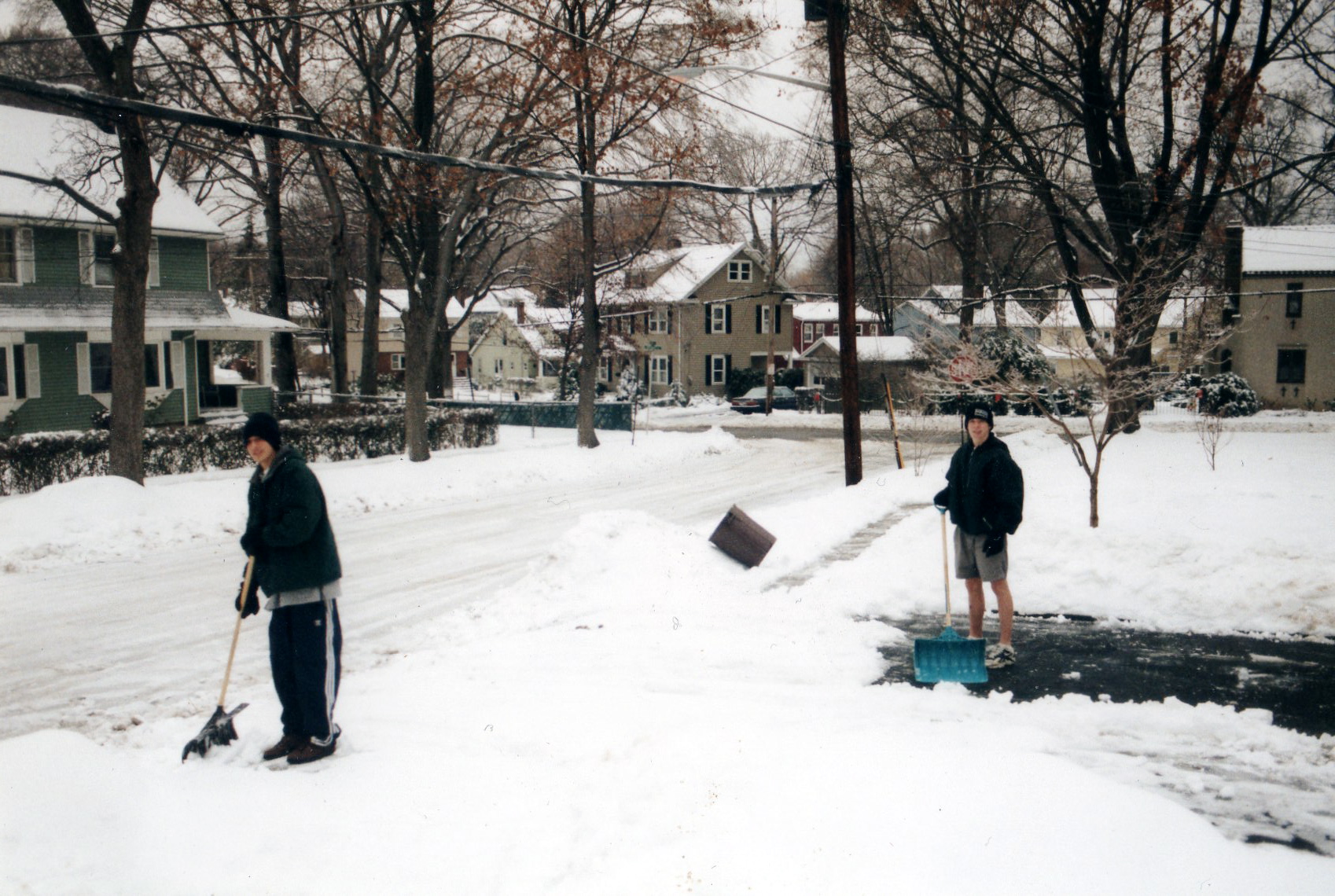
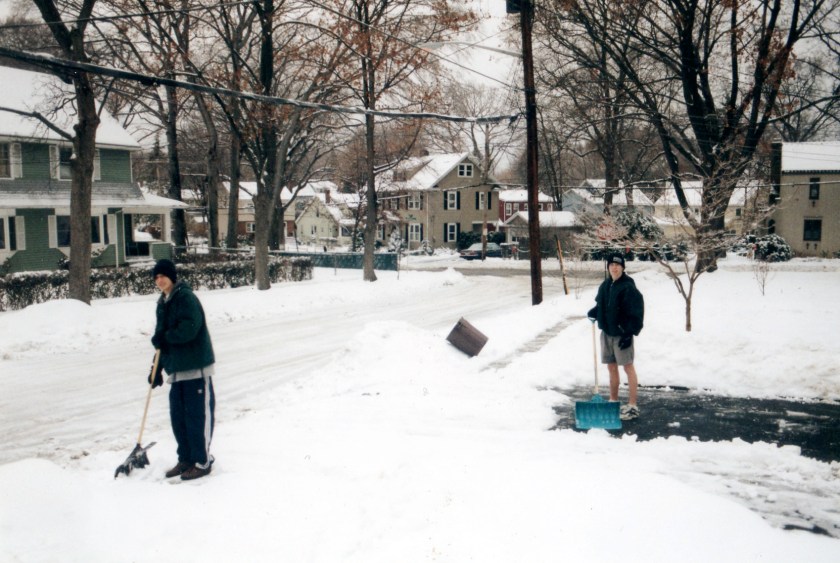 Ip (in skull cap) and Mike (in shorts!) shoveling snow on Ogden Avenue, 1995.
Special thanks to my brother from another mother Mike Halas for taking the time to be interviewed. You are truly a local hero…Peace…















 Westcheddar